

Why Smart Founders Are Choosing Botanicals Over Prescriptions
Jan 15th 2026
Prescription meds? Too many side effects. Founders are ditching them for natural options like kava and kratom. These botanicals offer focus and calm without the crashes, jitters, or addiction risks tied to stimulants.
- Kava: Promotes relaxation by interacting with GABA receptors, easing stress while keeping your mind sharp.
- Kratom: Boosts focus and energy at low doses, with a lower risk of severe withdrawal compared to opioids.
- Founders Fuel Blend: A mix of kava and kratom delivering steady energy and calm focus.
Botanicals are gaining traction as safer, more balanced choices for sustained performance. The global brain health supplement market hit $5.8 billion in 2023, showing a clear shift toward plant-based solutions. Just remember: responsible use is key, and results take a few weeks to build. Always consult a healthcare provider before trying new supplements.
These statements have not been evaluated by the FDA. This product is not intended to diagnose, treat, cure, or prevent any disease.
Why Founders Are Switching from Prescription Stimulants to Botanicals
The move away from prescription stimulants boils down to three key concerns: side effects, addiction risks, and the demand for lasting performance. Prescription meds and caffeine-loaded energy drinks often overstimulate the central nervous system, causing jitters and an inevitable crash. This "high and crash" cycle not only disrupts sleep but also derails the productivity that founders are trying to maintain. These downsides are pushing many to explore more balanced, long-term options.
"Caffeine gives you a quick energy boost... but this surge doesn't last long, and it's often followed by a crash that leaves you feeling tired and unfocused." - Jamal Bouie, PhD Candidate in Biomedicine
Dependency is another major drawback of prescription stimulants. These medications come with a high risk of addiction, while alternatives like kava and kratom show a different profile. Clinical studies reveal that kava has no significant withdrawal or addiction potential compared to a placebo, and kratom's key alkaloids act as partial "biased" agonists at mu-opioid receptors. This means they avoid causing the respiratory depression linked to traditional opioids. A survey in Malaysia even found that 90% of users successfully turned to kratom as a substitute for opioids to ease withdrawal symptoms.
The focus is shifting to long-term brain health instead of quick fixes. Natural nootropics are gaining traction due to their lower toxicity and reduced overdose risks compared to synthetic options. Founders are increasingly drawn to "clean energy" that supports mental clarity for years, not just hours.
Botanicals also stand out for their synergistic effects, thanks to multiple active compounds working together. This approach aligns with the principles of nutritional psychiatry, where mental performance is seen as deeply connected to nutrient intake and natural compounds, rather than relying solely on pharmaceuticals.
sbb-itb-02d64da
1. Kava
Stress Management
Kava works by interacting with GABA receptors to promote relaxation, while its kavalactones inhibit MAO-B, helping to boost dopamine and serotonin levels. This combination can improve mood and motivation, making it a helpful option for those dealing with high-pressure situations like startup founders.
Clinical research backs its calming effects. A review of 11 studies found kava extract to be effective in reducing anxiety. What makes kava stand out is its ability to relax the body without clouding the mind. In a comparative study, participants who took 600 mg of standardized kava extract daily for five days maintained their attention and memory, unlike those on the benzodiazepine oxazepam, who experienced noticeable cognitive decline.
"Unlike caffeine, kava helps keep your mind clear while your body stays calm, giving you balanced energy throughout the day." – Jamal Bouie, PhD Candidate in Biomedicine
While kava is known for its stress-relieving properties, it’s important to weigh these benefits against potential safety concerns.
Side Effects
Short-term side effects of kava may include mild drowsiness, stomach discomfort, or temporary numbness in the mouth. However, heavy or prolonged use can lead to more serious issues like kava dermopathy - a skin condition causing dryness and scaling - and elevated liver enzymes. To minimize risks, it’s essential to choose products made exclusively from the kava root, particularly from "Noble" cultivars. Past cases of liver damage were linked to low-quality products that used stems, leaves, or "Two-Day" cultivars instead of high-quality root extracts from "Noble" kava.
For safe use, experts recommend keeping daily kavalactone intake under 250 mg and opting for water-based extracts rather than those made with alcohol or acetone. Additionally, it’s best to avoid combining kava with alcohol or medications processed by the liver, as this can heighten toxicity risks.
Long-Term Sustainability
Kava’s mild side effect profile makes it a viable choice for long-term stress and cognitive support. Unlike some alternatives, kava carries a low risk of dependency and doesn’t cause withdrawal symptoms or hangovers. Products made from "Noble" cultivars - legally approved for export and considered the safest for medicinal purposes - offer consistent benefits without the adverse effects tied to inferior varieties. For those looking for natural, reliable stress relief, kava provides a way to manage anxiety while maintaining mental clarity.
2. Whole Leaf Kratom
Effectiveness for Focus
At doses below 5 grams, whole leaf kratom is known to boost alertness and fight fatigue without causing the jittery side effects often associated with caffeine. Its main active compound, mitragynine, interacts with the brain's noradrenergic, serotonergic, and dopaminergic systems - key pathways involved in focus and concentration. This interaction creates what many describe as "clean energy," a steady and focused state that entrepreneurs and professionals often rely on to power through demanding workdays.
Historically, kratom has been appreciated for its role as a natural stimulant. However, while its benefits are notable, responsible use is critical to minimize potential side effects.
Side Effects
Common side effects include nausea (13%) and constipation (9%). Higher doses or combining kratom with other substances can increase the risk of serious issues like liver damage, heart problems, or central nervous system toxicity. Whole leaf kratom is generally safer than concentrated extracts or semi-synthetic derivatives like 7-hydroxymitragynine, which are much more potent and carry a greater risk of addiction.
"What concerns me the most is the way that it is marketed as all-natural, safe, without any side effects, an almost miracle-like cure for everything - and there's no regulation around it." – Robert Levy, MD, Addiction Medicine Specialist, University of Minnesota
Frequent use can lead to physical dependence. Almost half of regular users may experience withdrawal symptoms - such as insomnia, nausea, and muscle pain - beginning within 12 to 48 hours of stopping. These symptoms are typically less severe than those linked to prescription opioids, with an average withdrawal severity score of 13.5 on the SOWS scale.
Long-Term Sustainability
Kratom's safety profile is tied to its unique pharmacology. Its alkaloids act as partial, "biased" agonists on opioid receptors, mainly activating G-protein coupled pathways while avoiding the beta-arrestin pathway responsible for respiratory depression. Because of this, the risk of overdose with kratom is about 1,000 times lower than with traditional opioids like morphine or heroin.
"Kratom acts on some of the same receptors as classical opioids like morphine and heroin, except that the overdose risk on kratom is a thousand times less." – Marc T. Swogger, PhD, Clinical Psychologist, University of Rochester Medical Center
For long-term, responsible use, it’s recommended to stick with whole leaf kratom rather than extracts and to focus on how often you use it rather than just the total dosage. Dependence is more closely tied to frequency of use. Always consult with a healthcare provider before starting any new regimen, especially if you’re on other medications or have preexisting health concerns. This careful approach highlights why many professionals prefer natural botanicals over synthetic options.
3. Founders Fuel Blend

Effectiveness for Focus
Founders Fuel combines kava root and leaf kratom in a 10:1 ratio, offering steady energy without the jitters. Rather than triggering a rush of neurotransmitters, this blend supports natural cognitive balance, keeping your mind sharp and focused.
"The active alkaloids in leaf kratom are known to boost energy and enhance focus without the negative side effects that come from coffee." – Jamal Bouie, PhD Candidate in Biomedicine, Botanic Tonics
The kavalactones in the formula interact with brain receptors, creating what users describe as a state of "relaxed focus." This means staying mentally clear while feeling physically calm. Unlike stimulants that cause energy spikes followed by crashes, this botanical blend works in harmony with your body’s natural rhythms, promoting steady productivity throughout the day. Its focus-enhancing qualities naturally complement its stress-relief properties.
Stress Management
Kava plays a key role in helping the body handle occasional stress. Acting as a natural balancer, it supports resilience and helps restore a sense of calm. Unlike medications that merely mask fatigue, kava works to genuinely aid stress recovery.
Side Effects
The blend is generally easy on the body, but excessive use could lead to side effects like nausea, dizziness, or abdominal discomfort. Experts suggest limiting daily kavalactone intake to no more than 250 mg to ensure safe use.
Long-Term Sustainability
This blend isn’t just about quick fixes - it’s designed for lasting benefits. With consistent use, most people notice improvements in 2–3 weeks, as botanical nootropics often take time to build their effects. The diverse ingredients also make it a safer option compared to synthetic alternatives, reducing the risk of toxicity.
Advantages and Disadvantages
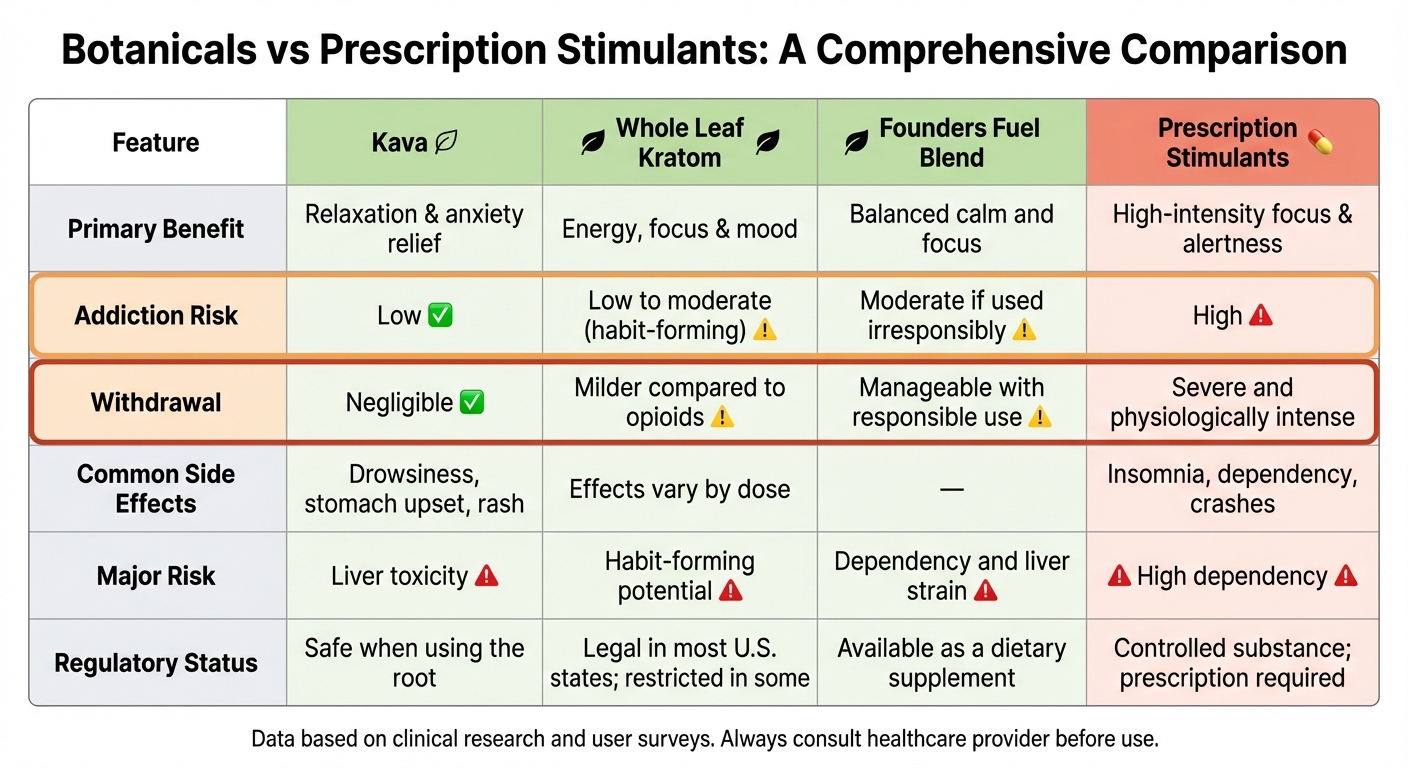
Botanicals vs Prescription Stimulants: Benefits, Risks, and Side Effects Comparison
Here’s a look at the upsides and downsides of botanicals versus prescription options, based on the detailed profiles above.
Choosing between botanicals like Kava and Whole Leaf Kratom or prescription stimulants often comes down to balancing benefits with risks. Botanicals tend to offer relaxation, improved focus, and mood support while generally presenting a lower risk of dependency compared to many prescription drugs.
Kava is prized for its calming effects and ability to ease anxiety. However, its use has been associated with over 100 cases of liver toxicity, often tied to low-quality products, as noted in the kava section above.
Whole Leaf Kratom is known for its energizing properties, focus enhancement, and mood-boosting effects. Its withdrawal symptoms are usually less severe than those linked to stronger pharmaceuticals.
Prescription stimulants, on the other hand, deliver immediate, intense focus and alertness. But they come with significant risks, including insomnia, dependency, and harsh withdrawal symptoms, often requiring close medical supervision.
"Herbs are less likely than pharmaceuticals to cause side effects." – Hyla Cass, MD
The Founders Fuel Blend, which combines Kava and Whole Leaf Kratom, offers a balanced mix of calm and focused energy. With a 4.8/5 star rating from 749 reviews (89% of users giving it five stars), it’s a popular choice for high-performing professionals. Risks and dosage recommendations are outlined above.
Here’s a quick comparison of key features:
| Feature | Kava | Whole Leaf Kratom | Founders Fuel Blend | Prescription Stimulants |
|---|---|---|---|---|
| Primary Benefit | Relaxation & anxiety relief | Energy, focus & mood | Balanced calm and focus | High-intensity focus & alertness |
| Addiction Risk | Low | Low to moderate (habit-forming) | Moderate if used irresponsibly | High |
| Withdrawal | Negligible | Milder compared to opioids | Manageable with responsible use | Severe and physiologically intense |
| Common Side Effects | Drowsiness, stomach upset, rash | Effects vary by dose | - | Insomnia, dependency, crashes |
| Major Risk | Liver toxicity | Habit-forming potential | Dependency and liver strain | High dependency |
| Regulatory Status | Safe when using the root | Legal in most U.S. states; restricted in some | Available as a dietary supplement | Controlled substance; prescription required |
This table highlights the trade-offs between these options, helping you weigh their benefits and risks side by side.
Conclusion
Switching from prescription stimulants to botanicals marks a deliberate move toward a more balanced way to maintain focus and manage stress. Many founders are turning to Kava and Whole Leaf Kratom as part of their strategy for long-term performance. These options come without the jittery side effects, energy crashes, or higher risks often tied to prescription drugs, making them an appealing choice for those seeking steady, reliable performance.
The global nootropic market reached nearly $5.8 billion by 2023, signaling a growing recognition of the advantages natural botanicals bring. Unlike synthetic drugs, these plants contain a variety of compounds that work together to offer benefits that single-molecule drugs often can't match.
"Natural nootropics also usually have lower toxicity, which reduces the possibility of harm from an overdose." – Matěj Malík, Department of Agroenvironmental Chemistry and Plant Nutrition
When incorporating botanicals, it's important to start with responsible dosing, keeping in mind that noticeable effects often take 2–3 weeks. Always consult a healthcare professional before adding these to your routine, especially if you're on other medications. The goal is to find a solution that enhances your performance while safeguarding your long-term health.
With market trends and clinical research supporting their use, botanicals represent a shift toward a more sustainable approach to peak performance. Founders Fuel offers a carefully crafted blend designed to provide clean, consistent energy. Whether you opt for individual botanicals or a pre-formulated mix, the aim is the same: steady energy, sharp focus, and enduring resilience.
FAQs
What are the risks and side effects of using kava and kratom?
While kava and kratom come from nature, they’re not without risks, especially if misused or overused.
Kratom can lead to side effects like nausea, constipation, dry mouth, and elevated blood pressure. In more serious cases, taking large amounts or using it for extended periods might result in dependence, withdrawal symptoms (such as irritability or trouble sleeping), or even liver damage. Though rare, some users have reported irregular heart rhythms, seizures, or other cardiac problems.
Kava, often praised for its calming properties, can negatively impact liver health if overconsumed or mixed with alcohol or certain medications. Common side effects include drowsiness, reduced motor coordination, and occasional skin irritation. In rare instances, excessive use may cause a temporary condition called kava dermopathy, which affects the skin. Additionally, kava can amplify the sedative effects of some drugs, potentially leading to respiratory complications.
To stay safe, use these botanicals responsibly. Avoid mixing them with other substances, and consult a healthcare provider if you have any concerns.
How do kava and kratom compare to prescription stimulants when it comes to addiction risk?
Kava is widely regarded as having the lowest potential for addiction among the three. Research and botanical reviews often label it as non-habit forming, indicating a minimal likelihood of dependence. In contrast, kratom presents a moderate to high risk of addiction, particularly with frequent or high-dose use. Regular kratom consumption can even align with the criteria for substance use disorder.
As for prescription stimulants, such as amphetamine-based medications, their addiction risks are well-documented. However, available sources don’t provide direct comparisons between their dependency potential and that of kava or kratom. To sum up, kava poses the least risk, kratom comes with a notable addiction potential, and prescription stimulants demand close oversight due to their habit-forming nature.
Why should you talk to a healthcare provider before using botanical supplements?
It's always wise to talk with a healthcare provider before using botanical supplements. They can help figure out the right dosage, spot any potential interactions with medications you're on, and evaluate how your personal health conditions might react to the supplement.
Even though they're natural, these supplements can have strong effects on the body. A healthcare provider's guidance ensures you make informed choices, reducing risks while getting the most out of the benefits.
