

10 Steps to Quit Caffeine Without Losing Focus
Mar 31st 2026
If you’re stuck in the caffeine loop - slumps, jitters, withdrawals - quitting can feel impossible. But ditching caffeine doesn’t mean sacrificing focus or energy. Here’s the playbook to cut it out without crashing:
- Track your intake: Know your daily caffeine dose to avoid quitting too fast.
- Taper gradually: Reduce by 10–25% every few days to dodge withdrawal headaches.
- Hydrate: Water fights fatigue and eases headaches.
- Sleep smarter: Regular bedtimes and less screen time = better energy.
- Move more: Walks or yoga beat coffee for a natural boost.
- Eat right: Protein, healthy fats, and complex carbs keep energy steady.
- Mindfulness: Breathe through cravings; it’s temporary.
- Journal progress: Track symptoms and wins to stay motivated.
- Try alternatives: Herbal teas or supplements like Founders Fuel can help.
- Build habits: Sunlight, hydration, and movement replace caffeine’s kick.
You’ll feel worse before you feel better, but within 7–10 days, withdrawal fades. Stick it out, and you’ll reclaim steady energy, better sleep, and sharper focus - no coffee required.
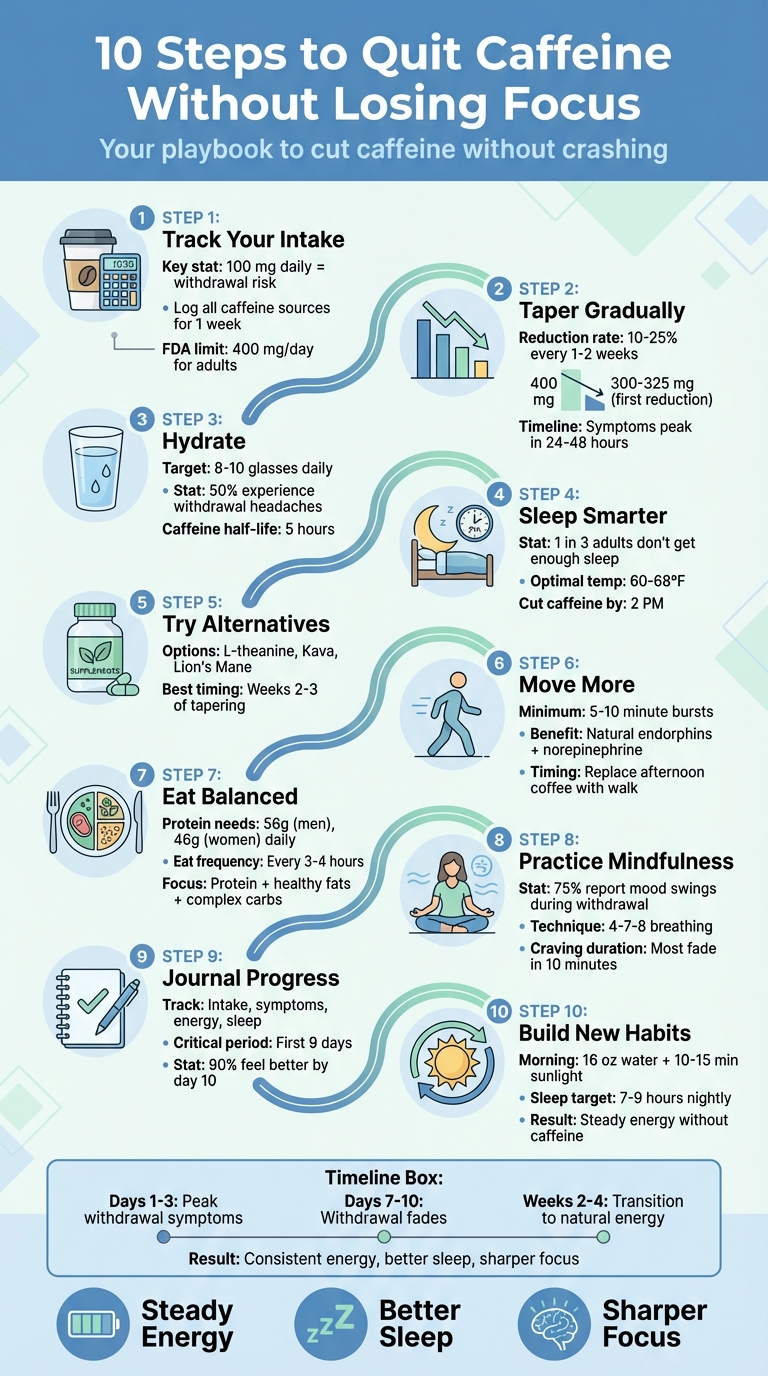
10-Step Process to Quit Caffeine Without Losing Focus
Thinking about quitting caffeine cold turkey?
sbb-itb-02d64da
Step 1: Calculate Your Daily Caffeine Intake
Before stepping away from caffeine, it’s crucial to know how much you’re consuming. As Yasanga Perera wisely notes:
"You can't change what you don't measure. For one week, track your normal caffeine intake precisely."
Spend a week logging every caffeinated item you consume - coffee, energy drinks, chocolate, coffee-flavored treats, pre-workout powders, even over-the-counter painkillers. This will help you determine your true daily intake in milligrams. Beth Czerwony, a Registered Dietitian from Cleveland Clinic, emphasizes the importance of reading labels carefully.
Here’s a quick breakdown to guide you: an 8-oz cup of filtered coffee has about 140 mg of caffeine, but a 20-oz coffee shop serving can easily exceed 200 mg. Even decaf isn’t completely caffeine-free, containing 2–12 mg per serving. Energy shots? Some pack a punch with up to 215 mg. To get an accurate picture, log every detail - how many servings, the size in ounces, the type of brew (espresso or drip), and the time of consumption. For packaged items like sodas or supplements, check the nutrition labels since caffeine levels vary widely by brand.
Understanding your baseline matters because withdrawal symptoms can kick in with as little as 100 mg of caffeine daily. Without this data, you might quit too abruptly, leading to headaches and fatigue, or taper too slowly, unnecessarily dragging out the process.
The FDA suggests keeping caffeine intake under 400 mg per day for healthy adults. Once you know your current consumption, aim to reduce it by about 25% every few days. Use a simple notebook or apps like Macro Tracking AI or NOCAF to track your intake automatically. After a week, you’ll have an honest average that accounts for any differences between weekdays and weekends. With this information, you’ll be ready to create a tapering plan in the next step.
Step 2: Reduce Caffeine Slowly Over Time
Once you've figured out how much caffeine you're consuming daily, it's time to start cutting back - but do it gradually. Quitting cold turkey might seem like ripping off a Band-Aid, but it often leads to nasty withdrawal symptoms like headaches, fatigue, and a higher chance of falling back into old habits. A slow taper is your best bet for reducing withdrawal effects while keeping your focus and energy intact by using natural caffeine alternatives.
Start by cutting your caffeine intake by 10–25% every one to two weeks. For example, if you're drinking 400 mg of caffeine daily, reduce it by about 75–100 mg, bringing your intake down to 300–325 mg. The Dr. Oracle Medical Advisory Board emphasizes this approach:
"The most effective approach is gradual dose reduction (tapering) by decreasing your daily caffeine intake by approximately 25-50 mg every 2-3 days... rather than abrupt cessation which causes more severe withdrawal symptoms."
If you're consuming 600 mg or more daily, go even slower - aim for about a 10% reduction per month. If withdrawal symptoms hit hard, pause your taper and maintain your current dose for two to four weeks before continuing.
Create a Weekly Reduction Schedule
A step-by-step plan can help you stick to your goals without feeling overwhelmed. Here's an example schedule for someone starting at 400 mg of caffeine daily:
| Week | Target Reduction | Action Example |
|---|---|---|
| Week 1 | 25% Reduction | Reduce to 3 cups of coffee daily; replace 1 cup with herbal tea |
| Week 2 | 50% Reduction | Drop to 2 cups daily; prioritize getting 8+ hours of sleep |
| Week 3 | 75% Reduction | Limit to 1 small cup; snack on energizing foods like almonds |
| Week 4 | 100% Reduction | Eliminate caffeine entirely; build new morning habits like stretching or journaling |
Track how you're feeling each day. If your focus or productivity takes a nosedive, consider holding your current dose for a little longer before cutting back further. Withdrawal symptoms often peak within 24–48 hours after reducing your dose, so give yourself time to adjust before pushing ahead.
Switch to Lower-Caffeine Alternatives
Substituting your usual drinks with lower-caffeine options can make the transition smoother. This allows you to keep your routines intact while gradually easing off caffeine. For coffee drinkers, the "Mix Method" is a solid strategy: start by blending 75% regular coffee with 25% decaf, and over time, shift the ratio until you're drinking only decaf.
Another option is the "Tea Step-Down." Replace one cup of coffee (about 100 mg of caffeine) with green tea, which contains L-theanine. This amino acid can help promote calm focus and reduce energy crashes. After a week or two, swap the green tea for caffeine-free herbal teas like peppermint or rooibos. Just remember, even decaf coffee isn't completely caffeine-free - it still contains 2–5 mg per cup, making it a good stepping stone if you're aiming to cut caffeine entirely.
Don't forget to check for hidden caffeine in unexpected places like sodas, chocolate, and certain pain relievers. These sneaky sources can add up quickly.
Step 3: Drink More Water to Ease Withdrawal Symptoms
Once you've started cutting back on caffeine, staying hydrated becomes a key part of managing withdrawal symptoms. Reducing caffeine causes your brain's blood vessels to dilate, which can lead to withdrawal headaches - something up to 50% of people experience. Drinking enough water helps by addressing dehydration, a common headache trigger.
Beth Czerwony, a registered dietitian at Cleveland Clinic, highlights the connection between hydration and energy:
"People often drink caffeine because they can't seem to stay awake, but dehydration is often the reason they don't have energy to begin with. If you can get hydrated, you're going to perk up and not need that caffeine as much."
Aim for 8–10 glasses of water a day to help your body flush out caffeine and its byproducts. This is especially important during the first 72 hours of your taper when withdrawal symptoms tend to be at their worst. Since caffeine's half-life is about 5 hours and it can take up to 10 hours to fully leave your system, steady hydration throughout the day supports the detox process.
Kick off your morning with a big glass of water instead of coffee to rehydrate after a night's sleep - it can give you a natural energy lift. If cravings strike or a headache starts to creep in, drink a glass of water right away to help ease the discomfort. You can also replace your coffee routine with hydrating alternatives like sparkling water with a splash of citrus or herbal teas.
Step 4: Get Better Sleep for Natural Energy
Hydration plays a role in easing withdrawal, but quality sleep is just as crucial for maintaining natural energy and focus. When you reduce caffeine, your body has to adjust and produce energy on its own, making good sleep essential. With one in three adults not getting enough sleep, caffeine withdrawal can make fatigue feel even worse.
A consistent sleep schedule is a game-changer. Aim to go to bed and wake up at the same time every day - even on weekends. Dr. Matthew Walker emphasizes this point:
“Regularity is the single most important sleep habit, even more impactful than total sleep duration in many cases.”
This consistency helps regulate your circadian rhythm, which can be disrupted as your body adapts to changes in adenosine signaling during caffeine withdrawal.
Your sleep environment also matters. Keep your bedroom cool - between 60°F and 68°F - to help your body lower its core temperature, a key step for deep sleep. Use blackout curtains or an eye mask to keep light out, and if noise is an issue, try a white noise machine to block distractions.
Limit screen time at least an hour before bed. Blue light from phones or laptops suppresses melatonin, and stimulating content keeps your brain too active to relax. Instead, wind down with calming activities like reading, light stretching, or meditation for 30–60 minutes. Dr. Michael Breus describes this as:
“A bedtime routine is a runway for sleep - a gradual descent rather than an abrupt stop.”
This approach not only improves sleep but also supports your energy as you reduce caffeine.
In the morning, get outside for 20–30 minutes of natural sunlight to reset your internal clock and boost daytime alertness. And if you’re still tapering off caffeine, make sure to stop drinking it by 2 p.m., as consuming it within six hours of bedtime can cut into your sleep time.
Step 5: Use Founders Fuel to Maintain Focus

As you cut back on caffeine, Founders Fuel can help you stay sharp and energized. This liquid botanical supplement is crafted to support mental clarity during the caffeine tapering process.
The formula combines L-theanine, Kava, Whole Leaf Kratom, and Lion's Mane Mushroom to encourage calm, focused energy. L-theanine, in particular, can help ease the tension that sometimes comes with reducing caffeine, offering steady clarity without the rollercoaster highs and lows caffeine often brings.
Founders Fuel is especially useful during Weeks 2–3 of tapering, helping you stay productive as your body adapts to generating energy on its own. Whether you're tackling demanding tasks or just trying to stay on track, this blend is designed to keep you going.
Packaged in 2oz bottles, the supplement is made in a GMP-certified facility, with all ingredients tested for purity. You can opt for a Founders Circle subscription at $229/month (12 bottles, 24 servings) or make a one-time purchase for $279.
Always consult a healthcare professional before starting any new supplement to ensure it's a good fit for you. Paired with proper hydration, good sleep, and a gradual caffeine reduction, Founders Fuel can support your journey toward natural energy and focus. Up next? Add regular exercise to your routine for an extra energy boost.
Step 6: Add Regular Exercise to Boost Energy
Cutting caffeine leaves your brain without its usual jolt, but exercise steps in as a natural substitute for energy. It triggers the release of endorphins and norepinephrine, which help enhance alertness and energy levels. Dr. Anna B. Shannahan, a family medicine physician, explains it well:
"Exercise tells your cells you need more energy, your body will rise to the occasion and provide you with more."
Even short bursts of movement, like 5–10 minutes of activity, can deliver a noticeable lift. For example, a brisk 10-minute walk gets oxygen and blood flowing to your brain more effectively than lounging with a coffee cup. This is especially useful during Weeks 2–3 of tapering, as your body adjusts to producing energy naturally. Early on, stick to gentle activities like walking or yoga since your body is already managing significant changes.
Swap your afternoon coffee with a quick outdoor walk. If you're stuck indoors, try simple stretches or pacing. A short walk after lunch can also help stabilize blood sugar and prevent that dreaded 3 p.m. slump that often sends people back to caffeine.
Feeling sluggish or battling a headache? A 30-minute walk can help ease those withdrawal symptoms. Regular movement also improves sleep, which is crucial for maintaining steady energy. The more consistent you are with exercise, the easier it becomes to stay focused and alert without stimulants. Pair this habit with hydration, balanced meals, and good sleep to stabilize your energy as you transition away from caffeine. It’s a simple but powerful addition to your plan.
Step 7: Eat Balanced Meals to Prevent Energy Crashes
Without caffeine to mask those inevitable energy dips, what you eat takes center stage in keeping you focused. The key? Combine protein, healthy fats, and complex carbohydrates at every meal. This trio helps stabilize blood sugar levels, avoiding the spikes and crashes that leave you drained.
Kick off your day with a protein-packed breakfast - think eggs, Greek yogurt, or a protein shake. Danna Raphael, a Registered Dietitian at HSS, emphasizes:
"Eating a well-balanced, protein-rich breakfast has been shown to help reduce cravings later, like that 3 p.m. snack slump."
For context, adult males need at least 56g of protein daily, while adult females require 46g. Pair your protein with complex carbs, such as oats or whole-grain toast, and healthy fats like avocado or nuts. This combo slows digestion, ensuring your brain gets a steady glucose supply - crucial since it has minimal energy reserves.
To keep your blood sugar stable, aim to eat every 3–4 hours. Stick to three modest meals and two healthy snacks, such as hummus on whole-grain bread or an apple with peanut butter.
Make smart swaps by ditching refined grains - like white bread or sugary cereals - for unrefined options such as quinoa, brown rice, or sweet potatoes. The fiber in complex carbs provides a slow, steady energy release, unlike the quick spike (and crash) from simple sugars. Also, don’t skimp on calories: women need at least 1,200 daily, and men require over 1,500.
Your body thrives on consistent, predictable energy. During caffeine withdrawal - which peaks within 24–48 hours and eases after 7–10 days - balanced meals are even more critical. They help you avoid the mid-afternoon slump that might otherwise have you reaching for a cup of coffee. A solid nutritional foundation will keep you steady as you move through the rest of your withdrawal journey.
Step 8: Use Mindfulness to Handle Withdrawal
Caffeine withdrawal can throw your brain chemistry out of whack, dropping dopamine and serotonin levels and leaving you feeling irritable, anxious, or just "off." Around 75% of people report mood swings during withdrawal, while 55% experience anxiety or restlessness. The upside? These symptoms usually peak within 24–48 hours and start easing up after that. By day 10, 90% of people feel noticeably better. Mindfulness can help you navigate this rocky phase.
Simple techniques like 4-7-8 breathing (inhale for 4 seconds, hold for 7, exhale for 8) can help ease headaches and irritability brought on by withdrawal. Another approach is urge surfing - when a craving strikes, acknowledge it without acting on it and wait 10 minutes. Most cravings fade within that time frame. These mindful practices not only help in the moment but also reinforce your long-term goal of cutting back on caffeine.
"Recognising these neurochemical shifts is useful because it reframes withdrawal symptoms as predictable physiology rather than personal failure." - CaffeineHalfLife.com
Even a quick 5-minute meditation can take the edge off restlessness during the first week. If physical tension is an issue, try progressive muscle relaxation: tense and release each muscle group to calm the body. Short mindfulness breaks - just 2 minutes here and there throughout your day - can also help clear mental fog and fight off that dreaded mid-afternoon slump.
Consider tweaking your morning ritual with grounding ingredients to replace your usual caffeine routine. For instance, practice mindful sipping with herbal tea, focusing on the warmth, aroma, and flavor. Or spend 10 minutes journaling about the positives, like better sleep, more consistent energy, or even the money you're saving. These small, intentional habits satisfy the sensory ritual of coffee while reinforcing your decision to quit caffeine.
Step 9: Keep a Journal to Track Your Progress
Document your caffeine intake - whether on paper or through a digital app - to make your tapering journey concrete and measurable. Be thorough: include every source of caffeine, from coffee and tea to sodas, energy drinks, chocolate, and even medications that might sneak in caffeine. Use precise measurements, like grams or milligrams, instead of vague guesses. This level of detail keeps your plan grounded and actionable.
Beyond intake, track how your body and mind respond daily, especially in the critical first nine days. Rate symptoms like headaches, irritability, brain fog, and fatigue. Note your energy levels at key points - morning, mid-afternoon, and evening - to spot patterns, such as when caffeine's effects taper off. Sleep is another critical metric: jot down how long it takes to fall asleep, total hours of rest, and how you feel upon waking. Improved sleep is often one of the earliest signs that your transition is paying off.
Consider this example: in 2025, Daniel Reynolds, a software engineer, created a personal tracking tool to manage his 60-day caffeine taper. Starting at 75 mg per day, he gradually reduced to zero. By monitoring his intake and energy patterns, he discovered that dropping to 35 mg eliminated his mid-day crashes and boosted productivity. Remarkably, Reynolds completed the process without headaches or brain fog, all while maintaining full-time work performance.
Keeping a journal also shifts your mindset, helping you see withdrawal as a predictable physical adjustment rather than a personal failing. For instance, noting that headaches peak on day two but fade by day four can reassure you that progress is happening. Recording positive changes - like smoother energy levels, reduced anxiety, or even whiter teeth - can further motivate you. Tools like "Decaf" or "Macro Tracking AI" can complement your journal by offering visual progress charts and caffeine calculators. Just make sure to log updates in real time to avoid forgetting details.
This habit not only tracks your progress but also highlights the natural energy gains you're building. Combined with hydration, better sleep, exercise, and balanced meals, journaling strengthens your overall plan to cut caffeine while staying productive.
Step 10: Build Habits for Long-Term Focus Without Caffeine
Once you've moved past caffeine withdrawal, the next step is creating habits that keep your focus sharp naturally. A caffeine-free lifestyle doesn't mean sacrificing energy - it means finding smarter ways to sustain it.
Start your mornings with 16 ounces of cold water to rehydrate your body. Follow that with 10–15 minutes of sunlight exposure to kickstart your alertness naturally. Pair these habits with a protein-packed breakfast, like eggs or Greek yogurt, to stabilize blood sugar and prevent those mid-morning crashes.
Staying active is just as important. A quick 10-minute walk in the afternoon can work wonders for your energy levels. This small burst of movement improves blood flow and oxygen delivery to the brain, clearing away mental sluggishness far better than staying glued to your chair. Consistent exercise not only builds physical endurance but also fuels your mental stamina.
Consider adding natural nootropics to your routine. Ingredients like L-Theanine and adaptogens such as Rhodiola Rosea can help support focus and resilience. For those looking for an extra edge, Founders Fuel offers a premium liquid botanical blend combining Kava, Whole Leaf Kratom, Lion's Mane Mushroom, and L-Theanine - designed to maintain focus without the jitters or crashes tied to caffeine.
Lastly, prioritize your sleep. Aim for 7–9 hours of quality rest each night. Sleep is the cornerstone of all your efforts, allowing your brain to reset and recalibrate by reducing excess adenosine receptors over time. This process helps you wake up feeling naturally alert. When combined with hydration, sunlight, movement, and thoughtful supplementation, these habits create a reliable framework for long-term focus - no caffeine required.
Conclusion
Quitting caffeine doesn’t mean losing your edge - it’s about creating a steady, reliable energy base. The 10 steps in this guide cover everything: calculating your intake, tapering off, staying hydrated, optimizing sleep, and replacing caffeine with natural energy sources like sunlight, nutrition, and movement.
As you implement these steps, expect noticeable changes. Within 2–4 weeks, you’ll transition from caffeine dependency to natural energy, with benefits that stick. Think consistent energy levels all day, better sleep at night, and sharper mental clarity - no mid-afternoon crashes. Physical withdrawal symptoms typically ease by day 9, and the adjustments your brain makes are just part of the process - not a reflection of you.
For extra support during this shift, Founders Fuel offers a premium liquid botanical blend tailored for professionals who need to stay sharp. It combines Kava, Whole Leaf Kratom, Lion’s Mane Mushroom, and L-Theanine to deliver calm, focused energy - without the highs and lows caffeine brings. It’s a smart way to stay productive while your body adapts.
Keep reinforcing the habits you’ve built. Stick to your hydration goals, guard your sleep schedule, and fuel your body with the nutrients it needs to thrive. These routines are the foundation for lasting energy and focus.
Take control of your energy - stay focused, work smarter, and protect your health for the long haul.
FAQs
How do I pick the right taper pace for my caffeine level?
To cut back on caffeine without the headaches or energy crashes, aim to reduce your intake by 10-25% every 1-2 weeks. If you're a heavy caffeine user, take it slower - around 10% per month might be easier on your system. Listen to how your body reacts and adjust the pace to keep the process smooth while staying sharp and focused.
What should I do if withdrawal headaches or brain fog won’t go away?
If withdrawal headaches or brain fog stick around, consider cutting back on caffeine more slowly to give your brain time to adapt. Make hydration a priority - aim for 8–10 glasses of water each day to help ease headache discomfort. For quick, temporary relief, over-the-counter options like ibuprofen or acetaminophen can help, but use them sparingly. If these symptoms drag on, reach out to a healthcare provider for tailored guidance.
Is Founders Fuel safe to use while quitting caffeine?
Founders Fuel is often seen as a suitable option for those looking to cut back on caffeine. It blends natural botanicals like Kava, Kratom, Lion’s Mane, and L-theanine, which are known to promote focus and mental clarity without the jittery highs or sudden crashes linked to caffeine. Since everyone’s body reacts differently, it’s a good idea to check with a healthcare professional if you have any specific health concerns before adding a new supplement to your routine.
