

Nootropics vs. Coffee: Better Energy for Workdays
Mar 31st 2026
If coffee’s your daily lifeline, you know the drill: quick buzz, jittery hands, then the dreaded crash. Nootropics? They’re the new kid on the block, promising steady focus and long-term brain support without the rollercoaster ride. Here’s the deal:
- Coffee: Works fast by blocking fatigue signals (adenosine), giving you a dopamine-fueled boost. But it’s short-lived, can cause crashes, and builds tolerance over time. Plus, it might mess with your sleep and make you jittery.
- Nootropics: Focus on brain chemistry, improving blood flow, and reducing stress. They offer consistent energy, calm focus, and even support brain health. Downsides? They’re slower to show effects and can be pricey.
Quick takeaway: Coffee vs nootropics comparisons often show that while caffeine offers quick bursts, nootropics win for steady mental clarity and long-term performance. Want both? Try blending them - like L-theanine with caffeine - for balanced focus without the crash.
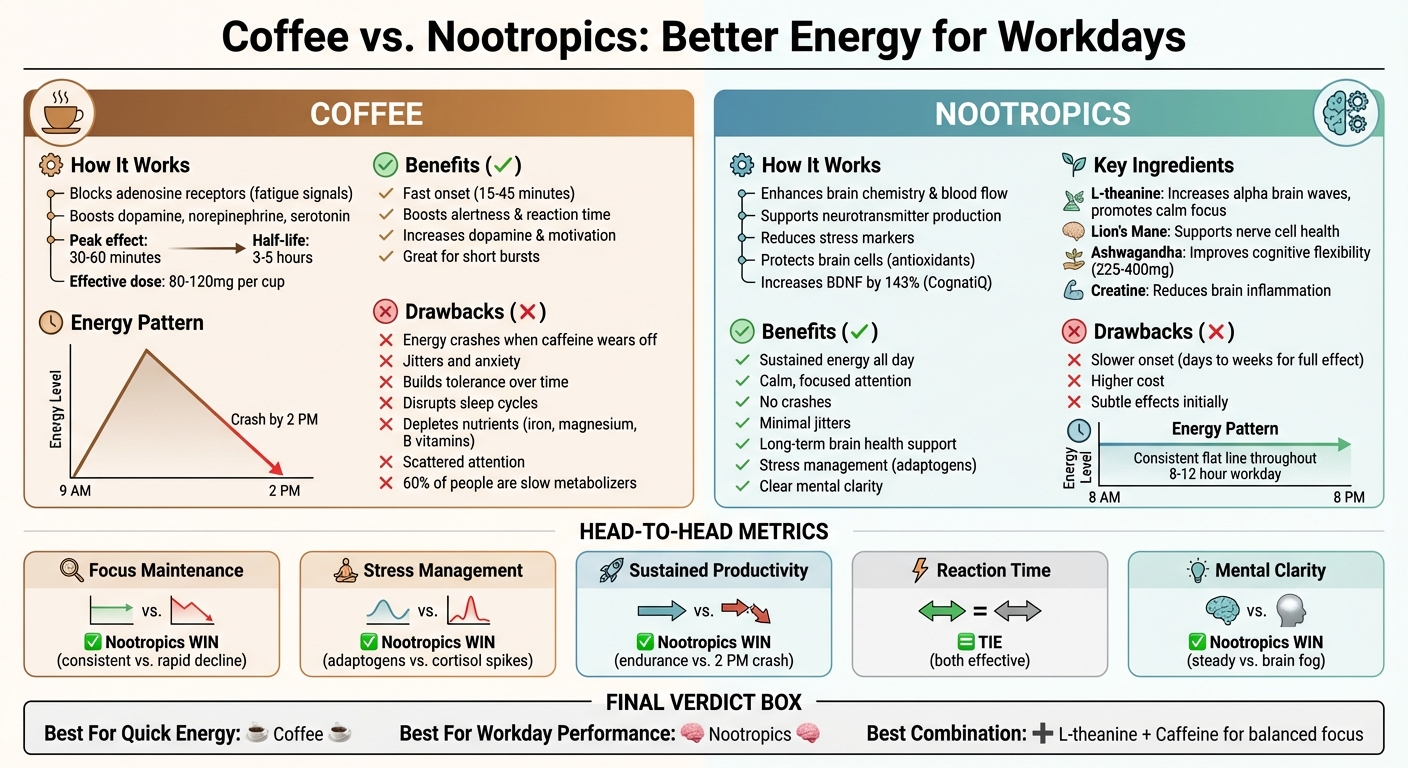
Coffee vs Nootropics: Complete Workday Performance Comparison
How Coffee Boosts Energy
The Science Behind Caffeine
Coffee works its magic by blocking your brain's natural fatigue signals. Here’s how: caffeine mimics adenosine, a neurotransmitter that builds up as you stay awake, making you feel sleepy. By blocking adenosine receptors (A1 and A2A), caffeine prevents those sleepy signals from kicking in and ramps up neurotransmitters like dopamine, norepinephrine, and serotonin. As Sergi Ferré puts it:
"Caffeine produces its motor and reinforcing effects by releasing the pre- and postsynaptic brakes that adenosine imposes on dopaminergic neurotransmission."
Caffeine hits peak levels in your system about 30 to 60 minutes after drinking and sticks around with a half-life of 3 to 5 hours. A standard cup of coffee packs 80 to 120 milligrams of caffeine, with noticeable cognitive perks starting at just 75 milligrams.
Short-Term Benefits of Coffee
Within 15 to 45 minutes of sipping coffee, you’ll likely notice sharper focus, quicker reaction times, and better task-switching. Dopamine gets a boost, which can elevate motivation. A sweet spot of 50 to 200 milligrams - roughly one to two cups - delivers a clean energy boost without tipping into overstimulation. David O Kennedy highlights:
"Caffeine modestly but consistently improves alertness and fatigue, its effects on mental performance are largely restricted to improved attention or concentration."
Common Downsides of Coffee
While coffee blocks fatigue signals, adenosine doesn’t stop building up. Once the caffeine wears off, that accumulated adenosine rushes in, leading to an energy crash. Regular coffee drinkers might also face dependence; the brain compensates for long-term caffeine use by creating more adenosine receptors, meaning you’ll need more caffeine over time to get the same kick.
Genetics plays a role, too. About 60% of people are slow caffeine metabolizers (A/C or C/C genotype), which can make the effects linger longer and amplify side effects like jitters or anxiety. Drinking coffee too late in the day? Bad idea. With caffeine’s half-life, that late-afternoon cup could interfere with your sleep and hurt your focus the next day.
Next, we’ll look at how nootropics offer a different approach to maintaining energy during long workdays.
sbb-itb-02d64da
How Nootropics Boost Energy
Understanding Nootropics
Nootropics are compounds designed to enhance memory, focus, and learning without relying on physical stimulation. Romanian psychologist Cornelius E. Giurgea introduced the term in the 1970s, combining the Greek words nӧos (thinking) and tropein (guide). These compounds improve brain function by enhancing nerve cell communication, supporting nerve cell health, and aiding in cellular energy production. This results in "usable energy" that promotes clear thinking and efficient execution - minus the jitters. Many nootropics also act as antioxidants, helping to protect brain cells from damage caused by free radicals.
Common Nootropic Ingredients
- L-theanine: Found in green tea, this amino acid increases alpha brain waves, promoting alertness and calmness. When combined with caffeine, it enhances focus and task-switching abilities. Research shows that 97 mg of L-theanine paired with 40 mg of caffeine significantly improved task accuracy and reduced distractions in young adults.
- Lion's Mane Mushroom: Known for supporting nerve cell health and cognitive function.
- Ashwagandha: A staple in Ayurvedic medicine, this plant extract has been shown to improve cognitive flexibility, reaction time, and executive function with daily doses of 225–400 mg over 30 days.
- Creatine: While often associated with sports performance, creatine may reduce brain inflammation and oxidative stress, boosting short-term memory and decreasing mental fatigue.
Advantages of Nootropics
Nootropics offer steady mental energy without the highs and lows of excessive caffeine intake. As Huberman Lab explains:
"Attention is a biological state, not a motivational one. What you consume directly shapes how long and how well you can focus."
These compounds help lower stress markers and improve mental clarity during long periods of work. Instead of scattered energy or jittery anxiety, nootropics provide calm, focused attention. This shift has led many high-performing professionals to move away from traditional coffee in favor of nootropic-enhanced beverages designed for modern cognitive demands. The emphasis now is less on strength and more on how these options enhance focus and manage stress, setting the stage for a direct comparison with coffee's energy effects.
Coffee Pros and Cons
Coffee is a go-to for a quick energy boost, thanks to its ability to block adenosine receptors in the brain. According to research published in Nutrients, caffeine enhances alertness and reaction time while increasing dopamine levels, which can temporarily lift mood and motivation. This makes it a staple for kickstarting the day, especially in high-pressure environments where speed and focus are key.
But this energy surge comes with trade-offs. Coffee can interfere with nutrient absorption and disrupt sleep patterns. The stimulation it provides often leads to jitters, anxiety, and energy crashes. In Australia, over 75% of adults consume at least one cup of coffee daily, but many report feeling "wired and tired" - mentally overstimulated yet physically drained. Coffee is known to hinder the absorption of nutrients like iron, magnesium, and B vitamins.
"Caffeine reliably improves alertness and reaction time, but its most common drawbacks, including jitters, anxiety, and energy crashes, are directly linked to unbalanced stimulation." - Nutrients
The energy crash happens because caffeine only masks tiredness - it doesn’t provide lasting energy. When the caffeine wears off, adenosine finally binds to its receptors, leading to sudden fatigue, irritability, and difficulty concentrating. Drinking coffee late in the day can also disrupt deep sleep cycles, which are essential for recovery and cognitive function. Over time, regular coffee drinkers often need higher doses to feel the same effects, as tolerance builds.
Comparison Table: Coffee Benefits and Drawbacks
Here’s a quick breakdown of coffee’s perks and pitfalls:
| Feature | Coffee (Caffeine Alone) |
|---|---|
| Onset Speed | Fast; delivers immediate stimulation to the central nervous system |
| Primary Benefits | Boosts alertness, speeds up reaction time, and elevates dopamine levels |
| Energy Duration | Short-lived; often described as a quick "buzz" requiring frequent refills |
| Crash Risk | High; can lead to fatigue, irritability, and loss of focus |
| Jitter Potential | High; linked to overstimulation of the nervous system |
| Focus Quality | May cause scattered attention rather than sustained concentration |
| Long-term Issues | Tolerance buildup, nutrient depletion, and disrupted sleep cycles |
Nootropics Pros and Cons
Nootropics offer a steady energy boost without the rollercoaster effects of coffee. Rather than just masking tiredness, they work by fine-tuning brain chemistry and supporting neurotransmitter production. This leads to what researchers describe as calm focus - a state of sustained attention without the jittery or scattered feelings coffee can bring. For example, the patented coffee fruit extract CognatiQ has been shown in clinical studies to increase BDNF levels by 143%, which promotes long-term brain health instead of just providing a quick energy fix. This distinction highlights the broader advantages of nootropics.
That said, their benefits don’t show up instantly. Many nootropic ingredients need consistent daily use over weeks to deliver noticeable effects, which might disappoint those used to the instant kick of a strong coffee. Additionally, high-quality formulas - especially those with clinical dosing - can be pricey. Understanding the specific ingredients in these blends is essential for evaluating their value. The complex blends also make it harder to pinpoint which ingredient is driving the results.
"Nootropics train your brain; caffeine just turns up the volume." - Neubrain
Nootropics shine in stress management too. Adaptogens in these supplements help balance the nervous system and avoid the cortisol spikes that coffee can trigger during stressful days. Research published in Nutritional Neuroscience found that combining caffeine with L-theanine not only improved focus and reaction time but also reduced the anxiety and jitters often linked to caffeine on its own. This balanced approach allows for sustained, focused energy without the downsides of overstimulation.
Comparison Table: Nootropics Benefits and Drawbacks
| Feature | Nootropics |
|---|---|
| Onset Speed | Gradual; some ingredients need days or weeks for full results |
| Primary Benefits | Stable energy, task-focused attention, and brain health support |
| Energy Duration | Consistent and sustained throughout the day |
| Crash Risk | Minimal or none |
| Jitter Potential | Low; adaptogens help regulate overstimulation |
| Focus Quality | Clear, calm concentration without scattered thoughts |
| Long-term Issues | Higher cost; effects may feel subtle compared to high-caffeine options |
Nootropics vs. Coffee for Workday Performance
Over the course of an 8–12 hour workday, the differences between coffee and nootropics become glaringly obvious. Coffee delivers a quick energy spike, but it often leaves you crashing by mid-afternoon.
When it comes to workday performance, nootropics take a different approach. While coffee provides an initial jolt that fades into the dreaded "2 p.m. crash", nootropics work on a deeper level. They enhance brain chemistry by improving blood flow, supporting neurotransmitter production, and keeping stress hormones in check, promoting sustained mental clarity.
Caffeine, the active ingredient in coffee, can overstimulate the nervous system and trigger cortisol release, leading to jitters and increased anxiety under stress. On the other hand, adaptogenic nootropics like whole-leaf botanicals, Lion's Mane, and Reishi help balance stress hormones and protect the brain from oxidative damage - benefits that coffee simply doesn’t offer. A 2021 study published in Nutritional Neuroscience showed that combining caffeine with L-theanine not only improved focus and reaction speed but also reduced anxiety levels.
"Caffeine will always have its place... But when your goal is sustainable focus, calm energy, and long-term brain growth, nootropics win every time." - Neubrain
For long workdays, energy consistency is key. Coffee's energy curve is often described as "sharp at 9 a.m., depleted by 2 p.m.," making it unreliable for sustained performance. Nootropics, by contrast, support the systems that coffee strains, building cognitive resilience and reducing the likelihood of dependency. This trend is reflected in a January 2026 industry analysis, which noted a surge in nootropic-enhanced beverages as professionals shift from pure stimulation to cognitive support.
Head-to-Head Table: Workday Energy Performance
Here’s how coffee and nootropics stack up when it comes to energy and focus:
| Metric | Coffee Performance | Nootropics Performance | Better Choice |
|---|---|---|---|
| Focus Maintenance | High initial spike; declines rapidly by mid-afternoon | Consistent mental clarity throughout the workday | Nootropics |
| Stress Management | Can cause jitters, anxiety, and elevated heart rate | Adaptogens help regulate the nervous system under pressure | Nootropics |
| Sustained Productivity | Effective for short bursts; prone to "2 p.m. crash" | Supports endurance and long periods of cognitive effort | Nootropics |
| Reaction Time | Boosts vigilance and short-term reaction speed | Improves attention and reaction time without overstimulation | Tie |
| Mental Clarity | Can lead to "brain fog" as effects wear off | Enhances neurotransmitter production for steady mental clarity | Nootropics |
This comparison highlights how nootropics outperform coffee when it comes to maintaining consistent focus and energy throughout demanding workdays.
Synergistic Stacks with Founders Fuel

When it comes to workday performance, the debate between nootropics and coffee often leaves people picking sides. But what if you didn’t have to? Founders Fuel offers a different path - combining carefully selected botanicals into a single formula designed for steady, reliable mental performance without the highs and lows of traditional stimulants.
Key Ingredients in Founders Fuel
Founders Fuel blends Kava, Whole Leaf Kratom, Lion’s Mane Mushroom, and L-theanine to deliver a balance of relaxation, energy, and mental clarity. Here’s how each plays a role:
- Kava: Helps ease workplace stress and tension.
- Whole Leaf Kratom: Provides smooth, clean energy without the jitters or anxiety often linked to caffeine.
- Lion’s Mane Mushroom: Supports long-term brain health and cognitive function.
- L-theanine: Promotes a calm, focused state by leveling out the stimulating effects.
This mix tackles the common pitfalls of coffee - like crashes, jitters, and heightened stress - while delivering the sustained focus many turn to nootropics for. The formula is free of artificial colors and flavors, with every ingredient undergoing thorough quality testing.
Why Founders Fuel Stands Out
Unlike coffee’s quick energy spike followed by an inevitable crash, Founders Fuel provides consistent cognitive support throughout the day. Its 2oz liquid format ensures faster absorption compared to pills or powders, and it’s produced in a GMP-certified facility for consistent quality you can trust.
For those facing demanding workdays, Founders Fuel offers a smarter, cleaner alternative to the coffee-dependency cycle. With its premium subscription model - priced at $229/month for 12 bottles (24 servings) - it’s positioned as a long-term solution for building mental resilience, not just masking fatigue. Over time, this formula supports sustainable cognitive performance, helping you stay sharp without the rollercoaster ride.
Which Provides Better Energy for Workdays?
Final Recommendation
For professionals aiming to stay sharp and steady throughout demanding workdays, nootropics clearly outshine coffee. While coffee delivers a quick energy boost, it often comes with side effects like jitters, anxiety, and the dreaded afternoon crash. Nootropics, on the other hand, provide a smoother, more sustained focus without the highs and lows.
Coffee’s benefits are mostly short-lived, whereas nootropics contribute to long-term cognitive support. Side effects are minimal when paired with ingredients like L-theanine, which helps maintain balance and calm. Founders Fuel, for example, combines Kava, Whole Leaf Kratom, Lion's Mane, and L-theanine to deliver both immediate mental clarity and long-term brain health. At $229/month through the Founders Circle subscription, it’s positioned as a serious investment in consistent performance rather than a temporary fix.
For those seeking to optimize their productivity and mental resilience, the choice is clear.
Key Takeaways
Deciding between coffee and nootropics depends on your priorities: a quick burst of energy or lasting, stable performance. Coffee is fine for short-term stimulation but often falls short during long, intense workdays. Nootropics like Founders Fuel provide consistent mental clarity, avoid caffeine’s pitfalls like crashes or anxiety, and support brain health over time. Switching to a well-balanced nootropic stack can help professionals avoid the afternoon slump and stay focused for the long haul.
FAQs
How do I know if I’m a slow caffeine metabolizer?
If you experience lingering effects like jitters, restlessness, or difficulty sleeping after having caffeine, you might be a slow caffeine metabolizer. This happens because your body processes caffeine at a slower rate, causing its stimulating effects to stick around longer than usual.
What nootropic ingredients are best for calm focus at work?
Natural nootropics that encourage relaxation without causing drowsiness can be game-changers for maintaining calm focus. Kava is known for promoting a sense of calm while supporting mental clarity. L-Theanine, often paired with caffeine, delivers focused energy without the jitters. Lion’s Mane Mushroom is linked to improved memory and mental sharpness, and Rhodiola Rosea is valued for helping to combat mental fatigue during stressful situations. These ingredients work together to create a steady, focused state of mind, perfect for staying productive throughout the day.
Can I safely combine caffeine and L-theanine?
Combining caffeine with L-theanine is considered safe for most people and can provide a balanced boost in focus and energy. L-theanine, an amino acid naturally found in tea and certain mushrooms, encourages relaxation without drowsiness. When paired with caffeine, it helps create a smoother, more steady alertness while reducing the jittery effects caffeine alone might cause. Begin with moderate amounts to gauge your personal response and minimize the risk of overstimulation.
