

Do Natural Nootropics Actually Work?
Mar 16th 2026
Natural nootropics claim to boost focus, memory, and mood using plant-based compounds. But do they deliver? The short answer: sometimes, but not for everyone. Research shows small improvements in cognitive tasks like memory recall and reaction speed, but the effects depend on the ingredient, dosage, and consistency. Popular options like Bacopa monnieri, Lion’s Mane, and L-Theanine have some evidence backing their use, though benefits typically take weeks of regular use to appear.
Key Points:
- Bacopa Monnieri: May improve memory recall after 8–12 weeks (300–450 mg/day).
- Lion’s Mane Mushroom: Supports nerve growth; short-term focus benefits and long-term brain health (1.8–3 g/day).
- L-Theanine + Caffeine: Boosts focus and calmness with quick results (e.g., 200 mg L-Theanine + 100 mg caffeine).
However, studies often have small sample sizes and inconsistent findings. Natural nootropics are safer than synthetic options like Adderall but work slower and with less impact. Quality matters - look for standardized, third-party-tested products. Pair supplements with good sleep, exercise, and nutrition for the best results.
Bottom Line: Natural nootropics can help, but they’re not magic pills. They work gradually and are best as part of a healthy lifestyle.
Nootropics: Bacopa, Ginkgo, & Lion’s Mane | Natural Medicines: Evidence in Practice Podcast
sbb-itb-02d64da
What Are Natural Nootropics and How Do They Work?
Natural nootropics are compounds derived from plants, herbs, or fungi that aim to support brain health, memory, focus, and mood. Unlike synthetic nootropics, which are lab-created and often used to treat conditions like ADHD or narcolepsy, natural nootropics come from botanicals and draw inspiration from systems like Ayurveda and Traditional Chinese Medicine.
The key difference lies in their composition. Natural nootropics are packed with complex phytochemicals - like polyphenols, terpenoids, and saponins - that act on multiple pathways at once. Synthetic options, on the other hand, tend to rely on a single molecule targeting a specific receptor. Martha Farah, PhD, Director of the Center for Neuroscience & Society, puts it simply:
"A nootropic is any substance believed to enhance mental function. They range from nutritional supplements to synthetic products made by pharmaceutical companies."
Let’s break down how these natural compounds influence brain function.
How They Affect Brain Function
Natural nootropics improve brain performance through several mechanisms. They enhance cerebral blood flow, ensuring the brain gets more oxygen and glucose, which are critical for energy and focus. For example, SPECT imaging has shown that standardized ginkgo extracts can increase blood flow in specific brain regions by 20–50%.
These compounds also regulate neurotransmitters like acetylcholine, dopamine, serotonin, and GABA, which are vital for memory, learning, and relaxation. Bacopa monnieri, for instance, slows down the breakdown of acetylcholine while other components supply the building blocks needed for neurotransmitter production.
Additionally, natural nootropics provide long-term benefits by protecting neurons. They combat oxidative stress, reduce inflammation, and support mitochondrial health. Some even stimulate growth factors like Nerve Growth Factor (NGF) and Brain-Derived Neurotrophic Factor (BDNF), which are essential for repairing and connecting brain cells. Ingredients with adaptogenic properties also help manage stress by modulating the HPA axis.
Now, let’s look at some specific examples of natural nootropic ingredients and their effects.
Common Ingredients in Natural Nootropics
Lion's Mane Mushroom is known for stimulating NGF production, which supports brain cell regeneration and overall brain health. Professor Frédéric Meunier from the University of Queensland noted:
"Neurons are extremely sensitive and easily die in culture, but with the Lion's mane mushroom extract, they were super happy, growing long and branched neurites and making new contact."
Bacopa monnieri, a staple in Ayurvedic medicine, has shown measurable benefits in cognitive performance. A meta-analysis involving 518 participants reported an 18-ms faster response on attention tests and an 11-ms improvement in reaction time. Clinical studies on the Bacopa extract BacoMind also found a 78% improvement in delayed memory recall, though results typically require 8–12 weeks of consistent use.
L-Theanine, found in green tea, promotes a calm yet alert mental state by increasing dopamine and serotonin levels while encouraging alpha-brain wave activity. When paired with caffeine in a 2:1 ratio, it enhances focus without causing jitters or energy crashes.
These examples highlight how natural nootropics work through diverse pathways to support cognitive health and performance.
What Does the Science Say About Natural Nootropics?
Studies suggest natural nootropics may improve memory, processing speed, and attention, though the results depend heavily on the specific ingredient and type of research conducted.
Human Studies vs. Animal Studies
Animal research shows that Lion's Mane might boost NGF (nerve growth factor) production and provide neuroprotection. However, findings from animal models often don’t translate directly to humans. Human clinical trials remain the gold standard for understanding how these substances affect cognition, as they account for the complexities of human biology.
One such study, conducted at the University of Surrey, involved 18 healthy adults taking 3g of Lion's Mane fruiting body extract. While global cognitive performance didn’t change, participants showed improved psychomotor skills on the Grooved Pegboard Test just 90 minutes after the dose. This highlights how natural nootropics may provide task-specific enhancements rather than broad cognitive boosts.
Cognitive Functions with Evidence of Benefits
Human trials provide more focused insights into how natural nootropics affect specific cognitive functions. For instance, a 2025 network meta-analysis covering 27 trials (2,334 participants) identified Polygala tenuifolia (RPTW) as the most effective extract for global cognition, with a 95.9% probability. The combination of Cistanche and Ginkgo biloba performed best for memory (89.3%) and executive function (96.9%).
A December 2023 study by the Center for Applied Health Sciences examined the effects of a single 650mg dose of Guayusa extract. Participants reported improved working memory, faster reaction times, and greater mental clarity within 1-2 hours of ingestion.
Similarly, a 90-day trial at Northumbria University tested a multi-ingredient supplement containing Bacopa, Turmeric, and Rosemary on 128 older adults with subjective memory decline. Results showed faster cognitive task performance, which Dr. Emma Wightman attributed to increased dopaminergic activity:
"A multi-ingredient herbal supplement increases speed of cognitive task performance and increased metabolism of tyrosine suggests that this is modulated by increased dopaminergic activity."
Challenges and Gaps in Research
Despite encouraging findings, there are notable limitations. Many studies rely on small sample sizes, sometimes fewer than 50 participants, making the results less definitive. Additionally, most research focuses on older adults or those with cognitive impairments, leaving a gap in data for younger, healthy individuals. The lack of standardized extracts also complicates comparisons between studies.
For professionals seeking targeted cognitive enhancements without the intensity of synthetic options, these findings offer intriguing possibilities, though further research is needed to confirm and expand upon current evidence.
Which Natural Nootropics Have the Strongest Research Support?
When it comes to natural compounds with cognitive benefits, only a handful have been rigorously studied and show measurable effects on memory, processing speed, and stress management. Here’s a closer look at the most well-supported options.
Bacopa Monnieri
Bacopa Monnieri stands out as one of the most studied natural nootropics, particularly for its impact on memory recall. A systematic review found that Bacopa enhanced performance in 9 out of 17 tests focused on memory free recall, though its effects on other cognitive functions were less consistent. To see results, a daily dose of 300–450 mg of standardized extract over at least 12 weeks is recommended.
A 2025 study involving 101 participants aged 40–70 tested 300 mg of Bacopa extract (Bacumen®) daily for 12 weeks. While verbal learning and attention showed no significant changes, participants reported lower stress reactivity (p = 0.03) and reduced fatigue after mentally demanding tasks. Be aware of potential digestive side effects, including nausea or increased stool frequency.
Lion's Mane Mushroom
Lion's Mane Mushroom has gained attention for its ability to stimulate Nerve Growth Factor, which supports neuroplasticity and myelin health. Research highlights both immediate and long-term benefits. In a 2023 randomized, double-blind trial with 41 healthy adults (average age 22.7), a single 1.8-gram dose improved cognitive processing speed on the Stroop task by 6.7% within an hour. Additionally, 28 days of daily use reduced subjective stress levels by 18.7%.
For older adults with mild cognitive impairment, 3 grams of Lion's Mane powder daily over 16 weeks led to steady cognitive improvements at 8, 12, and 16 weeks. However, these benefits disappeared within 4 weeks of stopping supplementation. Suggested dosages range from 1.8 grams for short-term cognitive boosts to up to 3.2 grams daily for ongoing neuroprotection.
Kava and Whole Leaf Kratom
While Kava and Whole Leaf Kratom are traditionally used for relaxation and focus, their clinical support is not as strong as Bacopa or Lion's Mane. These botanicals indirectly enhance cognitive performance by calming the mind and reducing anxiety, creating a state conducive to focus and productivity. However, the lack of standardized extracts and controlled trials targeting specific cognitive outcomes limits their scientific validation.
For those seeking a balanced approach, Founders Fuel offers a blend combining Kava, Whole Leaf Kratom, Lion's Mane, and L-theanine, designed to promote mental clarity and stress resilience.
Natural vs. Synthetic Nootropics: How Do They Compare?
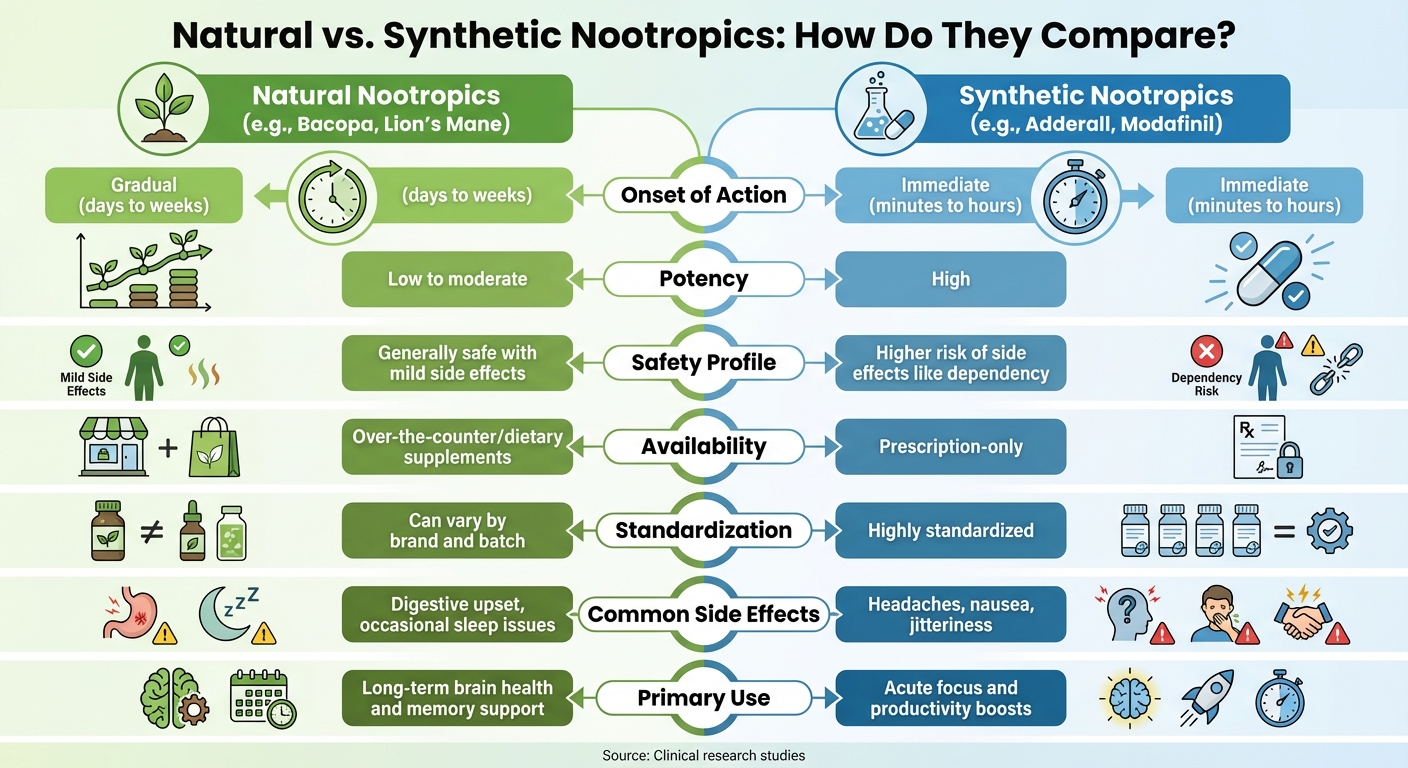
Natural vs Synthetic Nootropics: Safety, Effectiveness & Cost Comparison
When weighing natural nootropics against synthetic ones, the distinction often boils down to how quickly they act and the nature of their effects. Synthetic nootropics like Modafinil and Adderall are engineered for rapid, noticeable impact - often kicking in within minutes or hours. On the other hand, natural options such as Bacopa or Lion's Mane take their time, with benefits typically emerging over days or weeks. Dr. Daryl Bem notes that while synthetics are "more potent and effective," they often come with a higher risk of side effects and limited accessibility.
Safety is another critical factor. Natural nootropics usually bring mild issues like digestive discomfort or occasional sleep disturbances. However, even some botanicals, such as Ginkgo biloba, can pose risks - like increasing bleeding when paired with blood thinners like warfarin. Synthetic alternatives, while potent, are more likely to cause headaches, nausea, jitteriness, and, in some cases, dependency.
Regulation and consistency highlight another divide. Synthetic nootropics are tightly regulated pharmaceuticals, requiring prescriptions and undergoing rigorous standardization. Natural nootropics, categorized as dietary supplements, face less stringent FDA oversight, leading to variability in quality and potency. This makes third-party testing a key consideration when choosing natural options.
Cost and accessibility often favor natural nootropics. These are widely available over-the-counter and tend to be more affordable. In contrast, synthetics usually require a prescription, involve medical consultations, and can be more expensive. For those seeking long-term cognitive support with fewer risks, premium blends like Founders Fuel - which combine botanicals such as Kava, Whole Leaf Kratom, Lion's Mane, and L-theanine - offer a thoughtful balance. These formulations aim to deliver sustained mental clarity while prioritizing safety and affordability.
Comparison Table: Natural vs. Synthetic Options
| Feature | Natural Nootropics (e.g., Bacopa, Lion's Mane) | Synthetic Nootropics (e.g., Adderall, Modafinil) |
|---|---|---|
| Onset of Action | Gradual (days to weeks) | Immediate (minutes to hours) |
| Potency | Low to moderate | High |
| Safety Profile | Generally safe with mild side effects | Higher risk of side effects like dependency |
| Availability | Over-the-counter/dietary supplements | Prescription-only |
| Standardization | Can vary by brand and batch | Highly standardized |
| Common Side Effects | Digestive upset, occasional sleep issues | Headaches, nausea, jitteriness |
| Primary Use | Long-term brain health and memory support | Acute focus and productivity boosts |
Safety and Potential Side Effects
Start with a low dose and increase gradually to help your body adjust. Common side effects include headaches, nausea, diarrhea, insomnia, fatigue, anxiety, and a rapid heartbeat. In a 12-week study on Bacopa monnieri (300 mg daily), participants reported dry mouth (23% vs. 16% in placebo), palpitations (18% vs. 8%), and nausea (18% vs. 4%). Even mild side effects should be monitored.
Timing matters - stimulants or adaptogens like Rhodiola are best taken early in the day to avoid disrupting sleep. If you experience digestive issues, take supplements with food. For fat-soluble compounds like curcumin, pairing with piperine can boost absorption by up to 2,000%. Cycling usage (e.g., five days on, two days off) may help prevent tolerance.
"More is never better with nootropics. Ever! Taking higher than recommended doses of a nootropic can often be toxic to your brain." – David Tomen, Founder, Nootropics Expert
Quality control is key to minimizing risks. Dietary supplements face less FDA oversight than pharmaceuticals, making potency and purity inconsistent. Look for products verified by independent organizations like USP, NSF International, or Informed Sport. Standardized extracts - such as Bacopa monnieri with 45–55% bacosides or Ginkgo biloba with 24% flavone glycosides and 6% terpene lactones - offer consistent results. Avoid proprietary blends that obscure ingredient amounts, as this complicates troubleshooting side effects. Products from GMP-certified facilities, like Founders Fuel, follow strict protocols to reduce contamination and batch inconsistencies.
Dosage and Standardization
Proper dosing ensures effective supplementation while minimizing side effects. Standardized extracts provide consistent concentrations of active compounds. For example, Rhodiola rosea should contain 3% rosavins and 1% salidroside, while saffron extracts typically require 28–30 mg daily. Without standardization, some manufacturers may compensate for low-quality materials by increasing dosages to unsafe levels. Always request a Certificate of Analysis (CoA) to confirm purity and potency. Steer clear of products with unnecessary fillers. High-quality standardized nootropic extracts generally cost $25–$50 per bottle; suspiciously low prices often indicate poor-quality ingredients. Track changes in mood, sleep, and digestion when trying a new supplement to assess its effects.
Drug Interactions and Health Conditions
Natural nootropics can interact with medications and health conditions, so caution is essential. For instance, Ginkgo biloba and Panax ginseng can increase bleeding risk when combined with blood thinners like warfarin, aspirin, or clopidogrel. Kava may worsen Parkinson’s symptoms and should not be used with antipsychotics or levodopa. Bacopa monnieri can interfere with anticholinergic drugs and Alzheimer’s medications. Diabetics should avoid Panax ginseng, which can dangerously alter blood sugar levels when combined with glucose-lowering medications.
Around 70% of people using herbal remedies don’t inform their doctors, creating potential blind spots in care. Share a full list of supplements with your healthcare provider, especially if you have cardiovascular, psychiatric, or endocrine conditions. If surgery is planned, stop all nootropics 2–3 weeks beforehand to avoid complications like altered heart rate, blood pressure, or bleeding. Creatine monohydrate may pose risks for those with kidney issues, and Bacopa can increase bowel movements in about 20–30% of users. Introduce one nootropic at a time over 2–3 weeks to identify possible side effects. Discontinue use immediately if you experience a rapid heartbeat, palpitations, or allergic reactions like rash or swelling.
| Herbal Nootropic | Drug Interactions | Health Risks |
|---|---|---|
| Ginkgo biloba | Aspirin, Warfarin, Vitamin E | Spontaneous bleeding, ocular hemorrhage |
| Kava | Alcohol, Sedatives, Antipsychotics | Sedation, worsened Parkinson’s symptoms |
| Panax Ginseng | Warfarin, MAOIs, Insulin | Bleeding risk, blood sugar fluctuations |
| Bacopa monnieri | Anticholinergic drugs, Alzheimer’s meds | Cognitive medication interference |
How to Use Natural Nootropics for Best Results
Getting the most out of nootropics means paying attention to dosing, timing, and setting realistic goals.
Dosing Protocols
Start with standardized extracts to ensure consistency and effectiveness. For instance, Bacopa monnieri (45–55% bacosides) and Ginkgo biloba (24% flavone glycosides) are well-researched options. Begin with the lowest dose and increase gradually to find what works for you.
Some nootropics require specific pairings for better absorption. Fat-soluble compounds like Curcumin work best when combined with healthy fats or piperine. Others, like L-Tyrosine, are more effective on an empty stomach . To avoid building tolerance, rotate stimulants and adaptogens. For example, take a caffeine break for one week each month or cycle Panax Ginseng with a 6–8 week use period followed by a 2-week break. Introduce new nootropics slowly - one every 2–3 weeks - to monitor their effects and side effects.
Once dosing is set, timing becomes key.
Timing and Ingredient Combinations
Timing your nootropics can amplify their benefits. Stimulants like caffeine, Rhodiola rosea, and L-Tyrosine are best taken in the morning to early afternoon, with your last dose at least 6–8 hours before bed to avoid sleep disruption. On the other hand, calming agents like magnesium and L-theanine are ideal 1–2 hours before bedtime to aid relaxation and recovery.
For sustained cognitive support, split dosing can help - take a full dose in the morning and a smaller dose in the early afternoon. Pre-task dosing is another strategy; take nootropics 1–2 hours before mentally demanding activities to give them time to absorb. For example, caffeine peaks within 30–60 minutes and has a half-life of about 5 hours, while L-theanine starts working in roughly an hour.
The caffeine and L-theanine combo, often in a 2:1 ratio (e.g., 200 mg L-theanine with 100 mg caffeine), is particularly effective. Studies show it can improve task accuracy by about 15% and reaction time by around 12%. Products like Founders Fuel combine ingredients like Kava, Whole Leaf Kratom, Lion's Mane Mushroom, and L-theanine to promote focus and mental clarity.
Setting Realistic Expectations
Don’t expect instant results from most natural nootropics. While caffeine and L-theanine may deliver noticeable effects within an hour, adaptogens like Ashwagandha and Bacopa monnieri require consistent use over weeks or months. For instance, Bacopa monnieri often takes 8–12 weeks of daily use to significantly improve memory. Similarly, Citicoline has been shown to enhance memory performance by 23% and extend focus duration by 18% after 12 weeks at a daily dose of 500 mg.
"Most nootropics do not have an immediate effect after a single dose, and therefore long-term use is necessary to achieve the desired results." – Matěj Malík, Department of Agroenvironmental Chemistry and Plant Nutrition
Track your regimen daily, noting dosage, timing, sleep quality, and mood. Review progress every four weeks and use tools like the Digit Symbol Substitution Test to objectively measure cognitive improvements. Pair your nootropic routine with good sleep, regular exercise, stress management, and a balanced diet for the best results.
Conclusion: Do Natural Nootropics Actually Work?
Yes - but with some important nuances. Research indicates that natural nootropics can provide small but measurable improvements in areas like memory, focus, and attention. For example, pairing L-theanine with caffeine has been shown to improve task accuracy by 15% and reaction time by 12%, while Citicoline can enhance memory by 23% and extend focus duration by 18% after consistent use over 12 weeks. These results highlight that while benefits exist, they are incremental rather than transformative.
Natural nootropics tend to deliver results gradually, requiring consistent use. For instance, Bacopa monnieri often takes 8–12 weeks to show noticeable effects. As Dr. Sheridan Walter, MBChB, explains:
"While nootropics may play a small role in optimizing cognitive function, they should be viewed as part of a holistic approach to brain health rather than a magical shortcut to enhanced intelligence."
The quality of the product is critical. Since the supplement industry lacks stringent regulation, it's vital to select products with standardized extracts, third-party testing, and GMP certification. High-quality options, like Founders Fuel, combine ingredients such as Kava, Whole Leaf Kratom, Lion's Mane Mushroom, and L-theanine in a GMP-certified facility, ensuring both safety and effectiveness.
For the best results, natural nootropics should complement a healthy lifestyle. Prioritizing sleep, exercise, stress management, and a balanced diet amplifies their subtle cognitive benefits. When combined with these practices, natural nootropics can provide consistent and meaningful support for cognitive performance over time.
FAQs
How do I know which nootropic is right for me?
To pick the right nootropic, start by defining what you want to achieve - better focus, less stress, or sharper memory. For instance, L-Theanine + Caffeine offers steady focus, while Lion’s Mane Mushroom is often linked to memory support. Begin with a single option, monitor how it affects you over 4–6 weeks, and combine it with good sleep, a balanced diet, and stress control. Seeking advice from trusted sources or a healthcare professional can provide extra guidance.
What’s the safest way to start taking nootropics?
The best way to begin with nootropics is to stick to natural options that have been thoroughly studied and follow established guidelines. Begin with a small dose, pay attention to how your body reacts, and give it 4–6 weeks to notice any changes. Combine nootropics with healthy habits like getting enough sleep, eating a balanced diet, and managing stress effectively. Always consult a healthcare provider beforehand, especially if you have existing medical conditions or are on other medications.
How can I tell if a nootropic is high quality?
To spot a top-notch nootropic, focus on natural ingredients like Lion’s Mane or Ginkgo biloba that have solid research backing. Make sure the product comes from trusted suppliers, adheres to safety standards, and provides clear, transparent labeling with third-party testing results. Prioritize products with science-backed claims and genuine positive feedback from users or experts who note noticeable benefits without harmful side effects.
