

The Natural Alternative to Prescription Stimulants: A Founder's Guide
Jan 6th 2026
Prescription stimulants like Adderall and Ritalin might seem like productivity hacks, but they come with heavy baggage: addiction risks, anxiety, insomnia, and energy crashes. Instead of riding the stimulant rollercoaster, many are turning to natural options like Kava, Whole Leaf Kratom, Lion’s Mane Mushroom, and L-Theanine. These botanicals offer a smoother, more sustainable way to stay focused and energized - without the harsh side effects.
Here’s the breakdown:
- Kava: Promotes calm focus by interacting with GABA receptors. Best for stress relief without drowsiness.
- Whole Leaf Kratom: Provides energy and focus at low doses. Strain matters - white for energy, green for balance, red for relaxation.
- Lion’s Mane Mushroom: Supports long-term brain health by boosting Nerve Growth Factor (NGF).
- L-Theanine: Sharpens focus and reduces caffeine jitters by increasing alpha brain waves.
To make these work for you, start with low doses, rotate supplements to avoid tolerance, and pair them with healthy habits like proper sleep and nutrition. Always source from GMP-certified suppliers and consult a healthcare provider if you’re on medications. Remember: these aren’t miracle solutions but tools for steady, consistent support.
Why Prescription Stimulants Fall Short
Addiction Risks and Common Side Effects
Prescription stimulants mess with your brain's reward system in a way that can feel like a shortcut to motivation. According to research from Washington University School of Medicine, these drugs "pre-reward" your brain, making even the dullest tasks seem oddly satisfying. Nico U. Dosenbach, MD, PhD, Professor of Neurology, puts it plainly:
"Essentially, we found that stimulants pre-reward our brains and allow us to keep working at things that wouldn't normally hold our interest - like our least favorite class in school, for example."
The catch? Your brain can start depending on that artificial boost to feel motivated, which opens the door to psychological dependency. And for many people, the trade-offs aren’t worth it. Around 20% to 30% of users either don't see results or can't deal with the side effects. These side effects are no joke - they range from a racing heart and stomach issues to jitters, anxiety, and serious sleep problems. This shaky reward system also sets the stage for a rollercoaster energy pattern, which we’ll dive into next.
The Energy Spike and Crash Pattern
Stimulants are notorious for their quick, dramatic effects. They kick in within 30–60 minutes, delivering a sharp energy boost. But when they wear off, they leave users crashing hard. This "peaks and valleys" cycle can wreck long-term productivity. During the crash, it’s common to feel mentally sluggish, physically drained, and unable to focus. For some, the solution seems to be taking more frequent or higher doses, which only deepens the problem.
Matthew Howe, PMHNP-BC, explains the mechanism behind this: "Adderall increases dopamine and norepinephrine levels in the brain, impacting focus and attention." While this spike might help in the short term, it’s a fragile fix that undermines stable, consistent productivity.
In contrast, natural options offer a smoother ride. Instead of the dramatic highs and lows of synthetic stimulants, compounds like theobromine provide steady, relaxed energy that lasts without the crash.
sbb-itb-02d64da
Do Adaptogens and Nootropics Actually Work? (What the Science Says)
Natural Botanical Alternatives for Focus and Energy
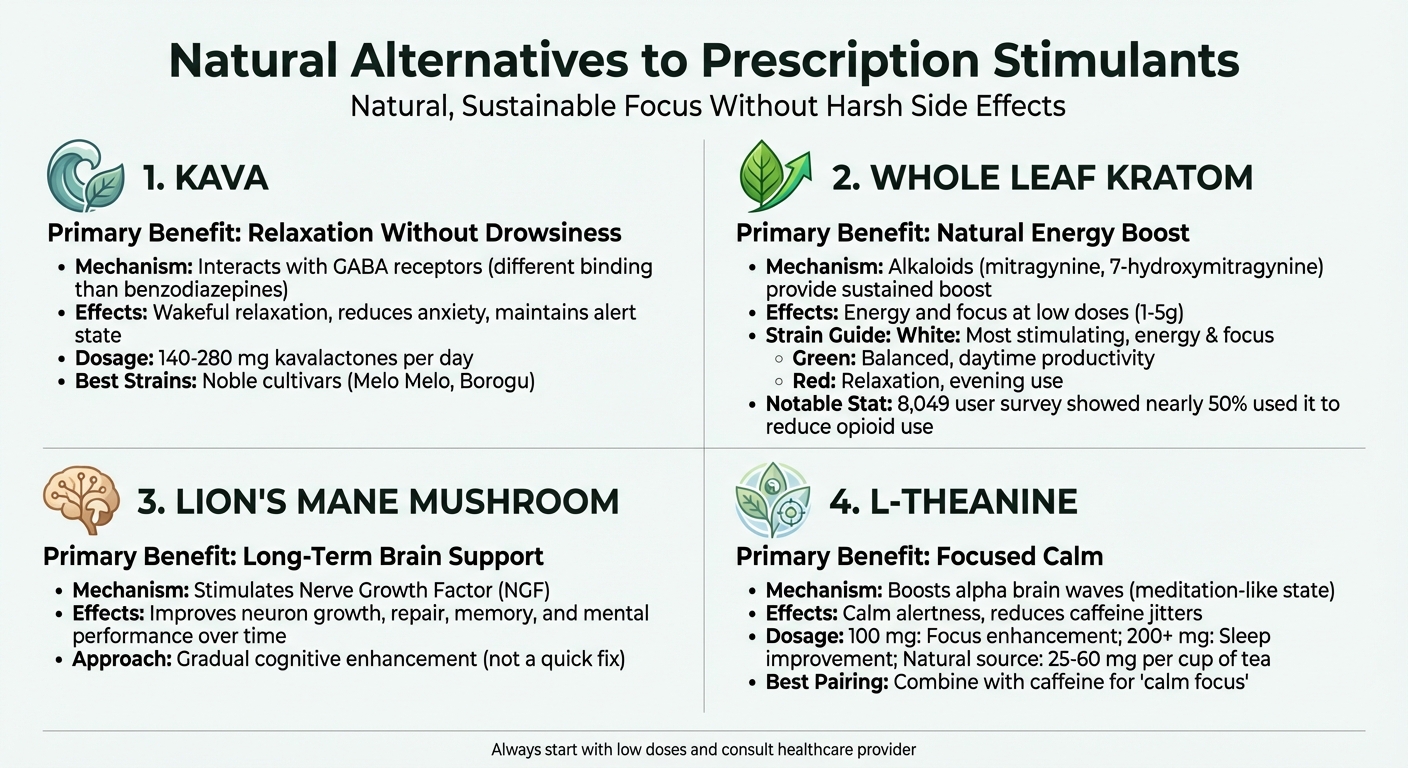
Natural Alternatives to Prescription Stimulants: Benefits and Dosage Guide
Synthetic stimulants often come with a host of issues - unpredictable highs, crashes, and potential dependency. For those seeking a more balanced approach, nature offers a range of botanicals that work harmoniously with your brain's natural chemistry. These alternatives provide steady support for mental clarity and energy, catering to individual needs with unique benefits, whether it's stress relief, enhanced focus, or sustained alertness.
Kava: Relaxation Without Drowsiness
Kava is renowned for inducing "wakeful relaxation," a state of calm without sedation. It achieves this by interacting with GABA receptors in a way that's different from benzodiazepines. Dr. Robert Ashley, an internist and assistant professor at UCLA, explains:
"Kava can help reduce anxiety... kava binds to a different GABA receptor than benzodiazepines... This aspect may make kava less addictive than these other medications."
The plant's active compounds, known as kavalactones, also slow the reuptake of dopamine and noradrenaline, which helps maintain a relaxed yet alert state. For safety, it’s best to stick with water-based preparations to avoid rare liver-related issues linked to solvent-based extracts. Clinical studies suggest doses of 140–280 mg of kavalactones per day for anxiety relief. Additionally, selecting the right strain matters - Noble cultivars like Melo Melo or Borogu are ideal for reducing stress, while Tudei strains may cause side effects like nausea and headaches.
Whole Leaf Kratom: Natural Energy Boost
Whole Leaf Kratom offers a natural way to enhance energy and focus, particularly at doses of 1–5 grams. Historically used for combating fatigue, its key alkaloids - mitragynine and 7-hydroxymitragynine - provide a smooth, sustained boost without the sharp neurotransmitter spikes seen with synthetic stimulants.
The strain you choose significantly influences the effect. White strains are the most stimulating, ideal for heightened energy and focus. Green strains provide a balanced boost, making them great for daytime productivity, while red strains lean toward relaxation and pain relief, better suited for unwinding in the evening. As Super Speciosa describes:
"Reds are for relaxation. Greens are for energy. Whites are viewed as hybrids for both energy and focus."
Interestingly, a survey of 8,049 users revealed nearly half reported using kratom to reduce or stop opioid use. However, keep in mind that higher doses (5–15 grams) can shift the effects from stimulating to sedating, so precise dosing is crucial.
Lion’s Mane Mushroom: Long-Term Brain Support
Lion’s Mane mushroom takes a more gradual approach to cognitive enhancement. It stimulates Nerve Growth Factor (NGF), a protein critical for neuron growth and repair. By encouraging axon growth, it improves the speed and efficiency of nerve signals, which can aid memory and sustained mental performance over time. Unlike quick fixes, this mushroom offers a steady path toward better brain function.
L-Theanine: Focused Calm
L-Theanine is an amino acid that promotes a calm yet alert mental state. It works by boosting alpha brain waves, which are associated with relaxation and focus - similar to the effects of meditation. Found naturally in tea, a single cup contains 25–60 mg, but doses of 100 mg are effective for sharpening focus. Higher amounts (200 mg or more) are often used to improve sleep.
When paired with caffeine, L-Theanine creates a balanced state of "calm focus," enhancing reaction time and attention while reducing the jitteriness caffeine alone can cause. This combination is perfect for those seeking alertness without the edge.
How to Add Natural Alternatives to Your Daily Routine
Incorporating botanical supplements into your daily life isn't just about swapping out one product for another. It’s about creating a thoughtful routine that includes proper dosing, timing, and healthy habits. The goal is to find what works best for you while minimizing side effects and avoiding tolerance buildup. This approach complements earlier discussions on natural alternatives.
Start Small and Adjust Slowly
When trying out a new botanical, always begin with a low dose. For instance, if you’re using Kratom, start with just 1–2 grams rather than jumping to a full 5-gram serving. Similarly, for Kava-based drinks, begin with half a bottle to see how your body reacts. This gradual method helps you monitor your response and reduces the risk of side effects like nausea or dry mouth.
Smaller doses can offer an energizing effect, while larger amounts may cause sedation. Adjust your intake over several days to find the right balance - enough to provide steady energy without causing jitters or drowsiness.
Pair with Healthy Lifestyle Habits
Botanicals work best when they’re part of a broader commitment to health. They’re not a replacement for good sleep, stress management, or balanced nutrition. For example, pairing supplements with protein-rich meals - like lean meats, eggs, fish, beans, or nuts - can help support neurotransmitter production, including dopamine and norepinephrine.
Staying hydrated and sticking to a consistent sleep schedule also play a big role in enhancing the benefits of these supplements. A 2021 study on Bacopa monnieri found that participants who took 150 mg twice daily for 12 weeks showed significant improvements in memory and processing speed. These results highlight the importance of consistent, long-term use alongside a healthy lifestyle, rather than relying on sporadic doses. This kind of integration sets the stage for sustained effectiveness.
Rotate to Avoid Tolerance
To maintain the effectiveness of botanicals, it’s crucial to avoid building tolerance. Over time, your body can adapt to stimulants, making them less effective. One way to counter this is by rotating your supplements. For example, you might take "breaks" on weekends or during periods of lower demand to allow your brain’s receptors to reset.
You can also alternate between different botanicals. For instance, use Kratom on busier days and switch to L-Theanine with caffeine on lighter ones. This strategy helps prevent tolerance buildup and ensures your supplements continue to support focus and energy over the long term. Considering that around 10–16 million Americans use Kratom, mindful and varied usage is key to getting the most out of these natural options.
Safety Guidelines and Legal Status
Using botanical supplements wisely means sticking to reliable quality standards and understanding the legal regulations that keep you safe.
Quality Standards and Third-Party Testing
When buying supplements, choose suppliers certified under GMP (Good Manufacturing Practice) and always ask for a Certificate of Analysis. This document confirms the product’s purity, potency, and absence of harmful contaminants. GMP certification guarantees that products are manufactured under strict quality protocols. Additionally, look for companies that test every batch in ISO/IEC 17025-accredited labs. These labs are qualified to check for issues like heavy metals, bacteria, and other contaminants accurately.
The American Kratom Association has introduced a voluntary GMP Standards Program specifically for kratom. This initiative fills a gap, as the FDA hasn’t established formal regulations for kratom. To minimize risks, opt for whole-leaf products instead of extracts or synthetic alternatives.
It’s worth noting that kratom can inhibit the CYP2C9 enzyme, which may increase the toxicity of certain medications like midazolam (a sedative) or quetiapine (an antipsychotic). This makes it even more critical to choose products that have undergone reliable third-party testing.
Once you’ve ensured quality, understanding the legal framework for these botanicals is the next step.
U.S. Legal Status of Botanical Supplements
The legal landscape for botanical supplements varies widely. Kava is legal across all 50 states, with no federal or state restrictions. Kratom, on the other hand, presents a more complicated picture. While legal at the federal level, the DEA classifies it as a "drug of concern" but has not scheduled it as a controlled substance.
State laws can be stricter. Six states - Alabama, Arkansas, Indiana, Rhode Island, Vermont, and Wisconsin - have banned kratom outright. Louisiana will join this list on August 1, 2025, making kratom illegal there as well. Even in states where kratom is legal, local bans may apply, such as in San Diego, California, or Sarasota County, Florida.
Several states have adopted the Kratom Consumer Protection Act (KCPA), which establishes guidelines for testing, labeling, and age restrictions. Depending on local regulations, the minimum age for purchasing kratom usually ranges from 18 to 21 years.
| Botanical | Federal Status | State Restrictions | Typical Regulations |
|---|---|---|---|
| Kava | Legal / Dietary Supplement | Legal in all 50 states | Generally unregulated; some retail age limits |
| Kratom | Legal / "Drug of Concern" | Banned in 6 states | Age restrictions (18+/21+), KCPA testing requirements |
When to Consult Your Doctor
Before starting any botanical supplement, it’s wise to talk to your healthcare provider, especially if you have pre-existing conditions or take prescription medications. This is particularly crucial for kratom, which can interact with commonly prescribed drugs. The FDA has not approved kratom as safe or effective for medical use and has, at times, seized shipments labeled as dietary supplements.
If you notice any unusual side effects, stop using the supplement and consult your doctor. While around 1.7 million people aged 12 or older in the U.S. reported using kratom in 2021, individual reactions can vary significantly. A healthcare professional can help you assess potential risks based on your unique health needs.
Conclusion
Natural botanicals, when used thoughtfully, provide a compelling option for maintaining mental performance without the downsides of prescription stimulants. Botanicals like kava for easing stress, kratom for boosting energy, and lion's mane for supporting cognitive function each bring distinct benefits to the table, helping users stay productive naturally. In fact, approximately 72% of users express confidence in the safety and quality of botanical products.
These plant-based options often come with lower toxicity compared to synthetic alternatives, making them a safer choice when used responsibly. As Matěj Malík from the Department of Agroenvironmental Chemistry and Plant Nutrition explains:
"Natural nootropics also usually have lower toxicity, which reduces the possibility of harm from an overdose."
However, success with these supplements requires a disciplined approach. Proper dosing and sourcing are non-negotiable for achieving and sustaining results. Starting with low doses from GMP-certified, third-party tested suppliers is key, and it’s important to allow 2–4 weeks to observe consistent improvements. To avoid building tolerance, consider rotating supplements and pairing them with healthy habits like good sleep, regular exercise, and balanced nutrition.
Always consult a healthcare provider before adding any new supplement to your routine, especially if you’re on prescription medications. By understanding both the potential and the limits of these natural alternatives, you can make smarter choices that promote long-term performance and overall well-being.
FAQs
How do natural options like Kava and Kratom stack up against prescription stimulants for focus and energy?
Natural options like Kava and Kratom can offer mild support for focus and energy, but their effects are generally less pronounced and more variable compared to prescription stimulants. Kava is often associated with its calming effects, which might help with mental clarity indirectly, though it’s not known for being energizing. Kratom, on the other hand, has a history of traditional use for reducing fatigue and providing a mild energy boost, sometimes mimicking stimulant-like effects.
Unlike prescription stimulants, which are supported by extensive clinical research and deliver consistent results for focus and alertness, Kava and Kratom are backed mainly by anecdotal accounts and preliminary studies. These natural alternatives might appeal to those seeking a gentler option, but their safety and effectiveness can differ greatly depending on the individual and the product.
What should I know about the safety of natural supplements for focus and energy?
When turning to natural supplements for focus and energy, quality matters more than anything else. Unlike prescription drugs, most botanicals hit the shelves as dietary supplements without FDA pre-approval for purity or potency. This leaves room for some products to sneak in fillers or list inaccurate ingredient amounts. To stay safe, stick with brands that provide third-party testing and confirm the active ingredients on their labels.
Dosage and side effects deserve just as much attention. Take kava, for example - high doses have been tied to liver issues, especially when mixed with alcohol. Kratom, on the other hand, can strain the liver or even lead to dependence if overused. Adaptogens like ashwagandha tend to be well-tolerated at recommended doses, but everyone’s body reacts differently. Follow dosage instructions closely and steer clear of mixing supplements with substances that could lead to harmful effects.
Lastly, don’t overlook drug interactions. Some botanicals can influence heart rate, mood, or sleep patterns and might clash with medications like antidepressants or blood thinners. If you’re pregnant, dealing with liver conditions, or taking prescription meds, it’s smart to check in with a healthcare provider before introducing any new supplement into your routine.
What’s the best way to add natural supplements like Kava, Kratom, and adaptogens into my daily routine?
To bring Kava, Kratom, and adaptogens into your daily routine effectively, it’s all about timing and balance. Start by choosing the right supplement for the right moment. For instance, a small dose of whole-leaf Kratom in the morning can help sharpen your focus, while Kava around midday promotes a calm, steady mindset. In the evening, adaptogens like ashwagandha or rhodiola may aid in unwinding and recovery. Always begin with the lowest recommended dose and adjust gradually over a few days if necessary.
Consistency is key. Take Kratom about 30 minutes before diving into work, enjoy Kava mid-morning, and save adaptogens for dinner or just before bed. Stay hydrated, steer clear of mixing these supplements with alcohol or stimulants, and keep tabs on how your body reacts - note changes in focus, energy, or any side effects. To avoid building tolerance, consider cycling your use, such as five days on and two days off for Kratom and Kava. And, of course, consult a healthcare professional before starting, particularly if you have medical conditions or are on other medications.
