

Kava vs. Melatonin: Which Works Better for Sleep?
Mar 12th 2026
If you're struggling to sleep, it boils down to this: what's keeping you awake? Stress? Anxiety? Racing thoughts? Or is your sleep schedule out of whack? That answer decides whether kava or melatonin is your go-to.
- Kava: A calming plant from the South Pacific that helps ease tension and quiets your mind. Perfect if stress or anxiety is wrecking your sleep.
- Melatonin: A hormone your body makes naturally to signal bedtime. Best for fixing jet lag, shift work, or other schedule-related sleep issues.
Quick take? Kava relaxes you; melatonin resets your clock. Choose based on your root problem. Or, for some, a combo approach works - melatonin to set the stage, kava to calm the nerves.
| Factor | Kava | Melatonin |
|---|---|---|
| Best For | Stress, racing thoughts | Jet lag, irregular schedules |
| How It Works | Calms nerves, eases tension | Regulates sleep timing |
| Onset Time | 15–45 minutes | 30–60 minutes |
| Next-Day Effects | No grogginess | Possible sleep hangover |
Both have pros and cons, so pick what fits your situation. Stay smart - quality matters, and always consult a healthcare provider if you’re unsure.
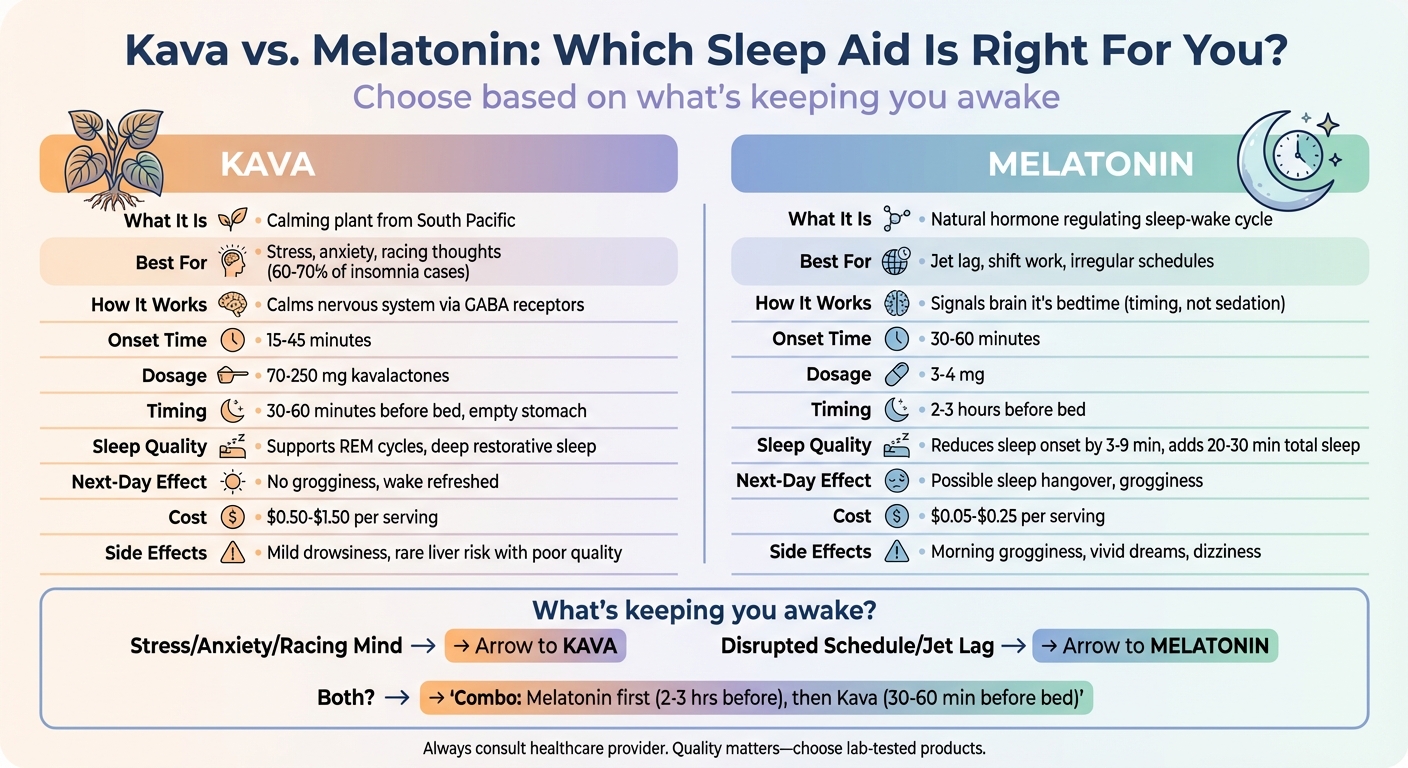
Kava vs Melatonin Sleep Aid Comparison Chart
Kava and The Future of Sleep
sbb-itb-02d64da
What is Kava?
Kava (Piper methysticum) is a tropical plant native to the South Pacific, found in places like Fiji, Vanuatu, and Tonga. The name "kava," which translates to "bitter" in Tongan and Marquesan, reflects its traditional roots. For around 3,000 years, Pacific Islanders have used kava in both ceremonial and social settings, appreciating its calming effects.
In modern times, kava comes in various forms such as powders, capsules, gummies, and liquid extracts, all of which maintain its soothing properties. The plant owes these effects to compounds called kavalactones. Dried kava root typically contains about 15% kavalactones, with six main ones (like kavain and methysticin) driving most of its activity. These compounds interact with GABA receptors, helping to ease mental and physical tension without causing heavy sedation. One unique feature of kava? A mild numbing sensation in the mouth when consumed.
Choosing the right type of kava is key. Products made from noble kava cultivars are preferred because they provide calming effects without the nausea or "kava hangover" that can come with non-noble (tudei) varieties. Traditional water-based preparations are considered safer than those made with organic solvents, and root-only products are often the best choice for promoting restful sleep.
"A well prepared Kava potion drunk in small quantities produces only pleasant changes in behavior... It relaxes the body after strenuous efforts, clarifies the mind and sharpens the mental faculties." - 1886 Western Publication
For sleep, kava works best when taken 1–2 hours before bed on an empty or nearly empty stomach. This timing allows the kavalactones to absorb effectively, helping you transition naturally into rest. With its long history and clear effects, kava offers an interesting comparison to melatonin for supporting sleep.
What is Melatonin?
Melatonin is a hormone naturally produced by the pineal gland, playing a central role in regulating the sleep-wake cycle. Often called the body’s internal clock, it signals when it’s time to sleep or wake based on light exposure. As night falls, melatonin levels increase, lowering body temperature and blood pressure to prepare for sleep. When morning light hits, production drops, helping you wake up naturally.
Unlike kava and other nootropics which directly calm the nervous system, melatonin works as a timing signal. It doesn’t force sleep but tells your brain it’s nighttime. This makes it particularly useful for circadian rhythm disruptions like jet lag, shift work disorder, or delayed sleep-wake phase disorder (DSWPD). Studies show melatonin helps individuals with DSWPD fall asleep 22 to 34 minutes faster, while for general sleep issues, the improvement is more modest - about 3 to 6 minutes faster.
Melatonin supplements come in various forms, including tablets, capsules, gummies, liquids, sprays, and lozenges. You can choose instant-release versions to aid sleep onset or slow-release formulas for maintaining sleep through the night. Typical doses range from 1 mg to 3 mg, though products may offer as little as 0.1 mg or as much as 10 mg. Between 2016 and 2020, U.S. melatonin sales surged by about 150%, with costs ranging from $0.05 to $0.25 per serving, making it an affordable sleep aid.
Melatonin levels naturally decline with age. By the time someone reaches 90, levels drop to less than 20% of those in young adults. This decline can lead to more pronounced sleep timing challenges in older adults. Experts suggest starting with a low dose, typically 1 mg or less, taken 30–60 minutes before bedtime. Additionally, avoid driving or operating machinery for at least five hours after taking melatonin, as drowsiness may persist.
When choosing a supplement, quality is crucial. A 2023 study of 25 gummy products found actual melatonin content ranged from 74% to 347% of the labeled amount. To ensure accuracy, look for third-party certifications like those from the U.S. Pharmacopeia (USP) or NSF International.
While melatonin helps reset your internal clock, it doesn’t address anxiety or tension - areas where kava is more effective. Up next, we’ll explore how these differences impact their respective sleep benefits.
How Kava and Melatonin Work
Kava and melatonin help with sleep, but they approach the problem in completely different ways.
Kava’s magic lies in its active compounds, kavalactones, which latch onto GABA receptors to calm neural activity. It also interacts with the limbic system - specifically the amygdala, the brain’s stress and emotion control center - and triggers p38 MAP kinase to reduce stress [3, 24]. The result? A quieter mind and relaxed body, paving the way for sleep without messing with REM cycles.
"Kava targets the root cause of most modern sleep problems: an overactive nervous system that won't downshift into relaxation mode." – Kava Krave
Melatonin, on the other hand, is your body’s natural “lights out” signal. Made by the pineal gland when darkness hits, it tells your internal clock it’s bedtime. But here’s the catch: while melatonin helps regulate your sleep schedule, it doesn’t do much to tackle stress or anxiety. That’s where kava shines. Since stress and anxiety are behind 60–70% of chronic insomnia cases - especially among high-achieving, stressed-out folks - choosing the right tool depends on what’s keeping you up. Is it a restless mind or just a disrupted routine? Knowing the difference can help you fine-tune your nighttime wind-down.
Sleep Benefits and Effectiveness
Melatonin and kava each tackle sleep issues in their own way, offering distinct benefits depending on the situation. Melatonin shortens the time it takes to fall asleep by 3–9 minutes and can add 20–30 minutes to overall sleep duration. For people dealing with jet lag or night shifts, even these small changes can make a big difference. However, melatonin doesn't address the mental overdrive or physical tension that keep many - 60–70% of chronic insomnia sufferers - awake at night.
Kava, on the other hand, targets the anxiety and muscle tension that often delay sleep. A 2019 review found kava to be significantly better than a placebo for anxiety disorders, which frequently underlie sleep problems. Sleep achieved with kava is often deeper and more restorative, as it doesn't interfere with REM cycles.
The next-morning effects of these two options are also worth noting. Kava users generally wake up feeling refreshed, without grogginess. Melatonin, however, can leave users with a "sleep hangover," which may include daytime drowsiness, dizziness, and even vivid dreams, particularly at higher doses. As Sean Felenczak, a researcher on melatonin timing, bluntly states:
"Melatonin is not a miracle sleep drug, and it probably never will be."
Melatonin works as a scheduling tool for sleep, not as a stress reliever.
So, which should you choose? If your issue is a disrupted schedule - like traveling across time zones or working irregular hours - melatonin is the better fit. But if your sleeplessness stems from a restless mind or physical tension, kava is more effective. Some people even combine the two: while following guidelines for responsible use, taking melatonin at 9:00 PM to set their internal clock and kava at 9:30 PM to calm their mind before a 10:00 PM bedtime.
Here's a side-by-side look at how these two compare:
Comparison Table: Kava vs. Melatonin Benefits
| Benefit/Factor | Kava | Melatonin |
|---|---|---|
| Sleep Latency | Helps transition naturally within 20–40 minutes | Reduces time to fall asleep by 3–9 minutes |
| Effect Duration | Promotes deep, uninterrupted sleep | Extends sleep by approximately 20–30 minutes |
| Anxiety Reduction | High; calms racing thoughts directly | Low; does not address mental stress |
| Next-Day Grogginess | None; no "sleep hangover" | Possible; may cause daytime drowsiness |
| Best For | Stress-related insomnia and physical tension | Jet lag, shift work, and circadian issues |
Side Effects and Safety
Kava and melatonin come with distinct safety considerations, and understanding these is crucial before use.
Kava's most serious risk is its rare link to severe liver damage, including hepatitis, cirrhosis, and even liver failure. Over 100 cases of serious liver damage related to kava have been reported worldwide. Dr. Matthew Goldman, a family physician at Cleveland Clinic, explains:
"There have been numerous reports of severe liver toxicity and/or liver failure from both Europe and the U.S., occurring within weeks and up to two years after ingesting kava."
Recent findings suggest these risks are primarily tied to poor-quality kava extracts, particularly those made from stems, leaves, or "Tudei" kava varieties instead of traditional "Noble" kava. Common side effects include headaches, indigestion, mouth numbness, and, with prolonged high doses, a reversible skin condition called kava dermopathy. On the positive side, kava is considered non-addictive and may even show reverse tolerance (FDA advisory).
Melatonin, while generally milder in its effects, has its own set of side effects. These often include morning grogginess or a "sleep hangover," dizziness, headaches, and sometimes vivid dreams or nightmares. A more serious concern is its potential to interfere with natural melatonin production, especially with excessive use, which can disrupt the body's ability to regulate sleep cycles on its own. Another issue is inconsistent labeling, as melatonin supplements often contain dosages that differ significantly from what's listed. Dr. David Seres, Professor of Medicine at Columbia University Medical Center, cautions:
"Many people think of these products as harmless, but that's a mistake."
Drug interactions also play a role in safety. Kava should never be combined with alcohol or benzodiazepines (e.g., Xanax) because of increased liver toxicity risks. It also interacts dangerously with Parkinson's medications and antidepressants. Melatonin, while generally safer in this regard, still varies widely in quality due to less stringent FDA oversight.
For those with pre-existing liver conditions, Parkinson's disease, or those taking medications affecting the central nervous system, consulting a healthcare provider before using kava is essential. With melatonin, sticking to low doses (0.5–3 mg) and using it for short-term circadian disruptions rather than chronic insomnia can help minimize hormonal disruptions. Always consult a healthcare provider if you have liver disease or are on CNS-affecting medications.
Dosage, Timing, and Usage
Getting the dosage and timing right is key when using kava and melatonin, as each serves a different purpose in promoting sleep.
Melatonin works best at a dose of 3–4 mg, taken 2–3 hours before your intended bedtime. This timing aligns with your body’s natural rhythm, enhancing its sleep-promoting effects. Taking melatonin too close to bedtime or in excessive amounts (like 20 mg) can lead to grogginess the next morning. Studies show that melatonin helps healthy individuals fall asleep about 9 minutes faster and sleep roughly 20 minutes longer.
Kava, on the other hand, is measured by its kavalactone content. A typical dose ranges from 70–250 mg of kavalactones, with higher doses (250 mg or more) often used for stronger sedative effects. For best results, take kava 30–60 minutes before bed on an empty stomach (around 3–4 hours after eating). Its effects usually begin within 15–30 minutes.
To combine these effectively, you might take melatonin at 8:00 PM if your bedtime is 10:30 PM, followed by kava at 9:30 PM to help ease into a relaxed state. As Matt Warren, co-founder of Psychedelic Water, puts it:
"Think of melatonin as setting the stage for sleep and kava as the gentle waves that carry you there."
If you’re new to kava, start with a lower dose to gauge your body’s response. For more tips on incorporating kava into your daily routine, consistency is key. Some beginners experience "reverse tolerance," where the effects may not be noticeable during the first few uses until the body adjusts.
Kava vs. Melatonin: Which is Better?
Let’s break down how kava and melatonin stack up for different sleep challenges. The short answer? Use kava for stress-fueled insomnia and melatonin for circadian rhythm issues.
Kava shines when stress and racing thoughts keep you up. Its interaction with GABA receptors helps your body and mind unwind, making it a go-to for relaxation. Considering that stress and anxiety are linked to 60–70% of chronic insomnia cases, kava’s ability to support natural sleep cycles - including REM - without leaving you groggy in the morning is a big plus.
Melatonin, on the other hand, is your ally for circadian rhythm problems. It works by signaling your brain to prepare for sleep, resetting your internal clock. However, it doesn’t actively calm stress or promote relaxation. Cost-wise, melatonin is more budget-friendly at $0.05–$0.25 per serving, compared to kava’s $0.50–$1.50.
As Dr. Jacob Teitelbaum, a sleep expert, points out, melatonin is great for sleep timing, while kava also helps with stress and energy management.
Here’s a quick comparison of their pros and cons:
Pros and Cons Table
| Factor | Kava | Melatonin |
|---|---|---|
| Primary Function | Relaxation and stress relief | Regulates circadian rhythm |
| Best Use Case | Stress-induced insomnia, racing mind | Jet lag, shift work, delayed sleep |
| Onset Time | 15–45 minutes | 30–60 minutes (up to 3 hours for peak) |
| Side Effects | Mild drowsiness, earthy taste | Morning grogginess, vivid dreams |
| Dependency | Non-habit forming; reverse tolerance | Non-habit forming; may affect natural production |
| Cost per Serving | $0.50–$1.50 | $0.05–$0.25 |
| Sleep Quality Impact | Supports REM and restorative sleep | Primarily regulates sleep timing |
Understanding these differences can help you tailor your approach to better sleep, whether you’re battling stress or adjusting to a new schedule.
Conclusion
When it comes to finding the right support for sleep, the choice depends on what’s keeping you awake at night. If stress, racing thoughts, or an overactive nervous system are the culprits - factors linked to 60% to 70% of chronic insomnia cases - kava stands out as a better option. It works by calming both the mind and body without causing sedation, allowing you to maintain natural sleep cycles and wake up refreshed.
On the other hand, melatonin plays a more targeted role. It’s particularly useful for situations like jet lag or shift work, where resetting your internal clock is key. Research shows melatonin can reduce the time it takes to fall asleep by 3–6 minutes and extend total sleep by roughly 30 minutes. Each option has its own strengths, depending on your specific sleep needs.
When choosing kava, prioritizing quality is essential. Opt for Noble varieties made exclusively from the root of the Piper methysticum plant. Products containing stems, leaves, or low-quality "Tudei" kava can lead to nausea and other unwanted side effects. Seek out lab-tested kava sourced directly from trusted Pacific Island growers in regions like Fiji, Tonga, or Vanuatu.
For those looking for a premium option, Founders Fuel (https://foundersfuel.co) offers a liquid botanical supplement combining high-quality kava with Lion's Mane Mushroom and L-theanine. This unique blend supports mental clarity and resilience while encouraging relaxation, making it ideal for staying sharp during the day and unwinding at night.
FAQs
Can I take kava and melatonin together?
Taking kava and melatonin together can heighten side effects such as dizziness, drowsiness, confusion, and trouble concentrating. This mix may also impact your thinking, judgment, and motor skills, with older adults being particularly vulnerable. Always consult a healthcare provider before using these together, and steer clear of tasks needing full alertness until you know how this combination affects you.
How can I tell if my insomnia is stress-related or circadian?
Stress-related insomnia often arises from anxiety, overthinking, or tension caused by emotional strain. Techniques that reduce stress or calming options like kava may help ease this type of sleeplessness. On the other hand, circadian insomnia is linked to disruptions in your body’s internal clock, often caused by irregular routines or exposure to light at odd times. Adjusting your daily schedule and maintaining consistent habits can make a difference. Pay attention to your sleep patterns and what might be triggering your insomnia to find the best way forward.
What should I look for in a safe kava product?
To ensure you're selecting a safe kava product, focus on traditional whole-root kava from trustworthy brands that adhere to good manufacturing practices. Opt for products that undergo third-party testing to confirm their purity and safety. Steer clear of anything with unnecessary additives or potential contaminants. Decide on the form - whether capsules, tinctures, or beverages - based on what suits your lifestyle best. Since kava may impact liver health or interact with medications, it's wise to consult a healthcare provider beforehand, especially if you have existing health conditions or are on other medications.
