

Kava vs Kratom: Evening Relaxation Benefits
Apr 1st 2026
When it comes to unwinding after a long day, two popular plant-based options stand out: Kava and Kratom. Both offer relaxation, but they work in completely different ways, and choosing the right one depends on what you're looking for.
- Kava: A root from the South Pacific, known for calming the mind and easing tension without fogging your thoughts. It interacts with GABA receptors, promoting relaxation and mental clarity. Great for reducing stress and supporting sleep without grogginess.
- Kratom: A Southeast Asian tree with leaves that interact with opioid receptors. At low doses, it can energize; at higher doses, it soothes pain and promotes deep relaxation. Ideal for physical discomfort or occasional sleep challenges but comes with dependency risks.
Quick Comparison
| Aspect | Kava | Kratom |
|---|---|---|
| Primary Use | Mental relaxation, stress relief | Pain relief, physical relaxation |
| Effects | Calm and clear-headed | Sedating or energizing (dose-dependent) |
| Duration | 2–3 hours | 2–5 hours |
| Dependency Risk | Low | Moderate to high |
| Next-Day Effects | No grogginess | Possible mild grogginess |
| Best For | Regular use | Occasional use |
Kava is your go-to for mental calm and focus, while Kratom is better for physical relief or when sleep feels impossible. Both have pros and cons, so it’s all about what fits your evening vibe. Always use responsibly.
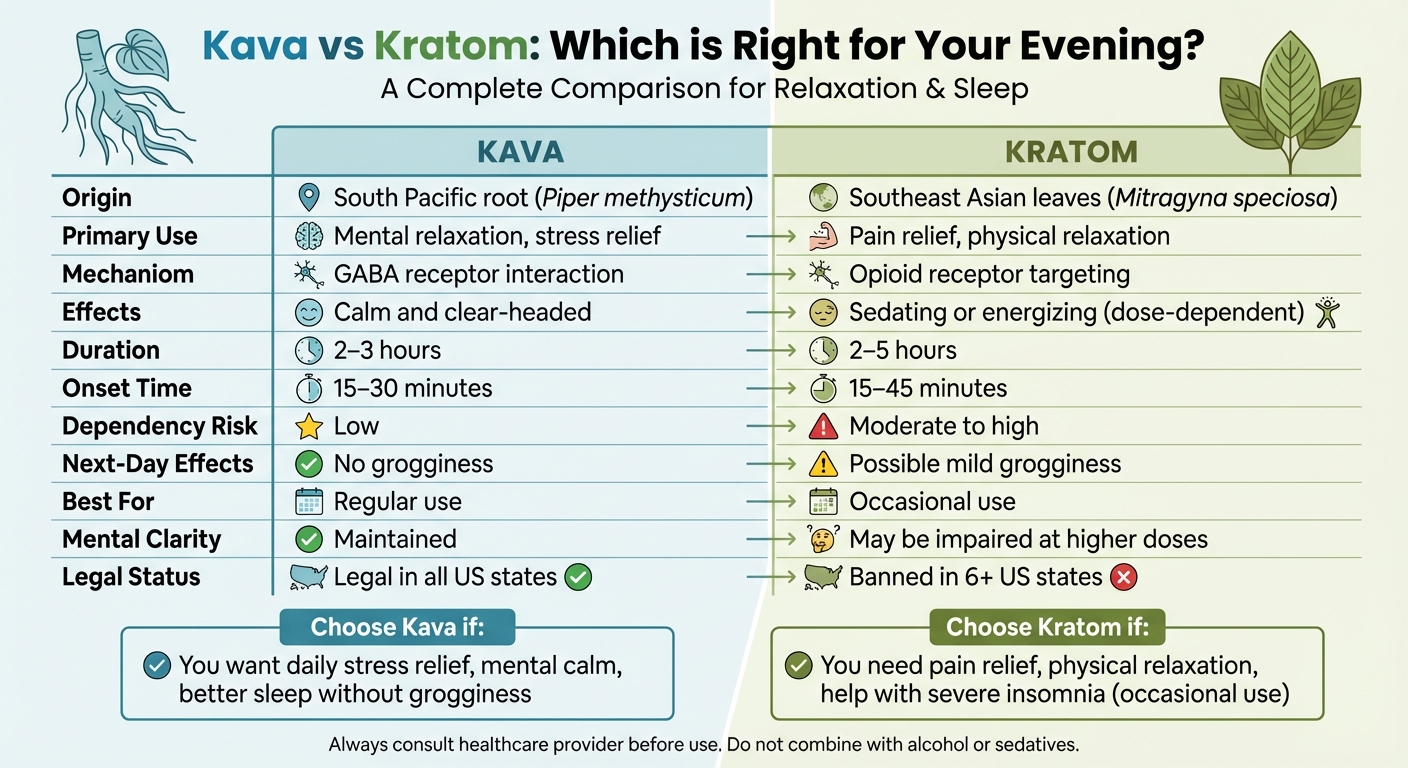
Kava vs Kratom Evening Relaxation Comparison Chart
HCANA Blog: Kratom Vs Kava
How Kava and Kratom Differ
While both kava and kratom are known for their relaxing effects, they originate from entirely different plant families and work in distinct ways. Kava, part of the pepper family (Piperaceae), is made from the root, which is traditionally ground and mixed with water or coconut milk. Kratom, from the coffee family (Rubiaceae), uses the leaves, which are chewed, brewed into tea, or consumed as powder.
The key difference lies in their active compounds and effects. Kava contains 18 kavalactones that promote relaxation without impairing awareness. In contrast, kratom’s alkaloids - primarily mitragynine and 7-hydroxymitragynine - produce effects that vary based on dosage. Small amounts of kratom can energize, while larger doses tend to sedate. Meanwhile, kava provides steady relaxation regardless of how much you consume. Let’s dive deeper into each botanical’s origin and active ingredients.
What is Kava?
Kava (Piper methysticum) was domesticated around 3,000 years ago in northern Vanuatu from its wild ancestor, Piper wichmanii. In South Pacific cultures, kava held ceremonial importance, often used to foster calm and mental clarity. For example, in Fijian yaqona ceremonies, kava drinking is paired with sevusevu (gift-giving rituals). In Hawaii, certain kava varieties, like Mo’i, were considered sacred and reserved for royalty.
Traditional kava cultivation involves harvesting plants only after four to five years to ensure optimal potency. Of the 18 kavalactones present, six dominate its effects, primarily by influencing GABAA receptors, which help regulate mood and stress. As described by researcher L. Lewin, kava’s effects include physical relaxation, mental clarity, and sharper focus:
"A well prepared Kava potion drunk in small quantities produces only pleasant changes in behavior... It relaxes the body after strenuous efforts, clarifies the mind and sharpens the mental faculties." - L. Lewin, Author/Researcher
These traditional uses have carried over into modern applications, where kava is often used to promote relaxation and reduce stress, particularly in the evenings.
What is Kratom?
Kratom (Mitragyna speciosa) is a tropical evergreen tree native to Southeast Asia, particularly Thailand, Indonesia, and Malaysia. Historically, laborers chewed or brewed kratom leaves to enhance endurance and energy during long, grueling workdays in the tropical heat. Unlike kava’s ceremonial role, kratom served as a practical aid for physical labor.
The leaves’ alkaloids bind to opioid receptors, altering how the body perceives pain and sensation. Effects typically begin within 15 to 30 minutes and can last for several hours. At lower doses, kratom acts as a stimulant, boosting focus and mood. Higher doses, however, produce sedative effects, offering physical comfort and relaxation - ideal for winding down after a demanding day. This dual nature makes understanding personal tolerance critical, as the same plant can yield opposite outcomes depending on the dose.
Today, kratom’s traditional uses have evolved into modern practices aimed at managing physical strain and encouraging post-work relaxation.
Kava for Evening Relaxation
Kava is known for calming the nervous system while keeping your mind clear, making it an excellent choice for winding down in the evening. Its active compounds, kavalactones, interact with GABA receptors in the brain - similar to how certain anti-anxiety medications work. The difference? Kava doesn’t bring the mental fog or risk of dependency. Within 15 to 30 minutes of drinking kava, most people feel a sense of calm that can last up to five hours.
Easing Anxiety and Quieting the Mind
Kava is particularly effective at soothing a restless mind after a long day. Unlike sedatives that knock you out, kava encourages a state of peaceful reflection. Professor Robert Gregory from Massey University explains it perfectly:
"Kava makes you quiet and able to think and listen to your thoughts... The subjective feeling after kava is to be slowed down, for it almost forces one to become quiet."
This mental stillness allows you to relax without losing focus, making it easier to process thoughts or enjoy meaningful conversations. On the physical side, kava also works as a muscle relaxant, easing built-up tension in your body. Together, these effects help create a smooth transition into a more restful evening.
Supporting Sleep Without Over-Sedation
For those dealing with stress-related insomnia, kava provides a gentle way to encourage sleep. It helps you fall asleep faster and supports deep, restorative rest - all without the grogginess that often comes with prescription sleep aids. By calming both your mind and body, kava removes the obstacles that can make sleep elusive.
As Henry from Kava Society puts it, kava helps users wake up feeling refreshed, not sluggish. To maximize its benefits, consume kava 30–60 minutes before bed, aiming for 120–240mg of kavalactones. Stick to noble kava varieties, which are considered the safest for regular use, and avoid mixing kava with alcohol or sedatives for your safety.
Kratom for Evening Relaxation
Kratom can ease daytime tension and support nighttime recovery, offering effects that range from mild stimulation to deep relaxation depending on the dose and strain. Lower doses (1–3 grams) often provide a calming energy, while moderate to higher doses - around 3–7 grams - can promote physical comfort and aid in sleep preparation.
Physical Comfort and Relaxation
Kratom is commonly used to alleviate physical discomfort that can disrupt restful sleep. Its alkaloids interact with opioid receptors, helping reduce pain, cortisol levels, and muscle tension. This makes it a popular choice for managing issues like lower back pain, arthritis, fibromyalgia, or soreness after physical activity. Research suggests it can reduce chronic pain by 50–70%, with 70–85% of users reporting noticeable relief.
Red vein strains, such as Red Bali, Red Borneo, and Red Maeng Da, are particularly effective for evening use due to their higher levels of pain-relieving and sedative alkaloids. A dose of 3–5 grams often provides significant relaxation and pain relief, while 5–7 grams may benefit those dealing with chronic pain or severe insomnia. Beyond easing discomfort, kratom’s sedative qualities help establish a restorative sleep cycle, making it a practical addition to evening routines for those seeking physical relief.
Supporting Sleep Without Disrupting REM
Kratom’s sedative effects extend beyond pain relief, making it useful for addressing sleep challenges like insomnia. Red strains typically begin working within 30–45 minutes and can last 5–7 hours. Unlike many conventional sleep aids, including alcohol and benzodiazepines, kratom does not suppress REM sleep. This ensures a more natural and restorative sleep experience. The Kratom Truth Project emphasizes:
"Unlike many sleep aids (alcohol, cannabis, benzodiazepines), kratom does not suppress REM sleep. This means you get actual restorative sleep with normal sleep architecture."
For optimal results, take kratom 1–2 hours before bedtime to allow for proper absorption. Beginners should start with a low dose (1–2 grams) and gradually adjust to find what works best. Rotating 2–3 red strains throughout the week can also help prevent tolerance buildup. Staying hydrated is essential, as kratom can cause mild dehydration that might affect sleep quality. Finally, avoid mixing kratom with alcohol or other sedatives, as this increases the risk of respiratory issues and over-sedation. With these precautions, kratom can be a helpful tool for managing sleep difficulties in the evening.
sbb-itb-02d64da
Kava vs Kratom: Side-by-Side Comparison
Kava and kratom provide relaxation but through very different biological mechanisms. Kava relies on kavalactones that interact with GABA receptors in the brain, promoting mental calm without affecting opioid pathways. On the other hand, kratom’s alkaloids bind directly to opioid receptors, leading to a different set of effects. Here's how they stack up against each other.
Comparison Table: Kava vs Kratom
| Aspect | Kava | Kratom |
|---|---|---|
| Primary Benefit | Anxiety reduction, mental calm | Pain relief, sedation |
| Mechanism | GABA receptor interaction | Opioid receptor targeting |
| Effect Duration | 2–3 hours | 2–5 hours |
| Dependency Risk | Low | Moderate to high |
| Next-Day Effects | No grogginess | Potential mild grogginess |
| Use Frequency | Suitable for regular use | Best for occasional use |
Kava is known for maintaining mental clarity during its effects, making it ideal for unwinding without impairing focus. Kratom, however, can lead to intoxicating effects, especially at higher doses, which may cloud judgment. The next morning, kava users typically wake up clear-headed, while kratom users might experience mild fogginess. These differences can guide your choice depending on whether you prioritize mental sharpness or deeper physical relaxation.
Safety and Dependency Risks
When it comes to safety, kava has a low risk of dependency and no known withdrawal symptoms, making it a better option for regular use. Kratom, however, carries a higher risk of physical dependence. Regular users who stop taking kratom may face withdrawal symptoms similar to those of opioids, such as muscle aches, insomnia, irritability, and nausea.
Both substances require caution. Combining them with alcohol or prescription medications can amplify their sedative effects dangerously. Kava’s main safety concern is its rare link to liver toxicity, particularly with heavy or prolonged use, so it’s not recommended for those with liver conditions. Kratom, on the other hand, may cause nausea, vomiting, and dizziness at higher doses.
From a legal standpoint, kava is allowed throughout the United States, while kratom is banned in several states, including Alabama, Arkansas, Indiana, Rhode Island, Vermont, and Wisconsin. These distinctions are key when deciding which botanical fits your needs and lifestyle.
Which Botanical is Right for Your Evening Routine?
Here’s how kava and kratom can fit into your evening habits, depending on what you’re looking for.
Both botanicals offer distinct ways to unwind. Kava is great for mental relaxation and clarity, while kratom is better suited for addressing physical discomfort or occasional severe sleep troubles. Keep in mind, kratom is best used sparingly.
When to Choose Kava
If you’re after a consistent way to relax your mind, kava is your go-to. It’s known for easing stress while keeping your thoughts sharp, often described as delivering a sense of "calm focus."
"Kava is like a gentle friend who helps you unwind after a long day, relaxing your body, easing your mind, and letting you ease into sleep or social calm." - Patrick Castillo
Kava’s safety profile supports regular use, and studies suggest its effects on anxiety are similar to low-dose benzodiazepines - without the addictive risks. Plus, you won’t deal with grogginess the next morning or withdrawal symptoms if you stop using it. That said, if you have liver issues, be cautious; heavy, prolonged use has been linked to rare liver concerns.
If you’re dealing with physical discomfort or other more intense challenges in the evening, kratom might be the better fit.
When to Choose Kratom
Kratom shines when you need help with physical pain, muscle tension, or stubborn insomnia. At higher doses (above 8 grams), it provides strong sedative effects that can help you sleep when other methods fall short. It’s also useful for managing chronic discomfort or recovering after physically demanding days.
"Kratom, on the other hand, is the powerful motivator, the natural energy jolt or pain reliever that can offer a lift when you're struggling with fatigue or chronic discomfort." - Patrick Castillo
However, kratom isn’t something to rely on nightly. Its dependency risks mean regular use can lead to tolerance and withdrawal symptoms like muscle aches, irritability, and nausea. For a safer long-term option, stick with kava for daily relaxation and save kratom for those nights when you need extra help with pain or sleep.
Conclusion
Decide what suits your evening goals. Kava's calming effects through GABA receptors differ from kratom's pain-relieving action via opioid receptors, each offering a unique way to unwind.
Kava promotes a clear, relaxed state, making it a great choice for easing stress and overthinking before bed. On the other hand, kratom is more suited for addressing physical discomfort and deeper sedation. Its interaction with opioid receptors can alleviate chronic pain or muscle tension but comes with the risk of tolerance and withdrawal if used too often.
Your choice depends on whether you're seeking mental relaxation or physical relief. For stress, racing thoughts, or social anxiety, kava delivers reliable calm and can be used regularly. If pain or severe sleep troubles are the issue, kratom may help, but it's better kept for occasional use.
FAQs
Can I take kava and kratom on the same night?
Both kava and kratom can promote relaxation, but they work differently. Kratom at low doses may boost energy, while kava tends to encourage calm. If you’re considering combining them, proceed carefully. Stick to low doses, avoid mixing with alcohol or sedatives, and consult a healthcare professional if you’re unsure. Moderation and responsible use are key to safely enjoying both in one evening.
How do I pick a safe, effective dose for evening use?
To find a balanced evening dose of kava or kratom, it’s best to start small and increase slowly. For kava, an initial dose of 50–100 mg of kavalactones is often enough to encourage relaxation, while higher amounts might lead to sedation. With kratom, begin with 1–2 grams, keeping it under 5 grams for a calming effect. Take into account factors like your body weight and overall health, and always check with a healthcare professional before making changes. Steer clear of combining these substances with alcohol or sedatives.
Which one is better for sleep: kava or kratom?
Kava tends to work better for sleep compared to kratom. It encourages relaxation and eases stress by interacting with GABA receptors, making it easier to unwind and drift off. Kratom’s effects depend on the dose - smaller amounts can increase energy, while larger doses may offer relief from discomfort or promote relaxation - but it’s not as consistent when it comes to aiding sleep. For winding down at night, kava is often the go-to option.
