

Kava vs Coffee: Energy Without the Crash
Apr 1st 2026
Kava and coffee both fuel your day, but they work in totally different ways. Coffee gives you a fast jolt of energy by blocking fatigue signals, but it can come with side effects like jitters, anxiety, and a mid-afternoon crash. Kava, on the other hand, promotes calm energy by engaging your brain’s GABA and dopamine receptors, delivering steady concentration without overstimulation or a harsh comedown.
Here’s the breakdown:
- Coffee: Quick energy, but may cause restlessness, anxiety, and disrupt sleep if consumed late. It’s great for mornings or powering through urgent tasks.
- Kava: Slower onset but provides smooth focus and relaxation. It’s easier on digestion, can ease tension, and supports better sleep, making it ideal for afternoons or social settings.
Quick Tip: Start your day with coffee for an energy spike, then switch to kava after lunch to maintain focus and avoid the crash. Both have their place, depending on your energy needs and schedule.
KAVA NECTAR VS. COFFEE?
sbb-itb-02d64da
What is Kava?
Kava (Piper methysticum) is a tropical plant from the pepper family, originating in the Pacific Islands. The term "kava" refers to both the plant itself and the drink made from its roots (often compared with kratom and kava for their distinct wellness benefits). For generations, Pacific Islanders have used kava in ceremonies, often as a way to foster community and connection.
The key to kava's effects lies in its active compounds, known as kavalactones. These compounds, particularly six main ones, make up about 96% of its pharmacological activity. They interact with GABA receptors and dopamine pathways in the brain, helping to regulate emotions. This results in a calm yet focused state, where mental chatter quiets down, anxiety decreases, and clarity remains intact, making it easier to engage socially.
Unlike sedatives or stimulants, kava doesn't impair judgment or cause overstimulation. A 2013 randomized trial found that 26% of participants with generalized anxiety disorder achieved full symptom remission while using kava. The World Health Organization has also noted that drinking kava carries "an acceptably low level of health risk."
Traditionally, kava is prepared by grinding the root into a powder, placing it in a cloth, and soaking it in water to extract the kavalactones. A standard serving contains about 250 mg of kavalactones, and users often experience a tingling or numbing sensation in the mouth due to the local anesthetic properties of these compounds.
As of 2025, the U.S. FDA officially categorized kava tea as a conventional food, putting it in the same regulatory group as coffee and tea. This classification underscores confidence in kava's safety and its reputation as a non-addictive option that doesn't lead to dependency or withdrawal.
Next, we'll take a look at coffee for comparison.
What is Coffee?
Coffee, brewed from roasted beans, holds the title as the world's favorite caffeine source. The two main bean varieties are Arabica, which contains about 1.2–1.5% caffeine, and Robusta, packing a stronger punch with 2.2–2.7% caffeine. These differences not only affect caffeine levels but also influence the flavor profile. On average, an 8‑oz cup delivers 80–100 mg of caffeine, though this amount can vary depending on the bean type and brewing method.
Caffeine works by blocking adenosine, a chemical in your body that signals fatigue. By mimicking adenosine, caffeine occupies its receptors, temporarily delaying tiredness while also triggering the release of dopamine and norepinephrine - chemicals linked to alertness and mood.
"Caffeine doesn't actually give the body more energy – it just blocks the signal that says it's tired." - Ultrahuman
Its effects typically kick in within 5 to 30 minutes of drinking. For professionals juggling demanding schedules, this makes coffee a go-to tool for staying sharp during extended work sessions. The FDA advises a maximum daily intake of 400 mg of caffeine for healthy adults, which equates to about four 8‑oz cups. However, regular use can lead to tolerance as the brain adapts by creating more adenosine receptors, meaning you may need more coffee over time to feel the same effects.
While coffee provides a quick energy boost ideal for short-term productivity, its impact on sustained energy levels differs significantly from kava and its steadier effects. Up next, we’ll explore how these differences play out in practical terms for professionals.
Kava vs Coffee: Effects Comparison
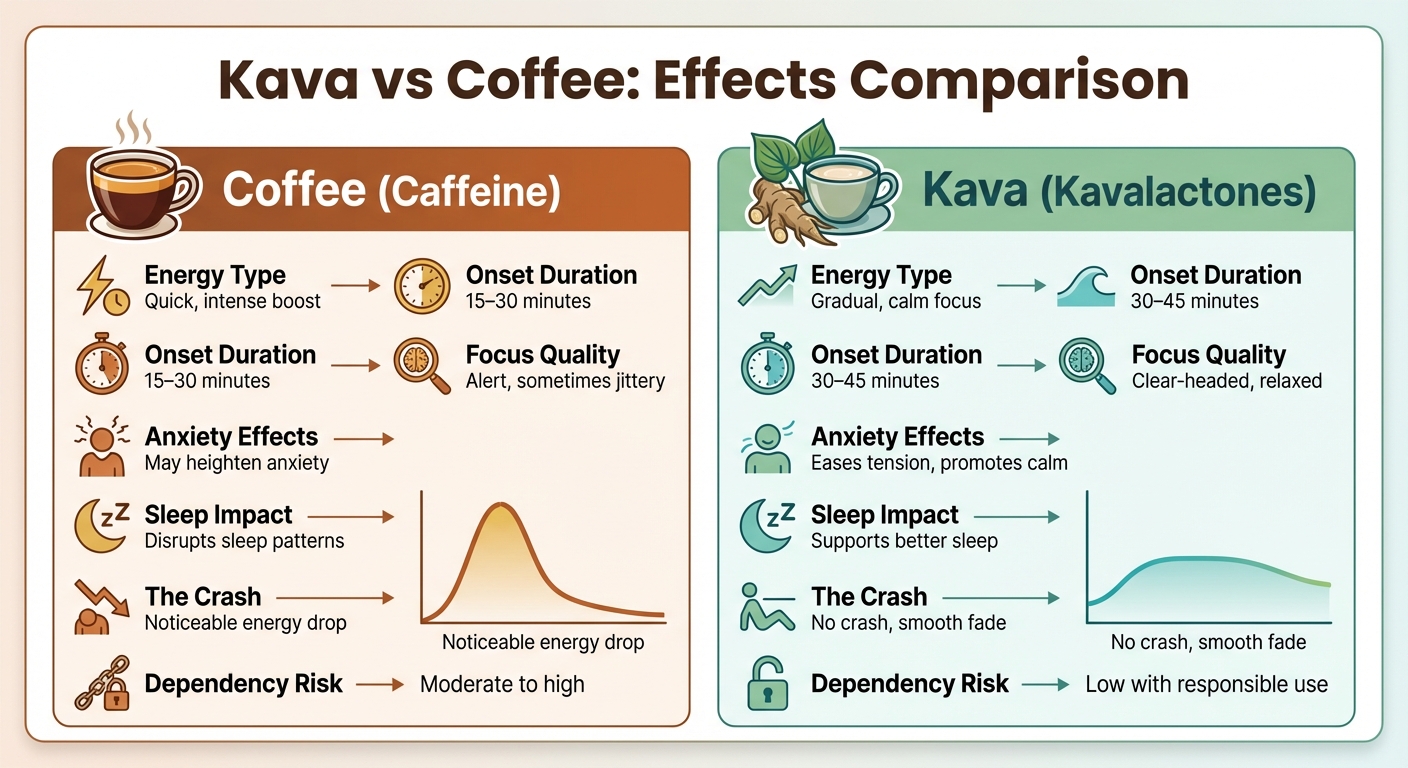
Kava vs Coffee Effects Comparison Chart
When deciding between kava and coffee, it often comes down to the kind of energy you're seeking. Coffee delivers a quick burst of energy within 15–30 minutes by blocking adenosine receptors, giving you that familiar jolt of alertness. On the other hand, kava takes a bit longer - 30–45 minutes - but offers a steady, calm focus that doesn't tip into overstimulation.
The difference becomes more pronounced after the initial energy boost. Coffee's effects often taper off into a crash, leaving you jittery or restless. Kava, however, fades smoothly, helping you maintain consistent productivity without the dreaded energy slump.
"Coffee, powered by caffeine, is a central nervous system stimulant... resulting in a surge of energy and alertness." - Institute for Scientific Information on Coffee
"Kava... produce[s] a state of calm and relaxation, without the intense jolt of caffeine." - National Center for Complementary and Integrative Health
For those prone to anxiety, coffee can be a double-edged sword. It may increase heart rate and intensify feelings of nervousness. Kava, by interacting with GABA and dopamine, helps ease tension, making it a better choice for social situations or high-pressure environments where caffeine might leave you feeling frazzled.
Sleep quality is another critical factor, especially for professionals who need sustained focus. Caffeine's half-life of about 5 hours means that a 2:00 PM coffee could still affect your ability to fall asleep at 10:00 PM. Kava, in contrast, is often praised for its ability to enhance sleep quality, making it a smarter option for late-day productivity without compromising rest.
Comparison Table
| Feature | Coffee (Caffeine) | Kava (Kavalactones) |
|---|---|---|
| Energy Type | Quick, intense boost | Gradual, calm focus |
| Onset Duration | 15–30 minutes | 30–45 minutes |
| Focus Quality | Alert, sometimes jittery | Clear-headed, relaxed |
| Anxiety Effects | May heighten anxiety | Eases tension, promotes calm |
| Sleep Impact | Disrupts sleep patterns | Supports better sleep |
| The Crash | Noticeable energy drop | No crash, smooth fade |
| Dependency Risk | Moderate to high | Low with responsible use |
Benefits and Drawbacks of Kava
Kava offers a unique balance of calm and focus, helping to quiet mental distractions while maintaining a clear mind. By interacting with GABA and dopamine receptors in the brain's limbic system, it promotes a state of relaxed alertness, making it great for creative projects or deep thinking. This steady effect is especially helpful for professionals tackling complex tasks or strategic challenges. Unlike caffeine, Kava wears off gradually, so there's no mid-afternoon energy crash. However, it’s worth noting that Kava takes longer to kick in, making it a better fit for moments where patience aligns with its slower onset.
For those navigating workplace stress or social situations, Kava can serve as a natural way to ease tension. It helps foster a sense of well-being, which can be invaluable during high-pressure meetings or networking events. Additionally, it’s easier on the stomach compared to acidic coffee. Many also find that Kava supports better sleep, which is essential for maintaining consistent energy on demanding days.
That said, Kava does have its downsides. Its slower onset means it’s not ideal for quick energy boosts but works well in the afternoon when you need sustained focus without risking sleep disruption. Some people might notice mild, temporary mouth numbness due to kavalactones, though this effect is harmless.
Timing is key with Kava. It shines in situations where its gradual effects can be appreciated, making it a smart choice for afternoons when steady focus and relaxation are priorities.
Benefits and Drawbacks of Coffee
Coffee is celebrated for its ability to jumpstart energy and sharpen focus, but it’s not without its downsides when it comes to maintaining productivity over time.
Caffeine delivers a quick energy boost, helping to reduce fatigue and improve concentration. For most healthy adults, moderate consumption - up to 400 mg of caffeine daily - can enhance mental performance and make tackling challenging tasks more manageable. This is why coffee has become a go-to for professionals facing demanding schedules.
However, the same caffeine that fuels productivity can also cause problems. It may lead to jitters, heightened anxiety, and racing thoughts. Neurologist Dr. Nicole Clark explains:
"Of course, if you're getting jittery, it's too much caffeine."
Coffee's acidity can irritate the stomach, potentially causing acid reflux or discomfort. Additionally, unfiltered coffee, such as that made with a French press or espresso machine, contains cafestol - a compound linked to increased LDL cholesterol levels. These side effects can derail focus, especially during high-pressure moments.
There’s also the issue of what happens later in the day. Many coffee drinkers experience an afternoon energy crash. While caffeine initially boosts alertness, it can lead to "rebound fatigue" as its effects wear off, leaving you feeling more drained than before. Dr. Shannon Kilgore highlights that withdrawal symptoms can begin within 12 hours of your last cup, often creating a cycle of dependency.
Speaking of dependency, regular caffeine use can lead to both physical and psychological reliance. In the U.S., about 85% of adults consume at least 135 mg of caffeine daily, and withdrawal symptoms like headaches, fatigue, and irritability can last anywhere from 2 to 10 days. To minimize these drawbacks, consider strategies like stopping caffeine intake by 2:00 PM, staying hydrated while drinking coffee, and avoiding it on an empty stomach. These simple adjustments can help maintain focus without the unwanted side effects.
How Kavalactones and Caffeine Work
Understanding the way caffeine and kavalactones influence your brain sheds light on why their effects on energy and focus feel so different.
Caffeine works by blocking adenosine receptors. Adenosine is a neurotransmitter that builds up during the day, signaling your brain to wind down and feel tired. By preventing adenosine from binding to its receptors, caffeine halts those "time to rest" signals. This creates a burst of alertness and energy. At the same time, caffeine stimulates the release of dopamine and norepinephrine, which can sharpen focus and lift your mood. However, these effects can also lead to side effects like jitters, crashes, or a racing heart.
Kavalactones, on the other hand, take a different route. Found in kava root, these compounds work by enhancing the activity of GABA (gamma-aminobutyric acid), the brain's main "calm down" neurotransmitter. According to Dr. Robert Ashley, an internist and Assistant Professor of Medicine at UCLA, kavalactones "alter the conduction of nerve signals, decrease excitatory neurotransmitters, increase the ability of the amino acid GABA to bind its receptors, inhibit the enzyme monoamine oxidase, and reduce uptake of the neurotransmitters noradrenaline and dopamine.”
Kavain, a key kavalactone, acts as a positive allosteric modulator of GABA_A receptors. In simpler terms, it amplifies the receptor's response to GABA without directly activating it. Studies show that 300 μM of kavain can increase the GABA response by around 170%. Unlike benzodiazepines such as Xanax or Valium, kavalactones bind to a different site on the GABA receptor, which might explain why they’re considered less addictive.
While caffeine stimulates your central nervous system to block tiredness, kavalactones calm the limbic system - the part of the brain tied to emotions - helping to ease anxiety and quiet mental chatter. This difference in how they work explains why coffee delivers a quick, energetic jolt, while kava fosters a steady, relaxed focus.
Best Use Cases for High-Performing Professionals
For professionals aiming to maintain peak performance, choosing the right energy source can make all the difference.
Coffee is perfect for a quick energy boost, especially during early meetings or when tackling urgent tasks. If you're struggling to shake off morning grogginess, coffee delivers that instant jolt of alertness to jumpstart your day.
For creative or strategic work, kava offers a more balanced approach. It helps quiet mental distractions, promoting a state of "calm focus" without the jittery side effects of caffeine. As Zana Herbals explains:
"Where caffeine pushes the body into high gear, kava offers a more centered and composed energy - calm but alert, relaxed but focused."
Since caffeine can stay in your system well into the evening, switching to kava in the afternoon helps sustain productivity without interfering with sleep.
Kava's benefits extend beyond individual tasks to social settings. It can ease social anxiety and encourage genuine connection, making it a great choice for team brainstorming, client meetings, or networking events. Coffee, on the other hand, can sometimes heighten anxiety and foster an intense, solitary focus that’s less effective in collaborative environments.
A hybrid strategy can maximize performance throughout the day. Start with coffee for a sharp energy boost in the morning, then transition to kava after lunch to maintain focus and avoid the afternoon slump. Unlike late-day coffee, kava won’t disrupt your sleep - it might even improve it.
Founders Fuel (https://foundersfuel.co) offers a convenient solution by blending kava with botanicals like Lion's Mane Mushroom and L-theanine. Their 2oz bottles are an easy way to sustain calm, focused energy during demanding work sessions without the risk of a post-caffeine crash.
Conclusion
Kava offers a steady, crash-free energy boost. Unlike coffee, which provides a quick surge of alertness but often leads to jitters, anxiety, and an afternoon slump, kava promotes calm focus and a smooth, gradual decline in energy levels.
Its gentler effects also sidestep the digestive and sleep issues linked to caffeine, making it a great choice for professionals juggling creative, strategic, and social responsibilities. Kava helps quiet mental distractions while keeping you sharp and alert.
For a balanced routine, pairing coffee in the morning with kava after lunch can provide the best of both worlds: a quick energy spike to kickstart the day and sustained focus without compromising sleep. This combination helps professionals maintain peak performance throughout the day.
Founders Fuel offers a premium kava-based supplement blended with Lion's Mane Mushroom and L-theanine, designed to deliver clear, focused energy without the crash - perfect for tackling high-pressure work sessions with clarity and confidence.
FAQs
How much kava should I take for focus?
The amount of kava needed for focus varies based on its form and your personal tolerance. Founders Fuel recommends beginning with half a bottle of their liquid kava supplement in the morning on an empty stomach. You can adjust this amount if needed but should not exceed one bottle per day. For tailored advice, consult a healthcare professional, as individual reactions differ, and there are potential risks, such as liver toxicity.
Can I use kava and coffee on the same day?
Yes, you can use kava and coffee on the same day, but it’s important to approach this carefully. Coffee provides an energy kick, while kava encourages relaxation. To minimize potential side effects like jitters, drowsiness, or energy crashes, space them out - have coffee in the morning and save kava for winding down later. Always factor in your personal tolerance and consult a healthcare professional if you're unsure.
Will kava affect a drug test?
Kava has the potential to show up on a drug test, particularly if specialized screenings are used to detect kava or its metabolites. While standard drug panels typically don't include kava, some tests tailored to specific substances might identify its presence.
