

The Founder's Guide to Natural Cognitive Enhancement
Jan 8th 2026
Feel like your brain’s stuck in slow motion by 2 PM? You’re not alone. Many entrepreneurs lean on quick fixes like coffee or stimulants, but those come with crashes, anxiety, and long-term risks. Here’s the better play: natural nootropics. These plant-based compounds work with your body to sharpen focus, memory, and energy - without wrecking your health.
Key Takeaways:
- Why skip synthetic stimulants? They mask fatigue, cause dependency, and lead to brutal crashes.
- What are natural nootropics? Plant extracts, amino acids, and minerals that support brain health by improving blood flow, protecting neurons, and balancing neurotransmitters.
- What works?
- L-Theanine + Caffeine: Smooth focus without jitters.
- Lion’s Mane Mushroom: Supports memory and brain cell regeneration.
- Rhodiola Rosea: Reduces mental fatigue during stress.
- Kava: Promotes calmness without dulling your mind.
- How to start: Pair nootropics with proper sleep, a balanced diet, and stress management. Track progress using a journal or app, and give it 4–6 weeks for results.
Natural nootropics don’t promise instant miracles, but they’re a smarter way to sustain energy, clarity, and focus. Skip the quick fixes and build a routine that works with your brain, not against it.
5 Nootropics Every Entrepreneur Should Take to Get Fired Up & Focused
sbb-itb-02d64da
How Natural Cognitive Enhancement Works
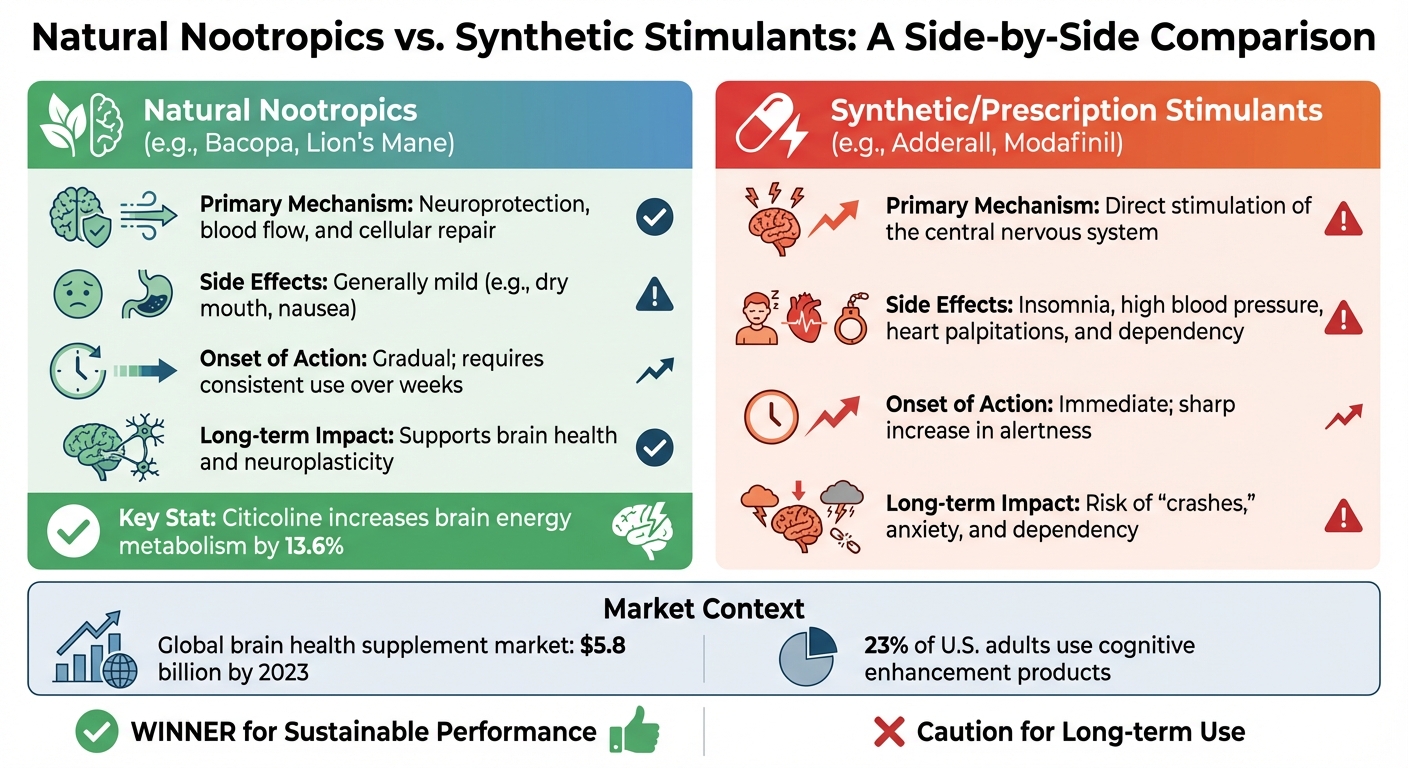
Natural Nootropics vs Synthetic Stimulants Comparison
Your brain doesn’t need to be pushed to its limits - it needs care. Unlike quick fixes that mask the problem, natural enhancers target the underlying causes of mental fatigue: poor blood flow, oxidative stress, neurotransmitter depletion, and chronic stress. Instead of simply covering up the symptoms, they strengthen the systems that fuel focus, memory, and mental clarity.
These compounds work through multiple pathways. They improve blood circulation, protect neurons with antioxidants, repair cellular damage, and balance neurotransmitters like acetylcholine, dopamine, and GABA.
The impact is tangible. Take citicoline, for example - it has been shown to increase brain energy metabolism by 13.6%. The global market for brain health supplements is expected to hit $5.8 billion by 2023, with nearly 23% of adults already using at least one product aimed at boosting mental sharpness. Unlike synthetic stimulants that drain your reserves, natural nootropics work to gradually build and sustain brain health.
These foundational mechanisms lay the groundwork for understanding how specific natural compounds can elevate cognitive performance.
What Are Natural Nootropics?
The word "nootropic" is rooted in the Greek terms nöos (thinking) and tropein (to guide). Natural nootropics include plant extracts, amino acids, and minerals that enhance mental performance without the harsh side effects of prescription stimulants like Adderall or Modafinil.
While synthetic stimulants deliver a quick, unsustainable jolt of energy, natural nootropics work differently. They focus on protecting neurons, improving blood flow, and aiding cellular repair.
The catch? Patience. Unlike prescription drugs, which act immediately, natural options like Bacopa monnieri take 4–6 weeks of consistent use to show noticeable improvements in cognitive speed. However, the long-term benefits - fewer side effects, no crashes, and better brain health - make the wait worthwhile.
| Feature | Natural Nootropics (e.g., Bacopa, Lion's Mane) | Synthetic/Prescription Stimulants (e.g., Adderall, Modafinil) |
|---|---|---|
| Primary Mechanism | Neuroprotection, blood flow, and cellular repair | Direct stimulation of the central nervous system |
| Side Effects | Generally mild (e.g., dry mouth, nausea) | Insomnia, high blood pressure, heart palpitations, and dependency |
| Onset of Action | Gradual; requires consistent use over weeks | Immediate; sharp increase in alertness |
| Long-term Impact | Supports brain health and neuroplasticity | Risk of "crashes", anxiety, and dependency |
How Adaptogens Help Manage Stress
Stress isn’t just mental - it’s physical. When you’re under pressure, your HPA axis floods your system with cortisol. While this initially sharpens focus, prolonged cortisol elevation leads to mental fog and exhaustion.
Adaptogens like Ashwagandha and Rhodiola Rosea help regulate the HPA axis and balance cortisol levels. They activate Heat Shock Protein 70 (Hsp70), which repairs damaged proteins and shields cells from stress-related harm. They also block stress-activated JNK1, preventing ATP suppression (the brain’s energy currency) and keeping your immune system steady under pressure.
"Adaptogens work like a stress vaccine (stress-mimetic) by activating stress-induced self-defense mechanisms in order to adapt the cell and organism to mitigate stress-induced harmful effects."
- Alexander Panossian, Researcher, Swedish Herbal Institute
Clinical studies on Rhodiola rosea (SHR-5 extract) revealed significant improvements in mental fatigue and cognitive functions like associative thinking and short-term memory in just two weeks. Unlike stimulants that drain energy, adaptogens boost ATP production in mitochondria, providing a steady energy supply during high-stress situations.
This sustainable energy management offers a stark contrast to the crash-prone effects of conventional stimulants.
Why Stimulants Create More Problems Than They Solve
Coffee and prescription stimulants may provide quick energy, but they come at a cost. Caffeine blocks adenosine receptors, masking fatigue rather than addressing its cause. Drinking more than 3–4 cups of coffee daily can restrict blood flow to the brain, cutting off the oxygen neurons need to function.
Prescription stimulants like Adderall are even riskier. They flood the brain with dopamine and norepinephrine to force alertness, but the aftermath is brutal: anxiety, insomnia, heart palpitations, and dependency. Over time, the brain adapts by reducing receptor sensitivity, meaning higher doses are needed for the same effect - a slippery slope toward addiction.
Natural alternatives offer a smarter approach. Instead of depleting neurotransmitters, they support and balance them. Citicoline enhances memory by boosting acetylcholine. L-Theanine promotes "wakeful relaxation" by modulating alpha brainwaves, without the jittery side effects. Adaptogens like Rhodiola sustain energy levels without the dreaded crash. The outcome? Consistent focus, lasting energy, and no dependency.
The Best Natural Ingredients for Mental Performance
When it comes to improving mental performance, nature offers some impressive options. These ingredients are known to support cognitive function and brain health, providing practical solutions for those looking to maintain focus and productivity.
Kava: Calm Focus Without the Fog
Kava (Piper methysticum) is a standout for promoting relaxation without slowing you down mentally. Its active compounds, kavalactones, work by enhancing GABA receptor activity, blocking monoamine oxidase, and reducing the uptake of noradrenaline and dopamine. A review of 11 clinical trials with 645 participants revealed that kava significantly reduced anxiety in 10 of the studies compared to a placebo. Unlike benzodiazepines such as Xanax or Valium, kava interacts with different GABA receptors, which may lower its risk of addiction.
"Kava can help reduce anxiety... it binds to a different GABA receptor than benzodiazepines, such as Xanax, Valium, or Ativan. This aspect may make kava less addictive."
- Robert Ashley, MD, Internist and Assistant Professor, UCLA
To keep it safe, limit kava use to short-term periods and stay under 240 mg per day to reduce the risk of liver issues. Avoid mixing kava with alcohol or antidepressants, and stick to water-based preparations, which are generally safer. It’s also worth noting that while most Pacific Islanders metabolize kava efficiently, only 79%–88% of Caucasians possess the necessary CYP2D6 enzyme.
Whole Leaf Kratom: Balanced Energy and Mood
Whole leaf kratom has a history of being used for energy and mood support, although scientific research is still limited. If you choose to try kratom, start with minimal doses to gauge your response, avoid using it daily to prevent tolerance, and always buy from trusted suppliers to ensure quality and safety.
Lion's Mane Mushroom: Boosting Brain Health and Memory
Lion's Mane (Hericium erinaceus) is celebrated for its ability to enhance brain function. It stimulates the production of Nerve Growth Factor (NGF), which helps regenerate and protect brain cells while improving neuroplasticity - key for forming new connections and strengthening memory. Studies have shown that a supplement combining Lion's Mane and L-Theanine significantly improved memory recall, both immediate and delayed, as well as visual and auditory memory. Benefits typically become noticeable after 2–4 weeks of consistent use. For the best results, look for supplements made from the fruiting body rather than grain-grown mycelium, as the fruiting body contains more active compounds that can cross the blood-brain barrier.
L-Theanine: Energy That’s Smooth, Not Stressed
L-Theanine, an amino acid found in tea, is prized for its ability to create a state of calm alertness by increasing alpha brainwave activity. It enhances focus and attention during the day while also improving sleep quality at night.
"L-theanine is the ultimate nootropic for simultaneously relaxing and staying focused... it is known for significantly improving daytime cognitive performance as well as night-time sleep quality."
When paired with caffeine, L-Theanine balances out caffeine's side effects, like jitters, while amplifying its cognitive benefits. This combo delivers steady focus and energy without the dreaded crash - perfect for tackling long, demanding workdays. Effects typically kick in within 1–2 hours, making it a go-to for staying sharp and productive.
Creating Your Daily Routine for Maximum Productivity
Designing a routine with natural nootropics doesn’t have to be overwhelming. It’s all about syncing the right supplements with your energy needs throughout the day. The trick? Work with your body’s natural rhythms instead of fighting them. By aligning nootropics with your energy cycle, you can achieve steady productivity without burnout.
Morning: Energize Without the Crash
Start your day with L-Theanine and caffeine for a smooth, focused boost. L-Theanine enhances alpha brain waves, promoting a calm yet alert state. Research shows that taking 200 mg of L-Theanine daily for four weeks can lower stress while improving decision-making and focus. Plus, its effects kick in within three hours, making it a great morning companion. This pairing not only sharpens your mind but also supports sustainable energy without the jitters.
Afternoon: Stay Sharp Through the Midday Dip
When your energy dips in the afternoon, skip the extra coffee and go for L-Theanine or Rhodiola Rosea. Rhodiola, an adaptogen, helps combat mental fatigue and boosts performance during stressful moments. Pair this with a quick 10-minute walk - studies show even brief moderate exercise can enhance memory, processing speed, and executive function. By timing your supplements and movement to fit your natural rhythms, you can power through the slump effectively.
Evening: Wind Down for Restful Sleep
As the day ends, it’s time to shift gears from productivity to relaxation. This is where Kava or Ashwagandha can help. Ashwagandha supports healthy cortisol levels, preventing that wired feeling that can disrupt sleep. Meanwhile, Kava promotes relaxation without clouding your mind, making it easier to unwind after a long day.
"It's a good strategy to combine Ashwagandha with calming supplements because their mechanisms complement each other."
- Dr. Crystal M. Gossard, DCN, CNS, LDN, Life Extension
Tracking Your Cognitive Performance
Start by measuring your baseline performance for a week before introducing nootropics. Pay attention to patterns like energy crashes, how long you can maintain deep focus, and occurrences of brain fog. This baseline will act as your starting point, giving you a clear reference to track changes and set realistic goals.
Define Your Performance Goals
After establishing your baseline, set specific and measurable objectives. Avoid vague targets like "improve focus." Instead, aim for concrete outcomes such as cutting down afternoon energy slumps, speeding up decision-making under pressure, or doubling your deep work sessions from 45 to 90 minutes. Focus on areas that matter most to your work - like recalling details during client meetings, staying locked in during strategic planning, or analyzing data faster.
Track Progress With Journals or Apps
Apps like Habitify ($4.99/month) can help you organize supplements by time - morning L-Theanine, afternoon Rhodiola, evening Kava - and sync your data with Apple Health or Google Fit. If you prefer a manual approach, keep a nootropic journal to log dosages, timing, and how you feel during critical tasks. Track metrics like the length of your deep work sessions or how often brain fog hits. Keep in mind that results vary: L-Theanine can work within hours, but botanicals like Lion's Mane and Bacopa often take 2 to 4 weeks of consistent use to show noticeable effects.
Adjust Your Approach Based on Results
Introduce one new supplement at a time to see how it affects you. For example, if you're testing caffeine, start with small doses and increase by 50 mg increments until you find the minimum amount that boosts focus without causing jitters or messing with your sleep. After 30 days, review your data for patterns. If afternoon crashes persist despite using Rhodiola, tweak the timing or dosage. If Lion's Mane isn’t improving memory recall after four weeks, consider pairing it with another supplement or addressing sleep quality, which plays a big role in cognitive health.
"Your health is the same - small daily habits compound, in either direction."
- Dr. Ryan Williamson, Neurologist
Conclusion
Boosting your brainpower naturally isn’t about chasing a miracle fix - it’s about setting up a system that supports your mind’s ability to focus, remember, and bounce back. The herbs and botanicals we’ve discussed can offer genuine perks, but they’re not magic wands. They work best when you’ve got the basics locked down: 7–9 hours of quality sleep, staying hydrated (around 3 liters a day), and keeping your body moving regularly. Think of nootropics as enhancers for a solid foundation, not a replacement for it.
Start small. Try the minimum effective dose - maybe a simple combo like caffeine and L-Theanine - and stick with it for at least a week before layering in anything else. Keep in mind, many of these natural boosters need 8–12 weeks of consistent use to show noticeable improvements in focus or memory.
Set clear, measurable goals to track your progress. Rather than aiming for something vague like "better focus", go for specific milestones - extending deep work sessions from 45 to 90 minutes, for instance, or cutting down on those mid-afternoon energy slumps. Use a journal or an app to log your dosages, timing, and how you feel during key tasks. After a month, review your notes and adjust based on what’s actually working for you.
With nearly 23% of U.S. adults turning to cognitive supplements, it’s clear there’s a growing appetite for brain-boosting solutions. But be smart about it. Steer clear of unregulated substances like high-dose kratom shots, which have been tied to addiction and liver damage. Instead, stick with products that are third-party tested and transparent about what’s inside.
Ultimately, success comes from consistent, data-driven tweaks. Small, daily habits stack up over time. Test out the strategies in this guide, give your body the time it needs to adjust, and make changes based on real results. Natural cognitive enhancement is a marathon, not a sprint - but when done right, it can lead to steady, crash-free performance without the downsides of synthetic stimulants.
FAQs
What are the key differences between natural nootropics and synthetic stimulants when it comes to long-term effects?
Natural nootropics, including L-theanine, Ginkgo biloba, and lion’s mane mushroom, are plant-derived compounds that work harmoniously with the body to support brain health. They help regulate neurotransmitters, ease stress, and protect brain cells, making them a gentle option for daily use over extended periods. Studies indicate they may even promote nerve growth and safeguard brain function, contributing to steady mental clarity and focus.
On the other hand, synthetic stimulants like modafinil or large doses of caffeine deliver a quick jolt of wakefulness and alertness. While they can be effective for short-term needs, they often bring risks such as tolerance, dependency, and side effects like insomnia, anxiety, or high blood pressure. Over time, these stimulants can put strain on the body and lose their effectiveness.
For entrepreneurs seeking sustained cognitive performance, natural nootropics offer a safer, more balanced solution. Synthetic stimulants, however, are better suited for occasional, short-term demands.
What are the best natural nootropics to enhance focus and memory for entrepreneurs?
For those looking for a natural, caffeine-free way to sharpen focus and memory, several nootropics stand out for their potential benefits. L-theanine is known for promoting a calm yet focused state, while Bacopa monnieri is often used to support memory retention. Rhodiola rosea can help reduce mental fatigue, and Lion’s Mane mushroom is praised for enhancing clarity and supporting brain adaptability. Citicoline boosts brain energy and memory, Phosphatidylserine aids learning and cell health, and Ginkgo biloba improves blood flow and alertness. These options are widely regarded as safe and effective when taken in recommended amounts.
A straightforward way to get started might look like this: pair 200 mg of L-theanine with your morning coffee to smooth out any jitters, take 300 mg of Bacopa monnieri (standardized to 20% bacosides) for memory support, and add 250 mg of Rhodiola rosea in the afternoon to maintain focus. For long-term cognitive benefits, consider 500 mg of Lion’s Mane mushroom daily. Start small - try one or two supplements at first, see how they work for you, and adjust as needed. Most of these options are budget-friendly, typically costing between $20–$40 per month, and provide steady productivity boosts without the energy crashes tied to stimulants.
What’s the best way to track my progress when using natural nootropics?
To monitor how natural nootropics are working for you, start by setting a baseline. Jot down your usual focus level on a scale of 1–10, typical work-session duration, and any measurable benchmarks you trust, like reaction time or memory test results. Define clear, specific goals - maybe lengthening deep-focus periods from 45 to 90 minutes or boosting your focus score by 2 points.
Maintain a daily log to track everything. Note the date, time of each dose (use AM/PM format), the exact amount (milligrams or ounces), the nootropics you’re taking, and give a quick rating for clarity, motivation, and any side effects. Once a week, revisit the same cognitive tests or monitor sleep quality and stress levels to spot trends or improvements.
At the end of the week, compare your progress against your baseline and goals. Use this data to tweak your nootropic stack, adjust dosage timing, or refine habits like sleep, exercise, and hydration. A system like this turns vague impressions into actionable insights, helping you stay consistent and productive.
