

The Complete Guide to Cognitive Enhancement for Founders
Jan 7th 2026
Running a company can feel like an endless mental marathon. Your brain, though just 2% of your body weight, devours 20% of your energy. Constant decision-making, stress, and multitasking drain those reserves fast, leaving you foggy, unmotivated, and prone to mistakes. This guide is your playbook for staying sharp, focused, and calm under pressure - without relying on synthetic stimulants.
Here’s the deal:
- Your brain’s biggest enemies: Decision fatigue, energy crashes, and chronic stress.
- The solution: Natural tools like nootropics (e.g., Citicoline, Lion’s Mane), adaptogens (e.g., Ashwagandha, Rhodiola), and simple habits like exercise and strategic caffeine use.
- What you’ll get: A step-by-step routine to boost focus, memory, and stress management - backed by science.
5 Nootropics Every Entrepreneur Should Take to Get Fired Up & Focused
sbb-itb-02d64da
Core Cognitive Functions Founders Need to Optimize
Founders rely on three key mental functions to thrive: focus, memory, and stress management. These are the building blocks of every decision, problem-solving session, and high-pressure moment.
Focus and Attention
Focus works like a mental spotlight, guiding your attention to what truly matters while shutting out distractions.
"Focus is the ability to direct attention toward specific information while filtering out distractions, like a mental spotlight. Concentration, on the other hand, refers to how deeply and consistently that attention is sustained over time." – Roger L. Lee, Sr., Expert Reviewer
The challenge? Constantly switching between roles - whether as CEO, recruiter, or product manager - leaves behind "attention residue." This mental hangover from unfinished tasks can drag your productivity down by as much as 40%. Research also shows that the average person can only sustain deep, critical thinking for about four hours a day. Protecting uninterrupted work time is non-negotiable if you want to operate at your best. Plus, sharpening your focus naturally boosts memory and learning.
Memory and Learning
Your working memory acts like a mental notepad, holding and processing information in real-time - whether you're mapping out project dependencies or tackling a technical challenge. This type of memory is strongly linked to general intelligence, with a correlation ranging from 0.72 to 0.85.
But memory isn’t just about storing facts; it’s about using them effectively. Founders need to quickly absorb and apply new knowledge, whether it’s diving into a new market, mastering a skill, or recalling critical details from a conversation. This ability hinges on two forms of intelligence: fluid intelligence, which helps solve new problems, and crystallized intelligence, which draws on accumulated knowledge. While fluid intelligence peaks around age 27, crystallized intelligence grows with experience. A sharp memory doesn’t just aid learning - it’s also a buffer against stress and poor decision-making.
Stress Management and Emotional Control
Chronic stress floods your system with cortisol, which can wreak havoc on memory, decision-making, and emotional stability. Left unchecked, it can spiral into burnout.
Stress hits your executive functions - the brain's "Inner CEO" - the hardest. These are the systems responsible for task management, impulse control, and self-regulation. When overwhelmed, they falter, making it harder to prioritize, think rationally, or stay composed during high-stakes situations. Staying in control of stress is essential to maintaining clarity and resilience when it matters most.
Natural Nootropics and Botanical Supplements for Founders
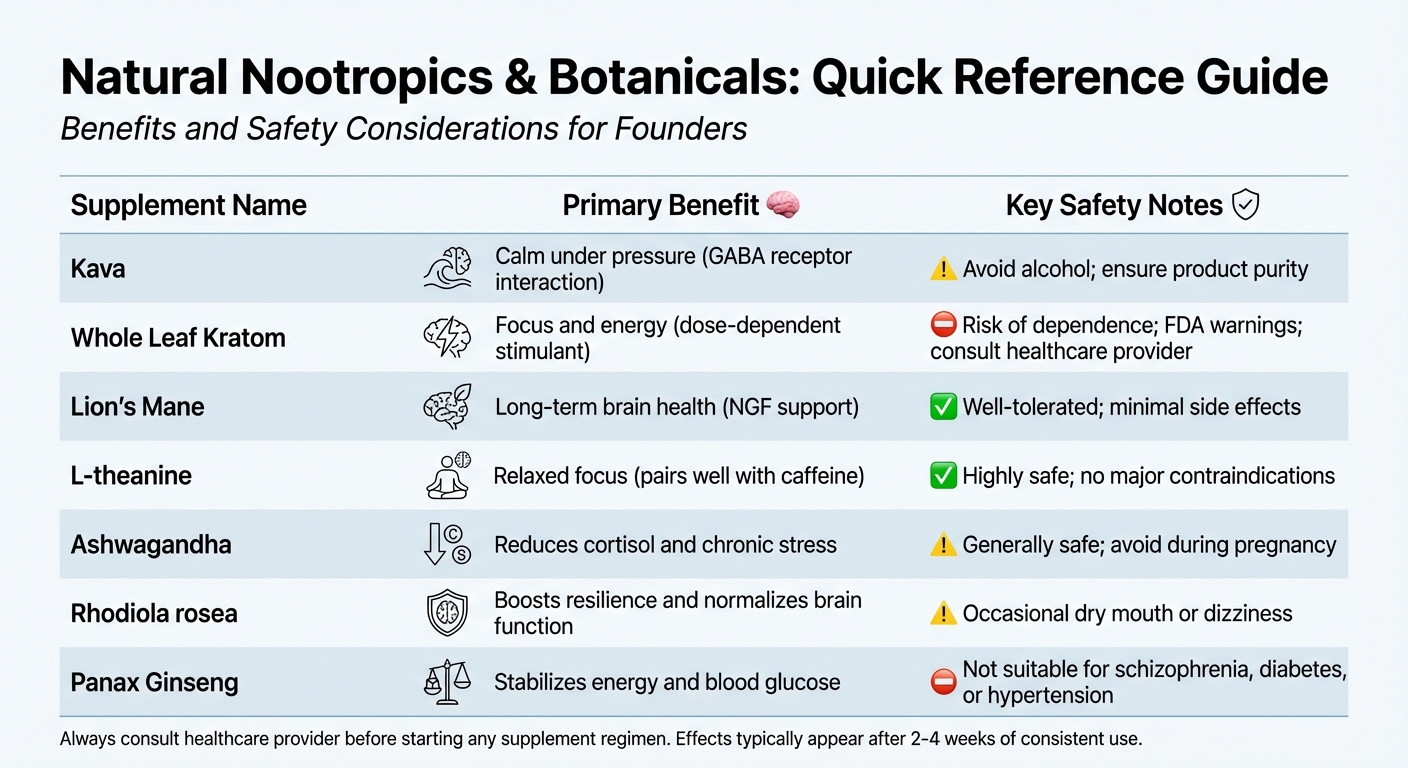
Natural Nootropics Comparison: Benefits and Safety Guidelines for Cognitive Enhancement
Natural nootropics are substances that can support cognitive function without the harsh side effects often tied to synthetic stimulants. They work by influencing neurotransmitters, promoting brain cell health, or helping reduce inflammation. Most take 2–4 weeks to show consistent results. Below, we dive into several botanicals that can help founders stay calm under pressure, maintain focus through long hours, and protect their brain health over time. Each option includes benefits and safety tips to help you decide what fits your needs.
Kava: Calm Under Pressure
Kava interacts with GABA receptors in the brain, promoting relaxation and reducing stress. This makes it a go-to for moments that demand composure, like investor meetings, tough negotiations, or tight deadlines. Unlike alcohol or benzodiazepines, kava encourages calm without the same risks or side effects. Start with a low dose to gauge your reaction, and avoid mixing it with alcohol or other sedatives. Always choose products that have been rigorously tested for purity and safety.
Whole Leaf Kratom: Focus and Energy
Kratom’s effects depend on dosage. At lower amounts, it acts as a mild stimulant, boosting energy and focus. Higher doses, however, lean toward sedation. For founders, the goal is to find that sweet spot where alertness improves without tipping into overstimulation. It's important to note that the FDA considers kratom products adulterated, citing concerns like nausea, dizziness, liver issues, seizures, and the risk of dependence. Withdrawal symptoms may include cravings, agitation, and elevated blood pressure. If you choose to try kratom, start with the lowest effective dose, source from reputable suppliers, and consult a healthcare professional - especially if you're on other medications, as kratom can interfere with drugs like sedatives or antipsychotics.
Lion's Mane Mushroom: Long-Term Brain Health
Lion's Mane supports nerve growth factor (NGF), a protein critical for neuron growth and maintenance. Over time, this can improve memory and overall cognitive function, making it a solid choice for those investing in long-term brain health. It’s generally well-tolerated with minimal side effects and pairs seamlessly with other nootropics. Plus, it doesn’t carry risks of dependence or withdrawal.
L-theanine: Relaxed Focus
Found in tea, L-theanine promotes calm focus by increasing alpha brain wave activity. It’s particularly effective when paired with caffeine, smoothing out jitters and preventing energy crashes. Typical doses range from 100–200 mg, often taken alongside a morning coffee or tea. L-theanine is considered very safe, with no significant contraindications, making it an excellent starting point for those new to nootropics.
Adaptogens: Battling Chronic Stress
Adaptogens help the body handle stress by regulating the hypothalamic-pituitary-adrenal (HPA) axis, which influences cortisol production. Here’s a quick look at three popular adaptogens:
- Ashwagandha: Helps lower cortisol levels by interacting with GABA receptors and the HPA axis. It’s generally safe but should be avoided during pregnancy.
- Rhodiola rosea: Stabilizes brain function and boosts resilience, though side effects like dry mouth or dizziness are possible.
- Panax Ginseng: Provides steady energy by stabilizing blood glucose, but it’s not suitable for individuals with schizophrenia, diabetes, or hypertension.
Adaptogens typically need consistent use over several weeks to show noticeable effects. Start with one at a time to monitor your body’s response before combining them.
Below is a table summarizing the key benefits and safety notes for these supplements, making it easier to compare:
| Supplement | Primary Benefit | Key Safety Notes |
|---|---|---|
| Kava | Calm under pressure | Avoid alcohol; ensure product purity |
| Whole Leaf Kratom | Focus and energy (dose-dependent) | Risk of dependence; FDA warnings; consult healthcare provider |
| Lion's Mane | Long-term brain health (NGF support) | Well-tolerated; minimal side effects |
| L-theanine | Relaxed focus (pairs well with caffeine) | Highly safe; no major contraindications |
| Ashwagandha | Reduces cortisol and chronic stress | Generally safe; avoid during pregnancy |
| Rhodiola rosea | Boosts resilience and normalizes brain function | Occasional dry mouth or dizziness |
| Panax Ginseng | Stabilizes energy and blood glucose | Not suitable for schizophrenia, diabetes, or hypertension |
Quality and safety should always come first. While nearly 77% of Americans take dietary supplements and 72% trust herbal products, trust alone isn’t enough. For instance, kratom products have sometimes been found contaminated with heavy metals or bacteria. Always start with low doses, watch for adverse reactions, and consult a healthcare provider - especially if you’re pregnant, nursing, under 18, or on prescription medications. Most nootropics are not recommended during pregnancy or lactation.
"The use of nootropics by healthy individuals is of great concern due to the lack of clinical evidence regarding their efficacy, safety, and social consequences, especially in long-term use."
– Matěj Malík, Department of Agroenvironmental Chemistry and Plant Nutrition
The long-term effects of natural nootropics on healthy individuals remain uncertain. While they generally carry lower toxicity than synthetic alternatives, they may require higher doses to achieve results. The bottom line? Approach cognitive enhancement with caution and make informed choices - this isn’t the time for reckless experimentation.
How to Build Your Cognitive Enhancement Routine
Designing a cognitive enhancement routine is about creating a system that fits your lifestyle while targeting focus, memory, and stress management. The aim is to find a balance that delivers consistent benefits without unwanted side effects or tolerance buildup. By taking a thoughtful, step-by-step approach, you can tailor your routine to meet your specific cognitive needs.
Creating a Simple, Effective Stack
Start small. Begin with one or two compounds at the lowest effective dose to understand how they interact with your body. This "minimum viable dose" strategy helps you isolate effects and avoid unnecessary complications.
A well-known beginner stack combines caffeine and L-theanine in a 1:2 ratio - for instance, 100 mg of caffeine paired with 200 mg of L-theanine. Studies show this combination can improve task accuracy by 15% and reaction time by 12% when taken about 30 minutes before high-focus activities.
After 2–3 weeks, once you’ve adjusted to your base stack, consider adding complementary compounds. For example, Citicoline (250–500 mg) can enhance neurotransmitter production and brain energy metabolism, while Lion’s Mane (500 mg daily) supports long-term brain health by promoting nerve growth factor. These additions can enhance your cognitive toolkit without interfering with your primary focus stack.
Define your goals using the S.M.A.R.T. method. Are you aiming for sharper communication during meetings, deeper concentration for creative work, or better stress management? Tailor your stack accordingly. For instance, if stress is a constant challenge, adaptogens like Panax Ginseng might help. If you’re struggling with afternoon energy dips, N-Acetyl L-Tyrosine could replenish neurotransmitters depleted by stress.
Keep it simple. Avoid piling on too many supplements at once. More ingredients don’t guarantee better results - they just make it harder to pinpoint what’s working (or not). If using multiple choline sources like Alpha-GPC and Citicoline, reduce the dose of one to avoid “choline dominance,” which can cause brain fog and lethargy.
Timing and Dosage for Best Results
Timing is everything. Align your supplements with your daily rhythms to maximize effectiveness and avoid disrupting sleep.
- Morning (7:00–9:00 AM): Take foundational nootropics like Citicoline (250–500 mg), Bacopa Monnieri (300 mg), and Panax Ginseng (200–400 mg) with breakfast. These compounds work best with consistent use over weeks to support brain metabolism and memory.
- Pre-Work (30 minutes before focus session): Use fast-acting stacks like caffeine and L-theanine to sharpen focus without the jitters.
- Midday (Before 2:00 PM): Incorporate 10–20 minutes of brisk exercise to give your executive function an immediate boost.
- Evening (After 6:00 PM): Wind down with magnesium and an hour of screen-free time to improve sleep quality and recovery.
Be mindful of stimulant timing. Caffeine has a half-life of 5–6 hours, so consuming it too late can disrupt sleep. Similarly, Panax Ginseng can trigger insomnia in some users when taken in the evening.
For fat-soluble supplements like Bacopa Monnieri, pair them with meals containing healthy fats - think avocado, nuts, or olive oil. This improves absorption and minimizes gastrointestinal discomfort.
Cycle your supplements to avoid tolerance. For example, use Panax Ginseng for 6–8 weeks, followed by a 2-week break. Similarly, if caffeine starts losing its edge or causing jitters, try a "5 days on, 2 days off" schedule.
| Time of Day | Recommended Protocol | Primary Benefit |
|---|---|---|
| Morning (7–9 AM) | Citicoline (500 mg) + Bacopa (300 mg) | Supports memory and brain cell health |
| Pre-Work | L-Theanine (97 mg) + Caffeine (40 mg) | Boosts focus without jitters |
| Midday | 10–20 min brisk exercise | Enhances executive function |
| Evening | Magnesium + screen-free time | Improves sleep and recovery |
Safety Guidelines and Risk Management
A solid cognitive routine starts with the basics: consistent sleep (7–9 hours per night), hydration (about 3 liters daily), and regular exercise (150 minutes per week). As biohacker Stephen M. Walker II puts it:
"Jet fuel only really works when the jet is built properly".
Track your progress. Use an app or journal to log mood, focus, and any side effects. Review your data after 2–3 weeks to decide whether tweaks are needed.
Always consult your healthcare provider before starting any regimen, especially if you’re taking medications. For instance, Panax Ginseng can interact with blood thinners like Warfarin and certain diabetes drugs. Bacopa Monnieri may affect thyroid hormones, so it’s not ideal for those with thyroid conditions. Pregnant or breastfeeding individuals should avoid nootropics due to insufficient safety data.
Quality matters. Choose standardized extracts (e.g., Bacopa with 20–50% bacosides) to ensure consistent potency. Avoid products with vague “proprietary blends” that don’t disclose ingredient amounts. Remember, your brain uses 20% of your body’s energy, so don’t skimp on quality.
Stick to recommended doses. Caffeine, for example, should be capped at 400 mg daily to prevent side effects. Going beyond recommended limits doesn’t boost performance - it just raises risks. As researcher Matěj Malík warns:
"The use of nootropics by healthy individuals is of great concern due to the lack of clinical evidence regarding their efficacy, safety, and social consequences, especially in long-term use".
A well-planned, sustainable routine is key. If you notice side effects or diminishing returns, scale back rather than pushing through. Think of your routine as a long-term strategy, not a quick fix. When done right, it can help you stay sharp and steady for the road ahead.
Lifestyle Habits That Support Cognitive Performance
Core Practices for Brain Health
Natural nootropics can give your brain a boost, but without solid lifestyle habits like sleep, nutrition, and exercise, even the most advanced strategies fall short.
Sleep matters more than you think. During sleep, your brain clears waste, repairs itself, and strengthens neural connections. Adults need 7–9 hours of quality sleep to function at their best. Losing even one hour can leave you foggy and slow to react. The QQRT framework can help you evaluate your sleep: Quantity (7–9 hours), Quality (uninterrupted cycles), Regularity (consistent sleep/wake times within 30 minutes), and Timing (aligned with your natural rhythm). To optimize your sleep, soak up 10–15 minutes of morning sunlight right after waking, keep your bedroom cool (around 67°F or 19.4°C), and avoid caffeine 8–10 hours before bed. As biohacker Dave Asprey puts it:
"Sleep is where brain health begins. Without good quality sleep, it doesn't matter how much coffee you drink, or how many supplements you take, you won't be able to think clearly and focus without it."
Fuel your brain with the right nutrition. Stable blood sugar is key to avoiding energy crashes and brain fog. Low-glycemic foods like steel-cut oats, lentils, and apples can help. Omega‑3s, found in fatty fish like salmon or sardines, support brain cell membranes - fitting, since your brain is about 60% fat. Aim for two servings of fatty fish weekly or supplement with 1,000–2,000 mg of EPA/DHA. Even mild dehydration - losing just 1–2% of body water - can slow reaction times by up to 18%. Start your day with about 500 ml of water and hydrate before periods of intense focus. A Mediterranean diet, rich in healthy fats and vegetables, is also linked to a reduced risk of age-related cognitive decline.
Exercise keeps your brain sharp. Aerobic workouts improve executive function and processing speed, as shown in analyses of thousands of clinical trials. Physical activity boosts Brain-Derived Neurotrophic Factor (BDNF), increases blood flow to the brain, and enhances gray matter in areas like the hippocampus and prefrontal cortex. Following the 150/75 rule - 150 minutes of moderate cardio or 75 minutes of vigorous activity weekly - can help. Even short bursts of 10-minute vigorous activity throughout the day can lower the risk of cardiovascular-related death by 38%.
Building these habits into your routine ensures consistent cognitive performance.
Sample Daily Schedule for Founders
Here’s how you might structure your day to integrate these habits while balancing work and recovery:
- 7:00 AM – Morning Foundation: Wake up consistently, get 10–15 minutes of sunlight, and drink 500 ml of water. Pair a nutrient-rich breakfast (like avocado or nuts) with foundational nootropics such as Citicoline or Bacopa Monnieri.
- 8:00 AM – Movement Block: Spend 30 minutes on aerobic exercise, like running or cycling, to boost BDNF and brain blood flow.
- 9:00 AM – Deep Work Session 1: Take a pre-work stack (caffeine and L-theanine in a 1:2 ratio) about 30 minutes before starting, then focus on 90–120 minutes of uninterrupted work.
- 12:00 PM – Midday Reset: Have a low-glycemic, protein-rich lunch with leafy greens, followed by a brisk 10–20 minute walk. Rehydrate with another glass of water.
- 1:00 PM – Deep Work Session 2: Tackle tasks like writing or coding. Skip caffeine in the afternoon to protect your sleep.
- 4:00 PM – Administrative Block: Use this time for meetings, emails, or less demanding tasks, as energy tends to dip naturally.
- 6:00 PM – Evening Wind-Down: Dim lights, reduce screen time, and relax with activities like reading or meditation.
- 10:00 PM – Sleep Prep: Ensure your bedroom is cool (around 67°F or 19.4°C) and dark. Use blackout curtains or an eye mask if needed, and aim for 7–9 hours of sleep.
Reviewing and Adjusting Your Approach
Once your routine is in place, check in every 2–3 weeks to see how it’s working. Use a journal or tracking app to monitor mood, focus, and energy levels. Are you hitting your S.M.A.R.T. goals? Is your sleep efficiency above 85% on your wearable tracker? Are your wake/sleep times consistent? If something feels off, scale back and focus on the basics instead of overloading yourself.
Be flexible. If you’re traveling across time zones, for instance, prioritize keeping a steady sleep schedule over perfect supplement timing. During high-stress periods, double down on sleep, hydration, and exercise before adding anything extra.
The goal is a sustainable system that keeps you sharp and resilient. When your lifestyle is dialed in, nootropics become an enhancement - not a crutch.
Conclusion: Getting Started with Cognitive Enhancement
Building a solid foundation and taking a step-by-step approach can turn cognitive enhancement from a short-term fix into a lasting upgrade. As entrepreneur and biohacker Stephen M. Walker II wisely says:
"Jet fuel only really works when the jet is built properly."
Start with the basics: aim for 7–9 hours of quality sleep each night, drink about 3 liters of water daily, and commit to 150 minutes of aerobic exercise per week.
When introducing nootropics, less is more at the beginning. A simple combo like caffeine and L-theanine (100 mg:200 mg) is a great starting point. Stick with it for at least a week, tracking how you feel, before adding anything new. This methodical approach creates a strong base for steady cognitive improvements.
Natural nootropics like Bacopa Monnieri or Lion’s Mane take time to work, typically showing noticeable results after 2–4 weeks of consistent use. With ongoing discipline, you could see a 15–30% boost in cognitive performance by 8–12 weeks and as much as 20–40% after six months.
Set S.M.A.R.T. goals - whether it’s sharper focus, improved memory, or staying calm under pressure - and phase in changes gradually. Begin by fine-tuning your lifestyle during Weeks 1–4, add a single nootropic during Weeks 5–8, and integrate additional strategies in Weeks 9–12. Always consult with a professional before trying new supplements.
FAQs
What are the safest natural nootropics for improving focus and mental clarity?
When used thoughtfully, certain natural nootropics can support cognitive performance without major risks. Here are a few popular options:
- L-theanine: Naturally found in tea, this amino acid is known for promoting calm focus and mental clarity, often balancing out the edginess of caffeine.
- Ginkgo biloba: Extracted from the ginkgo tree, it’s believed to enhance blood flow to the brain, potentially aiding memory and concentration.
- Bacopa Monnieri: A staple in Ayurvedic traditions, this herb is often associated with improved recall and a sense of calm.
- Lion’s Mane mushroom: This medicinal mushroom may contribute to nerve growth and overall brain health.
While these compounds are generally well-tolerated, individual experiences can differ. Before adding any of these to your routine, it’s wise to check in with a healthcare provider to ensure they align with your needs. When approached responsibly, these nootropics can offer a boost in focus, memory, and mental endurance - especially useful during high-pressure days.
What’s the best way to start a cognitive enhancement routine?
Starting a cognitive enhancement routine doesn’t have to be complicated. The first step is to define your goals - whether you’re aiming to sharpen focus, improve decision-making, or boost mental clarity. Take stock of where you’re at by evaluating your sleep quality, energy levels, and stress to set a baseline.
From there, build a solid foundation with healthy habits. Prioritize at least 7 hours of good sleep each night, aim for 150 minutes of moderate exercise weekly, drink plenty of water, and stick to a balanced diet. Simple stress-management techniques, like deep breathing exercises or brief meditations, can also make a noticeable difference.
If you’re just starting out, consider a caffeine and L-theanine combo as an entry-level nootropic. For instance, pair a cup of coffee (roughly 100 mg of caffeine) with 100 mg of L-theanine to promote calm, focused energy. Begin with a small dose, monitor how you feel each day, and tweak as needed. The key is consistency - stick with your routine for at least a month before making any big adjustments.
By setting clear intentions, adopting healthy habits, and starting with an approachable nootropic option, you can enhance your cognitive performance without feeling overwhelmed.
What daily habits can help founders improve cognitive performance?
To keep your brain sharp and performing at its best, building daily habits that support mental health and resilience is key. Start with quality sleep - aim for 7–9 hours a night and stick to a consistent sleep schedule to keep your mind refreshed. Adding aerobic exercise like brisk walking, jogging, or cycling for at least 150 minutes a week can boost memory, focus, and blood flow to your brain. Your diet matters too - load up on whole proteins, healthy fats, and plenty of vegetables, and don’t forget to stay hydrated to steer clear of that dreaded "brain fog."
Keep your mind active by challenging it. Learn a new skill, practice active recall, or tackle tough problems to strengthen those neural pathways. On top of that, carving out time for mindfulness or meditation each day can help lower stress, sharpen focus, and build resilience. For an extra edge, some turn to adaptogenic herbs like Rhodiola or Ashwagandha to help manage stress and maintain mental energy. These habits work together to support clear thinking, better decision-making, and staying at the top of your game.
