

Brain Fog Solutions: 6 Natural Remedies
Jan 5th 2026
Brain fog sucks. It’s that groggy, unfocused feeling where your brain feels like it’s wading through molasses. If you’re tired of zoning out mid-thought or struggling to stay sharp, you’re not alone. Stress, lack of sleep, dehydration, and endless distractions are often to blame. But here’s the good news: there are natural ways to clear the mental haze.
Here’s the breakdown of six remedies that can help:
- Kava: Calms stress without killing focus. Best for high-pressure moments.
- Kratom: Boosts energy and focus. Pick the right strain for your needs.
- Lion’s Mane Mushroom: Supports long-term brain health and mental clarity.
- L-Theanine: Promotes calm focus, especially paired with caffeine.
- Rhodiola Rosea: Fights fatigue and helps you stay sharp under stress.
- Ashwagandha: Lowers cortisol and improves focus, especially in the evening.
Each remedy works differently, so you can mix and match based on what’s dragging you down. Whether it’s stress, burnout, or just that 3 PM slump, there’s something here to help you think clearly again. Remember, no magic fixes - just tools to help you work with your brain, not against it.
Disclaimer: These statements haven’t been evaluated by the FDA. These products aren’t intended to diagnose, treat, cure, or prevent any disease. Always consult a healthcare professional before trying new supplements.
Natural Remedies for Brain Fog - Plants that Support Cognition, Memory, and Focus
sbb-itb-02d64da
Kava for Stress Relief and Mental Clarity
Kava has long been used as a natural remedy for easing situational stress, especially in high-pressure scenarios. The root contains 18 kavalactones, compounds that enhance GABA receptor activity. This action helps calm the nervous system by reducing excitatory neurotransmitters often linked to brain fog. Interestingly, kava binds to specific GABA receptors, which may lower the risk of addiction compared to other calming agents.
"For situational stress, I look to remedies that tamp down stress hormones and support the adrenals... Kava root contains kavalactones, compounds that influence a range of neurobiological activities related to anxiety, including modulating GABA receptors." – Henry Emmons, MD, Integrative Psychiatrist
In a review of 11 randomized controlled trials involving 645 participants, kava was shown to significantly reduce anxiety in 10 of the studies. This supports its dual role in easing anxiety while maintaining mental clarity. Unlike many sedatives, kava helps manage stress without dulling your focus - an essential benefit during demanding situations.
How Kava Reduces Brain Fog
Beyond its stress-relief capabilities, kava's effect on neurotransmitters helps combat brain fog directly. Kavalactones inhibit monoamine oxidase and limit the reuptake of noradrenaline and dopamine. This mechanism makes kava particularly effective for acute stress when clear thinking is critical. Clinical studies have tested kavalactone doses ranging from 60 mg to 280 mg, showing that kava can rival traditional tranquilizers in anxiety management.
How to Use Kava Safely
To reduce potential risks, keep your daily intake under 240 mg of kavalactones. Opt for water-based kava preparations, as they are traditionally used and considered gentler on the liver compared to alcohol- or acetone-based extracts. Kava is best suited for short-term use during high-stress periods rather than as a long-term solution.
Avoid mixing kava with alcohol or sedatives, and refrain from activities requiring full alertness after consumption. If you’re on other medications, consult a healthcare professional first, as kava may influence how your body processes certain drugs.
Whole Leaf Kratom for Sustained Energy
Whole Leaf Kratom offers a steady energy boost that lasts throughout the day. Its active compounds, mitragynine and 7-hydroxymitragynine, interact with receptors in the body to create effects similar to stimulants when taken in smaller amounts. Unlike the jittery highs and sudden crashes linked to coffee or energy drinks, many users describe the energy from kratom as smooth and calming, helping to ease feelings of restlessness.
The effects typically kick in within 5–10 minutes and can last up to five hours. For busy professionals, this translates to sharper focus and mental clarity during those critical afternoon hours when brain fog often strikes. In Southeast Asia, workers have long relied on kratom to stay productive and combat fatigue during grueling workdays. Kratom is also said to elevate serotonin and dopamine levels, which play a role in mood regulation and stress management. This combination of clarity and sustained energy makes it a valuable ally for entrepreneurs aiming to stay sharp and effective.
A survey of 2,798 kratom users found that 67% used it to help manage anxiety symptoms. In small doses, kratom can enhance alertness, focus, and even sociability, making it a handy option for navigating high-pressure situations. For most, doses between 1–5 grams provide these effects for 3–4 hours. Selecting the right strain is key to tailoring these benefits to your specific needs.
Choosing the Right Kratom Strain
Kratom strains vary in effects depending on their vein color. Green vein strains, such as Green Maeng Da or Green Borneo, offer a balanced mix of energy and calm, making them ideal for daytime use. White vein strains, like White Thai, provide sharper energy and mental clarity, perfect for tackling morning sluggishness. On the other hand, red vein strains, such as Red Bali, are known for their relaxing, sedative effects and are better suited for unwinding in the evening.
| Strain Type | Primary Effect | Best Time of Day | Entrepreneurial Benefit |
|---|---|---|---|
| Green Vein | Balanced energy & focus | Morning / Mid-day | Consistent productivity without jitters |
| White Vein | High energy & clarity | Morning | Beating morning or afternoon brain fog |
| Red Vein | Relaxation & sedation | Evening | Decompressing after stressful workdays |
Adding Kratom to Your Daily Routine
Start with 1–2 grams to gauge your tolerance, keeping doses under 5 grams during work hours to avoid sedative effects. A small dose in the early afternoon can help fend off the dreaded "afternoon slump" without disrupting your sleep later. To maintain its effectiveness, try rotating between different strains rather than sticking to one daily. However, it’s important to note that kratom can interact with medications and has not been approved by the FDA. Always consult a healthcare provider before incorporating it into your routine. The FDA has also flagged potential risks, including addiction, dependence, and liver issues. With proper dosing and strain selection, kratom can be a useful addition to your productivity toolkit. Next, let’s explore another natural option for enhancing focus.
Lion's Mane Mushroom for Cognitive Function
Lion's Mane contains hericenones and erinacines, compounds that stimulate NGF (nerve growth factor) production. This process encourages neurogenesis, supports neuroplasticity, and shields neurons from oxidative stress and inflammation. Research suggests that taking 750 mg daily for 16 weeks can improve cognitive performance, while incorporating 500 mg into a nootropic stack may enhance reaction time within just 30 days. Animal studies have also shown that Lion's Mane can reduce nerve injury recovery time by 23%–41%. Let’s explore how this mushroom works and how you can add it to your routine.
How Lion's Mane Supports Brain Health
Lion's Mane’s active compounds are able to cross the blood-brain barrier, triggering NGF production. This promotes the growth of new neurons and strengthens neural connections, as demonstrated by super-resolution microscopy. Research from the Queensland Brain Institute found that extracts from Lion's Mane enlarge neuronal growth cones - specialized areas that help brain cells sense their surroundings and form new connections.
Users often report reduced brain fog and improved mental clarity within 1–4 weeks, while sharper memory recall typically develops between 4–8 weeks. Long-term benefits, such as nerve regeneration and protection against cognitive decline, generally appear after 8–12 weeks of consistent use.
Adding Lion's Mane to Your Diet
For cognitive benefits, aim for a daily dose of 500 mg to 1,500 mg. Higher doses, up to 3,000 mg, may be helpful for those dealing with severe brain fog. One popular method is mixing Lion's Mane powder into your morning coffee along with healthy fats like MCT oil, coconut oil, or butter to improve absorption. Alternatively, capsules offer a convenient way to ensure precise dosing. When selecting a product, choose one labeled as "fruiting body" or "full-spectrum extract", as these are typically richer in active compounds. Avoid mycelium-based products, which may contain fillers.
"Lion's Mane is a beautiful white mushroom... long been treasured in Asian medicine for nourishing the brain and nerves, and is often called a natural nootropic."
– Dr. Vijay Murthy, Functional Medicine Doctor, The Murthy Clinic
Lion's Mane is non-toxic and caffeine-free, but it may slow blood clotting and lower blood sugar levels. If you’re scheduled for surgery, stop using it at least two weeks beforehand. Those on diabetes medication should monitor their blood sugar closely. While side effects are uncommon, some people may experience mild stomach discomfort or allergic reactions. Always consult your healthcare provider before starting any new supplement, especially if you are pregnant, breastfeeding, or managing an autoimmune condition.
L-Theanine for Focused Calm
L-Theanine has a unique ability to cross the blood-brain barrier, where it enhances alpha brain waves (8–13 Hz) and influences key neurotransmitters like GABA, dopamine, and serotonin. This creates a state of alert calmness - a sharper focus without the sluggishness. When combined with caffeine in a 2:1 ratio, it maintains mental clarity while reducing caffeine-induced jitters. Let’s dive into the science and optimal dosing strategies to unlock these cognitive benefits.
"L-theanine promotes relaxation without drowsiness, enhancing alpha brain waves associated with a state of 'alert calmness.' This unique quality helps clear the mind, improve focus, and boost cognitive function."
– Dr. Sony Sherpa, Holistic Medicine Advocate, Natures Rise
The Science Behind L-Theanine
After ingestion, L-Theanine reaches peak levels in the bloodstream around 48 minutes, with a half-life of about 65 minutes. It works by competitively inhibiting glutamate receptors, helping regulate excitatory neurotransmission. In a clinical trial, participants who consumed 200 mg of L-Theanine daily for four weeks showed measurable improvements in verbal fluency and executive functioning. Interestingly, L-Theanine accounts for up to 50% of the amino acids in tea leaves, making it a standout bioactive compound in green tea.
L-Theanine Dosage and Sources
For mental clarity without sedation, a daily dose of 100–200 mg taken in the morning or early afternoon is effective. A single cup of green tea typically provides 20–60 mg of L-Theanine, so reaching therapeutic levels often requires supplements or Matcha. For those seeking an extra mental edge, pairing L-Theanine with caffeine at a 2:1 ratio - such as 200 mg of L-Theanine with 100 mg of caffeine - can enhance focus while smoothing out caffeine’s jittery effects. Toxicology studies in rats indicate a "no observed adverse effect level" at doses as high as 4,000 mg per kg of body weight, highlighting its broad safety profile.
Rhodiola Rosea for Fighting Fatigue
Rhodiola Rosea has earned a reputation for helping the body handle stress more effectively, particularly during demanding times. Unlike stimulants that often lead to a crash, this adaptogen supports sustained mental energy by promoting what researchers call "overall stress resistance" - essentially helping you stay sharp under pressure. It achieves this by balancing key neurotransmitters like serotonin, dopamine, and norepinephrine, while also shielding brain cells from stress-induced damage.
Scientific studies back these benefits. Research shows that daily doses between 100 mg and 576 mg can significantly reduce mental fatigue, sharpen focus, and lower cortisol levels.
"Rhodiola, acting as an adaptogen, increases attention and endurance in situations of decreased performance caused by fatigue." – Mind Lab Pro
Let’s dive into how Rhodiola works on a deeper level to manage stress.
How Rhodiola Modulates Stress
Rhodiola plays a key role in supporting the HPA axis, the system that regulates cortisol, your body’s primary stress hormone. Elevated cortisol over time can harm the hippocampus, the brain region crucial for memory and learning - something particularly concerning for those with relentless workloads. Instead of suppressing cortisol outright, Rhodiola helps your body maintain balance, ensuring a proper stress response without overtaxing your adrenal system.
For optimal results, look for extracts standardized to a 3:1 ratio of rosavins to salidrosides, which reflects the plant’s natural composition. This balanced approach to cortisol regulation makes Rhodiola a reliable choice for daily use.
Using Rhodiola Effectively
The ideal dose of Rhodiola ranges from 100 mg to 600 mg daily. Start small - around 50–100 mg in the morning or early afternoon - to see how your body reacts before increasing the dose. Keep in mind that Rhodiola follows a bell-curve effect: doses exceeding 680 mg may actually reduce its effectiveness.
To maximize its benefits, use Rhodiola in cycles of 20 to 30 days. Pair it with proper hydration, which supports your brain’s glymphatic system - a critical process for clearing out waste during sleep. While you may notice immediate effects within 30 to 90 minutes, consistent daily use for 1–2 weeks is necessary to fully enhance focus and mood. For the best results, stick with it for 4–6 weeks.
One caution: avoid taking Rhodiola late in the evening, especially if you’re sensitive to its stimulating effects, as it could interfere with your sleep.
Ashwagandha for Stress Resilience
Ashwagandha is a widely studied herb known for its ability to help the body handle chronic stress and mental fatigue. Unlike temporary solutions that just cover up the symptoms, this adaptogen works to balance your stress response across all stages - whether you're in the initial alarm phase, the resistance phase, or even the exhaustion phase. For entrepreneurs and high-achievers, this means staying mentally sharp and composed even when the pressure is on.
One of Ashwagandha’s key strengths lies in how it manages cortisol, the primary stress hormone. Elevated cortisol levels can hijack your brain, shifting energy from critical thinking to the "fight-or-flight" response. By helping to break down and regulate these stress hormones, Ashwagandha restores your brain's ability to focus and make clear decisions.
How Ashwagandha Helps with Cortisol and Brain Fog
Scientific studies back up Ashwagandha’s benefits, especially when it comes to mental clarity and stress management. Research shows that taking 225 mg of liposomal Ashwagandha daily can improve memory, reaction speed, and executive function in just 30 days. For even greater stress relief, 600 mg daily (split into two doses) has been shown to significantly lower cortisol levels and boost overall mental well-being.
"Ashwagandha supplementation (225 mg) may improve some measures of memory, attention, vigilance, and executive function while decreasing perceptions of tension and fatigue." – Nutrients Journal (MDPI)
This herb also provides neuroprotection by crossing the blood-brain barrier, which may help reduce the risk of developing beta-amyloid plaques - linked to long-term cognitive decline. For anyone aiming to keep their mind sharp during a demanding career, Ashwagandha offers a solid line of defense.
Incorporating Ashwagandha Into Your Evening Routine
Ashwagandha’s cortisol-lowering properties make it an excellent addition to your evening routine, especially if late-night work or screen time keeps your stress levels elevated. By reducing lingering cortisol, it supports better recovery and helps you wind down. Improved sleep also speeds up the brain’s natural process of clearing out metabolic waste, leaving you mentally refreshed.
Start with a daily dose of 225 mg to 600 mg, depending on your stress levels. While some cognitive benefits, like sharper executive function, can appear within six hours, consistent use over 30 days tends to yield the most noticeable improvements in memory and stress resilience. To ensure safety and purity, choose supplements that have third-party testing or NSF certification, as contamination can sometimes occur in Ayurvedic products.
Ashwagandha also pairs well with daytime L-Theanine, addressing physical stress in ways L-Theanine cannot. However, always consult with a healthcare provider before starting any new supplement, especially if you’re on medication, as interactions are possible.
Comparing the 6 Remedies
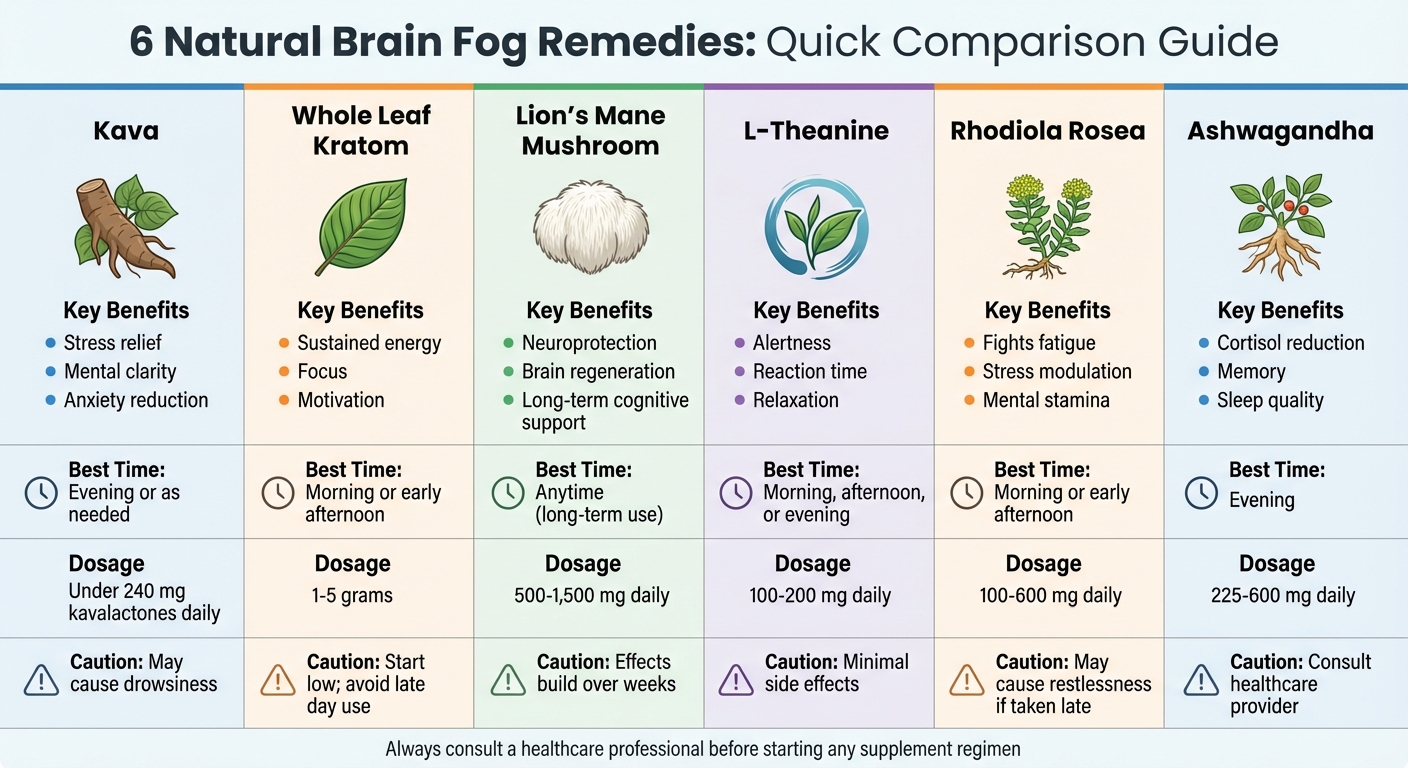
Brain Fog Remedies Comparison: 6 Natural Solutions for Mental Clarity
These six remedies tackle brain fog in different ways, letting you pick the one that best fits your needs - whether that’s easing stress, sharpening focus, or promoting long-term brain health. The table below offers a quick snapshot of how each remedy works, when to use it, and what to keep in mind.
L-Theanine stands out for its versatility, offering a boost to alertness at any time of day. Ashwagandha, on the other hand, works best in the evening, helping to improve sleep and manage stress. Lion's Mane Mushroom is more of a long-term ally, known for its neuroprotective properties and potential to support brain tissue regeneration and mental clarity over time.
Comparison Table of Remedies
| Remedy | Key Benefits | Best Time to Use | Considerations |
|---|---|---|---|
| Kava | Stress relief, mental clarity, anxiety reduction | Evening or as needed for stress | May cause drowsiness; ensure product quality |
| Whole Leaf Kratom | Sustained energy, focus, motivation | Morning or early afternoon | Start with low doses; avoid using late in the day |
| Lion's Mane Mushroom | Neuroprotection, brain tissue regeneration, long-term cognitive support | Anytime (long-term use) | Gradual effects; benefits build over weeks |
| L-Theanine | Alertness, reaction time, relaxation | Morning, afternoon, or evening | Well-tolerated; minimal side effects |
| Rhodiola Rosea | Fights fatigue, stress modulation, mental stamina | Morning or early afternoon | May cause restlessness if taken too late |
| Ashwagandha | Cortisol reduction, memory, sleep quality | Evening | - |
This breakdown highlights how each remedy uniquely contributes to mental clarity and stress relief.
It’s worth noting that natural cognitive enhancers aren’t without potential downsides. Some users may experience headaches, increased anxiety, upset stomach, insomnia, a faster heart rate, or irritability. Older adults might be more prone to side effects due to a weaker blood-brain barrier and slower metabolism as they age. To stay safe, choose products manufactured in cGMP-compliant facilities and verified by third-party testing, as supplements aren’t tightly regulated by the FDA.
Conclusion
Armed with the natural strategies we've explored, you're better equipped to tackle brain fog and regain mental clarity. Whether it's kava, Whole Leaf Kratom, Lion's Mane, L-Theanine, Rhodiola, or Ashwagandha, each offers unique support for stress relief, energy, or long-term brain health. The key is to choose options that address your specific hurdles - whether that's burnout, fatigue, or a lack of focus.
Shifting from caffeine to adaptogens or nootropics can provide steady energy and sharper focus. As Ana McRae, Life & Business Success Coach, wisely notes:
"Your business plateaus when you work too much and it quantum leaps when you prioritize your energy first".
These natural remedies work with your body's rhythms rather than pushing it into overdrive, aligning with that philosophy.
Pinpoint the root cause of your brain fog - stress, exhaustion, or focus issues - and combine one or two of these solutions with essential habits like staying hydrated and getting quality sleep. For instance, pairing L-Theanine with your morning coffee can promote calm focus, while incorporating Ashwagandha into your evening routine may help lower cortisol and improve mental clarity for the next day.
Before diving into any supplement regimen, check for common deficiencies in Vitamin D, B12, or iron, as these can often mimic brain fog symptoms. Stick to GMP-certified, third-party–verified products, and consult a healthcare professional to ensure these choices are safe and effective for your unique needs.
With these tools in hand, you can cut through the mental haze and tackle your entrepreneurial goals with renewed clarity and purpose.
FAQs
How can I find the best natural remedy for my brain fog symptoms?
To tackle brain fog with natural remedies, start by pinpointing your main symptom. Are memory lapses, trouble focusing, fatigue, or mood swings holding you back? Identifying the dominant issue can guide you toward the most effective approach.
If memory lapses are the problem, try nootropics such as bacopa or citicoline, along with essential vitamins like B12 or D. Struggling with focus? Adaptogens like ashwagandha or rhodiola might provide support. For fatigue, consider herbs like kava or supplements like magnesium to boost energy. If mood swings are the challenge, stress-balancing adaptogens and omega-3 fatty acids could help restore balance.
Start with a single trusted option - perhaps an adaptogen blend priced around $29.99 - and monitor your mental clarity for a week. Make adjustments as needed, and combine these remedies with proper sleep, hydration, and regular exercise to maximize their effectiveness.
Are there any risks or side effects to using these natural remedies for brain fog?
Yes, while natural remedies like kava, nootropics, and botanicals are often seen as safe, they’re not without potential risks. For instance, kava contains compounds that influence the central nervous system and, in rare cases, has been associated with serious liver problems. Other possible side effects include dizziness, skin irritation, or an upset stomach, especially when consumed in high doses or mixed with alcohol.
Similarly, other remedies like whole-leaf kratom or certain mushroom extracts might trigger mild side effects such as allergic reactions, trouble sleeping, or digestive issues. Some ingredients can also interact with prescription medications or pose risks for people with specific health conditions. To minimize risks, start with a low dose, monitor how your body responds, and consult a healthcare provider if you're pregnant, have liver problems, or are on other medications.
Can I combine these natural remedies for brain fog, and how should I add them to my routine?
When exploring natural remedies for brain fog, combining them can be effective, but it’s crucial to take a gradual approach. Start with the basics: aim for 7–9 hours of quality sleep, stay active with regular exercise, drink plenty of water, and focus on a nutrient-rich diet. Incorporate foods like lean proteins, leafy greens, and healthy fats - these foundational habits can go a long way in improving mental clarity.
Once your lifestyle is on track, you can introduce supplements one at a time. Begin with options that are generally well-tolerated, such as omega-3 fatty acids, a B-complex vitamin (especially B6, B12, and folate), or vitamin D. If you're interested in herbal remedies, consider starting with adaptogens like ashwagandha, rhodiola, or ginseng. Use the smallest effective dose and pay attention to how your body responds. For stronger botanicals like Kava or whole-leaf Kratom, proceed cautiously and only after building tolerance to milder options. These should ideally be used under professional supervision, as they may come with additional risks.
To minimize potential interactions, wait 3–5 days before introducing another remedy. If you have any medical conditions, take prescription medications, or are pregnant, consult a healthcare provider beforehand. This step-by-step method helps you safely explore combinations while keeping side effects in check.
