

Botanical Supplements FAQ: Safety and Effects
Jan 5th 2026
Kava and kratom are plant-based supplements people use for stress relief, focus, and energy. But they’re not without risks. Kava, sourced from the South Pacific, is known for its calming effects but can harm the liver if misused. Kratom, from Southeast Asia, can boost energy at low doses but carries a high risk of addiction and withdrawal. Both require careful dosing, quality checks, and should never be mixed with alcohol or sedatives.
Key takeaways:
- Kava: Helps with relaxation but may cause liver issues. Stick to peeled noble roots. Avoid long-term use.
- Kratom: Increases energy at low doses but is addictive. Watch for contamination and legal restrictions.
- Always check for third-party testing (CoA) and avoid if pregnant, nursing, or on sedatives.
These supplements aren’t FDA-approved to treat any condition. Consult a healthcare provider before use.
What Are Kava and Whole Leaf Kratom?
Kava: A Natural Way to Unwind
Kava (Piper methysticum) hails from the South Pacific islands like Fiji, Vanuatu, and Papua New Guinea, where its roots have been used for centuries in ceremonies and social gatherings. The secret lies in its kavalactones, which interact with GABA receptors in the brain, promoting relaxation without dulling mental sharpness.
In the U.S., kava has found a new home in modern settings. Kava bars now offer alcohol-free havens where professionals can de-stress, and kava-based products like extracts and capsules are widely accessible. With the market expected to hit $3.41 billion soon, kava’s appeal keeps growing. For entrepreneurs, it’s a way to stay calm and sociable while maintaining the mental clarity essential for making sound decisions.
Meanwhile, another time-honored botanical offers a different kind of support for energy and focus.
Whole Leaf Kratom: Boosting Energy and Focus
Kratom (Mitragyna speciosa), a tropical tree from Southeast Asia, has long been a go-to for combating fatigue. Workers in Thailand and nearby regions traditionally chewed its leaves or brewed them into tea to power through long days. The plant’s primary alkaloid, mitragynine, interacts with various brain receptors - including those tied to opioids, adrenaline, serotonin, and dopamine - producing effects that vary by dosage.
At lower doses (under 5 grams), kratom can enhance energy and alertness. Higher doses (over 8 grams), however, tend to have sedative effects. For entrepreneurs juggling endless tasks, small amounts of kratom can help sustain focus and productivity during those inevitable energy slumps.
sbb-itb-02d64da
Kava: A Natural Remedy or Risky Drink?
Safety Information for Kava and Whole Leaf Kratom
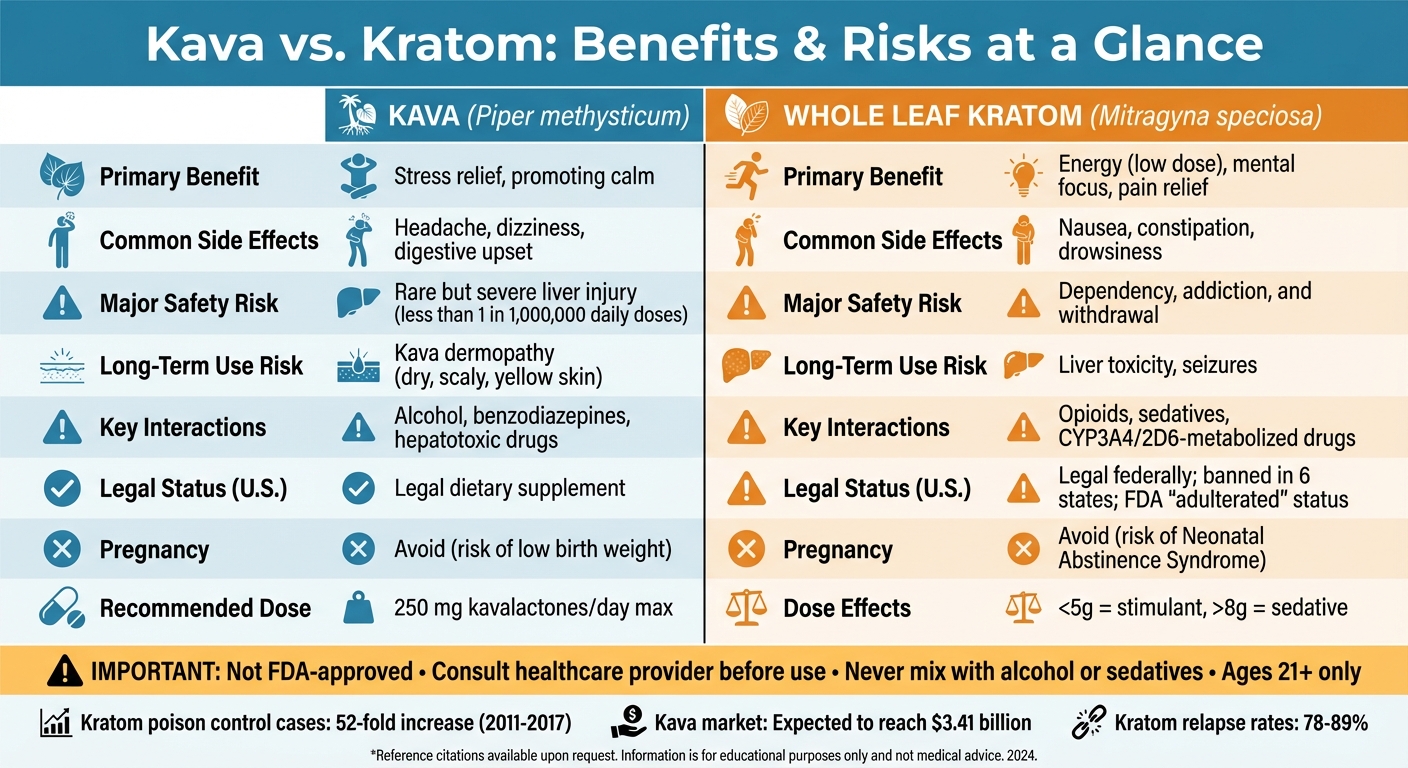
Kava vs Kratom: Benefits, Risks, and Safety Comparison
Kava Safety: What You Need to Know
Kava's most serious concern is its potential to harm the liver. Documented cases of liver injury range between 50 and 100, with the risk estimated at less than 1 in 1,000,000 daily doses. In severe instances, liver transplants have been necessary.
The risk increases when unpeeled stems or tudei cultivars are used instead of noble varieties. To minimize harm, stick to products made from the peeled roots of noble cultivars.
Long-term use (over 1–2 months) can lead to kava dermopathy, a temporary condition causing dry, scaly, and discolored skin. The National Center for Complementary and Integrative Health (NCCIH) notes:
Kava supplements may be helpful for anxiety, but they may need to be taken for several weeks to produce an effect.
Avoid combining kava with alcohol or sedatives like benzodiazepines, as this can lead to respiratory depression or liver failure. Kava also interacts with medications processed by liver enzymes, so consult your healthcare provider if you're on any medications.
These risks should be carefully considered by anyone looking to use kava as part of a stress-relief routine.
Whole Leaf Kratom Safety: What You Need to Know
The primary risk of whole leaf kratom is its potential for addiction and dependence. Its active compound, mitragynine, binds to mu-opioid receptors, similar to opioids, which increases the likelihood of addiction. Withdrawal symptoms resemble those of opioid withdrawal and include cravings, irritability, tremors, agitation, insomnia, and muscle spasms. Relapse rates after cessation are alarmingly high, ranging from 78% to 89%.
Between 2011 and 2017, U.S. poison control centers noted a 52-fold increase in kratom-related cases. Among 935 cases studied, symptoms included agitation (18.6%), tachycardia (16.9%), and drowsiness (13.6%). At higher doses, kratom can cause seizures or even cardiac and respiratory arrest.
Liver toxicity is another concern, typically emerging within 20 days of starting kratom use. The NCCIH has highlighted:
The long-term effects of kratom use are not well understood. There have been reports that long-term use of large doses of kratom may cause serious liver problems in some people.
Contamination is a major issue. Kratom products have been found to contain heavy metals and bacteria like Salmonella. The FDA has labeled kratom as "adulterated" due to its failure to meet safety and purity standards required for dietary supplements. Dr. Yufang Lin from the Cleveland Clinic emphasizes:
Just because kratom is considered 'natural' doesn't mean that it's safe.
Kratom's legal status is messy - it’s federally legal but banned in six U.S. states. The DEA categorizes it as a "drug of concern". Avoid mixing kratom with opioids, benzodiazepines, or other sedatives, as it can inhibit the metabolism of certain medications, raising toxicity risks.
Understanding these risks is essential for anyone considering kratom for managing energy or focus.
Table: Benefits and Risks at a Glance
Here’s a quick comparison of the benefits and risks of kava and whole leaf kratom:
| Feature | Kava (Piper methysticum) | Whole Leaf Kratom (Mitragyna speciosa) |
|---|---|---|
| Primary Benefit | Stress relief, promoting calm | Energy (low dose), mental focus, pain relief |
| Common Side Effects | Headache, dizziness, digestive upset | Nausea, constipation, drowsiness |
| Major Safety Risk | Rare but severe liver injury (less than 1:1,000,000 daily doses) | Dependency, addiction, and withdrawal |
| Long-Term Use Risk | Kava dermopathy (dry, scaly, yellow skin) | Liver toxicity, seizures |
| Key Interactions | Alcohol, benzodiazepines, hepatotoxic drugs | Opioids, sedatives, CYP3A4/2D6-metabolized drugs |
| Legal Status (U.S.) | Legal dietary supplement | Legal federally; banned in 6 states; FDA "adulterated" status |
| Pregnancy | Avoid (risk of low birth weight) | Avoid (risk of Neonatal Abstinence Syndrome) |
How to Use Botanical Supplements Safely
Selecting Quality Botanical Supplements
When it comes to botanical supplements, quality is everything. Since the FDA doesn’t pre-approve these products, it’s up to you to ensure you’re getting something safe and effective. Independent organizations like ConsumerLab and Labdoor can help - they buy supplements straight from stores and test them in labs for purity and label accuracy. Their findings can help you avoid products that don’t match up to their claims.
For added assurance, stick to supplements made in FDA-registered and cGMP-certified facilities. This guarantees consistent quality control. If you’re buying kava, prioritize products made from peeled roots of "Noble" cultivars rather than stems or "two-day" varieties, which have been linked to liver issues. Look for supplements that clearly list standardized active ingredients, such as the kavalactone content in kava or mitragynine levels in kratom.
Testing matters - big time. ConsumerLab’s research found a staggering 3,700% difference in active ingredient levels among milk thistle supplements, and 18% of joint health supplements didn’t meet quality standards. Contaminants like heavy metals (lead, arsenic, cadmium, mercury), aflatoxins, and bacteria such as Salmonella are also concerns. Founders Fuel addresses these risks by rigorously testing its ingredients for purity and potency, all while manufacturing in a GMP-certified facility.
Who Should Not Use These Supplements
Not everyone should use botanical supplements, and knowing when to steer clear is crucial. Avoid them if you’re pregnant, breastfeeding, dealing with liver conditions, or taking sedatives.
Kratom, in particular, carries risks for those with a history of substance abuse. Dr. Sara Zachman, an addiction psychiatrist at Nebraska Medicine, warns:
Some people who start using kratom to boost focus or relax end up unable to stop, spending large amounts of money and centering their daily lives around it.
Between 2011 and 2017, there were 11 recorded deaths in the U.S. linked to kratom exposure.
Both kava and kratom can cause drowsiness and impair coordination, making them unsafe for anyone operating machinery or driving. Additionally, these products are intended only for individuals aged 21 and older.
Dosing Guidelines for Professionals
Once you’ve confirmed the quality of your supplement, proper dosing becomes the next priority. For kava, Western guidelines suggest a daily limit of 250 mg of kavalactones. However, traditional South Pacific practices sometimes involve doses of up to 1–1.5 grams of kavalactone resin per session. Clinical trials show that about 180 mg of kavalactones per day is generally well-tolerated and doesn’t impair driving.
With repeated use, kava’s effects may become more pronounced. For kratom, the effects depend on the dose - lower amounts act as a stimulant, while higher doses are sedative. Start small to gauge your body’s reaction.
Always choose supplements that come with a Certificate of Analysis (CoA) from third-party testing. This ensures the product has been screened for contaminants like heavy metals and bacteria. Never mix these supplements with alcohol or pharmaceutical sedatives, as this can significantly increase the risk of liver damage and over-sedation. A CoA is your best assurance of purity and accurate dosing.
Conclusion
Key Takeaways for Founders and Professionals
Kava is often sought for its calming effects, while whole leaf kratom can provide a boost in energy and focus at lower doses but acts as a sedative at higher ones. However, both come with notable risks. Kava has been linked to liver toxicity, while kratom carries a potential for dependency, with regular users possibly facing withdrawal symptoms upon stopping. These risks highlight the importance of using caution and making informed decisions.
Prioritizing product quality is non-negotiable. Always opt for botanical supplements made in GMP-certified facilities and verified through third-party testing for contaminants. Founders Fuel exemplifies these practices by subjecting their ingredients to rigorous testing to promote safety and consistency.
Practical Recommendations
To ensure safety and maintain optimal performance, keep these practices in mind. Dr. Robert Ashley, an internist and assistant professor of medicine at UCLA, offers this perspective:
Similar to Xanax, Valium, Ativan I would not recommend using kava for the long-term treatment of generalized anxiety. Cognitive behavioral therapy has greater long-lasting benefits.
Before trying these supplements, consult your healthcare provider. Start with a low dose to gauge your individual response, and for kava, do not exceed 250 mg of kavalactones per day. Avoid mixing these products with alcohol or sedatives. Like Founders Fuel, which ensures its products meet stringent quality standards, always choose high-quality, thoroughly tested supplements. Responsible choices today safeguard your long-term health and performance.
FAQs
What safety tips should I follow when using kava or kratom?
When it comes to kava, keeping your liver safe should be a top priority. Some kava extracts have been associated with rare but severe liver problems, including hepatitis and liver failure. If you have liver disease, a history of alcohol abuse, or take medications that impact liver function, it's best to steer clear of kava. Mixing kava with alcohol, sedatives, or other central nervous system depressants is a dangerous combination, as it can heighten sedation and pose respiratory risks. Pregnant or breastfeeding individuals, kids, and those with severe anxiety disorders should avoid kava altogether. Stick to the recommended daily dose of 60–200 mg of kavalactones and limit use to a few weeks unless a healthcare provider advises otherwise.
For kratom, the key is to prevent dependence and avoid toxicity. Its active compounds interact with opioid receptors, which means regular use can lead to dependence, withdrawal symptoms, and, at high doses, serious issues like respiratory depression. Side effects might include nausea, heart problems, liver damage, or mood changes, especially if combined with alcohol, stimulants, or sedatives. Start with the lowest effective dose, avoid daily or high doses, and stop immediately if you notice signs of liver trouble - like jaundice or abdominal pain - or extreme mood changes. People with heart or liver conditions, a history of substance use disorder, or those who are pregnant or nursing should avoid kratom. Always check with a healthcare professional before trying either of these supplements.
How can I make sure botanical supplements are safe and high quality?
To prioritize safety and quality when selecting botanical supplements, stick to reliable brands that offer third-party lab testing results. Ensure the products are clearly labeled as dietary ingredients and meet FDA and DEA standards, confirming they are not classified as controlled substances.
Steer clear of supplements tied to contamination risks or potential health concerns, such as liver damage. Take time to review the product’s safety information and any associated warnings. If you have health conditions or specific concerns, consult a healthcare professional before use. Choosing transparent, high-quality options can support your wellness goals with confidence.
Is it legal to use kratom in the United States?
Kratom is not classified as a controlled substance at the federal level, which means it can generally be sold and used across the United States. However, the FDA has not approved kratom for medical use and categorizes it as a "new dietary ingredient", placing limits on how it can be marketed. Adding to this, the DEA has labeled kratom as a "drug and chemical of concern", highlighting the ongoing scrutiny surrounding its use.
Regulation of kratom largely falls to individual states, resulting in significant variation in laws. While some states have banned it outright, others enforce restrictions like age limits or require specific labeling. Because of these differences, it’s important to research your state’s regulations before purchasing or using kratom. Ignoring local laws could lead to legal consequences.
Both entrepreneurs and consumers need to stay updated on federal guidelines and state-specific laws to remain compliant and avoid potential legal issues.
