

Adaptogens vs Nootropics: Which Works Better for Stress?
Mar 16th 2026
When stress hits, you've got two natural options: adaptogens and nootropics. Adaptogens help your body handle stress over time, balancing hormones like cortisol and building resilience. Nootropics, on the other hand, give you a mental edge, sharpening focus and boosting brainpower for high-pressure moments.
Key Takeaways:
- Adaptogens: Long-term stress support, balances hormones, gradual effects.
- Examples: Ashwagandha (lowers cortisol), Rhodiola (fights fatigue), Holy Basil (calms & supports immunity).
- Nootropics: Quick mental clarity, enhances focus, short-term benefits.
- Examples: L-Theanine (calm focus), Lion’s Mane (neural health), Bacopa (memory boost).
Quick Comparison:
Adaptogens are ideal for chronic stress and burnout, while nootropics shine under tight deadlines or sudden pressure. For the best results, combine them - adaptogens for a steady baseline and nootropics for peak performance when needed.
If you want a shortcut, products like Founders Fuel blend both into a single solution for stress relief and mental clarity.
Do Adaptogens and Nootropics Actually Work? (What the Science Says)
sbb-itb-02d64da
What Are Adaptogens?
Adaptogens are herbs, roots, and mushrooms that help your body handle physical, chemical, and biological stress by promoting balance in your systems. Think of them as a support system for your stress response.
To qualify as an adaptogen, a plant must meet strict criteria: it needs to be non-toxic at normal doses, enhance the body's ability to manage stress, and help restore balance - scientists call this homeostasis. This sets adaptogens apart from quick-fix stimulants like caffeine, which often lead to energy crashes.
"Adaptogens are mediators to help your body minimize stress response and recover from anything that is putting you off balance." - Cleveland Clinic
By 1982, Russian researchers had published over 1,009 studies on adaptogens, with a focus on Eleutherococcus senticosus. Today, with nearly 47% of Americans reporting higher stress levels since the pandemic, U.S. medical experts are taking a closer look at these traditional remedies as research continues to grow.
Let’s break down how they work on a molecular level.
How Adaptogens Work
Adaptogens directly interact with the hypothalamic-pituitary-adrenal (HPA) axis, the system that controls your body's stress response. When stress hits, this axis triggers a hormonal chain reaction, releasing cortisol. While cortisol is vital for short-term survival, prolonged high levels can lead to burnout, brain fog, and a weakened immune system.
Unlike stimulants that spike cortisol and then crash, adaptogens work more subtly. They regulate cortisol levels, helping maintain balance. On a cellular level, they increase Heat Shock Protein 70 (Hsp70), which helps repair damaged proteins and blocks stress-related enzymes like JNK1 that can cause cell death. This approach doesn’t just mask stress - it strengthens your resilience over time.
"Adaptogens act like low molecular weight 'vaccines' or stress-mimetics, which induce mild activation of the stress system in order to cope with more severe stress." - Alexander Panossian, PhD
This leads to heterostasis, a state of balance where your stress response becomes more adaptable - like a dimmer switch instead of an on/off button.
Top Adaptogens for Stress Relief
Certain adaptogens are particularly effective for stress management:
- Ashwagandha: Known for regulating cortisol, it’s been shown to significantly reduce stress, anxiety, and cortisol levels. A 2021 review of 491 participants found doses between 240–12,000 mg/day lowered serum cortisol by –3.27 µg/dL after 56–60 days. It’s also helpful for improving sleep and mood.
- Rhodiola Rosea: Ideal for fighting mental fatigue and boosting performance under pressure. It provides steady energy without the crash, making it a favorite for high-stress work environments.
- Holy Basil (Tulsi): Promotes mental clarity and calm while supporting immune function.
Other notable adaptogens include Ginseng, which enhances energy and endurance, and Schisandra, known for improving focus and coordination. While each adaptogen has unique effects, they all share the same goal: helping your body adapt to stress more effectively over time.
What Are Nootropics?
Nootropics, often called "smart drugs," are substances designed to boost brain functions like memory, focus, clarity, and motivation. Unlike adaptogens, which work over time to improve the body’s stress response, nootropics are aimed at delivering quick cognitive enhancements.
The term "nootropic" was coined in the 1960s by Dr. Corneliu E. Giurgea, who emphasized that these compounds should be safe and free from the harsh side effects typical of neuropsychotropic drugs. Today, the category includes at least 85 recognized supplements, ranging from natural options like Lion’s Mane Mushroom to synthetic ones like Piracetam.
"Adaptogens help you cope better; nootropics help you think better." - Shine+ Drink
While adaptogens focus on stress management, nootropics are all about boosting brainpower, especially in high-pressure situations like deadlines, presentations, or problem-solving challenges.
How Nootropics Work
Nootropics work by enhancing different aspects of brain function. They can modulate neurotransmitters, improve blood flow and mitochondrial activity, and protect neurons from damage. Some even promote neurogenesis, helping to maintain long-term brain health and memory. For example, Lion’s Mane Mushroom stimulates Nerve Growth Factor (NGF), a protein crucial for neuron repair and growth, while L-Theanine boosts alpha brain waves, encouraging a state of calm focus.
The effects of nootropics vary in speed. Some, like L-Theanine and caffeine, act almost instantly. Others, such as Bacopa Monnieri, take weeks of consistent use - typically 300–450 mg daily over 4–12 weeks - to show results. A 2020 study found that Rhodiola Rosea improved stress-related fatigue within just four weeks, with some benefits noticeable after three days at 400 mg per day.
"L-theanine... raises alpha brain waves to promote a 'relaxed but alert' state that's great for creative thinking." - Mind Lab Pro®
These mechanisms make nootropics an appealing choice for those looking to manage stress and sharpen focus simultaneously.
Top Nootropics for Stress and Focus
Here are some standout nootropics for reducing stress and enhancing focus:
- L-Theanine: Known for its calming effects, it supports focus by balancing neurotransmitters like dopamine and serotonin. Often paired with caffeine, it smooths energy levels. Typical dosage: 100–200 mg.
- Lion’s Mane Mushroom: Stimulates NGF production, promoting long-term neural health and improving memory, focus, and mental endurance.
- Bacopa Monnieri: Improves memory and processing speed by maintaining acetylcholine levels. Effects build gradually with consistent use over weeks.
- Alpha-GPC: Shown to enhance mental processing speed by up to 18% in young adults.
- Ginkgo Biloba: Boosts mental clarity and recall by increasing blood flow and oxygen delivery to the brain.
These options provide a range of benefits, whether you’re looking for immediate results or long-term cognitive support.
Adaptogens vs. Nootropics: Key Differences
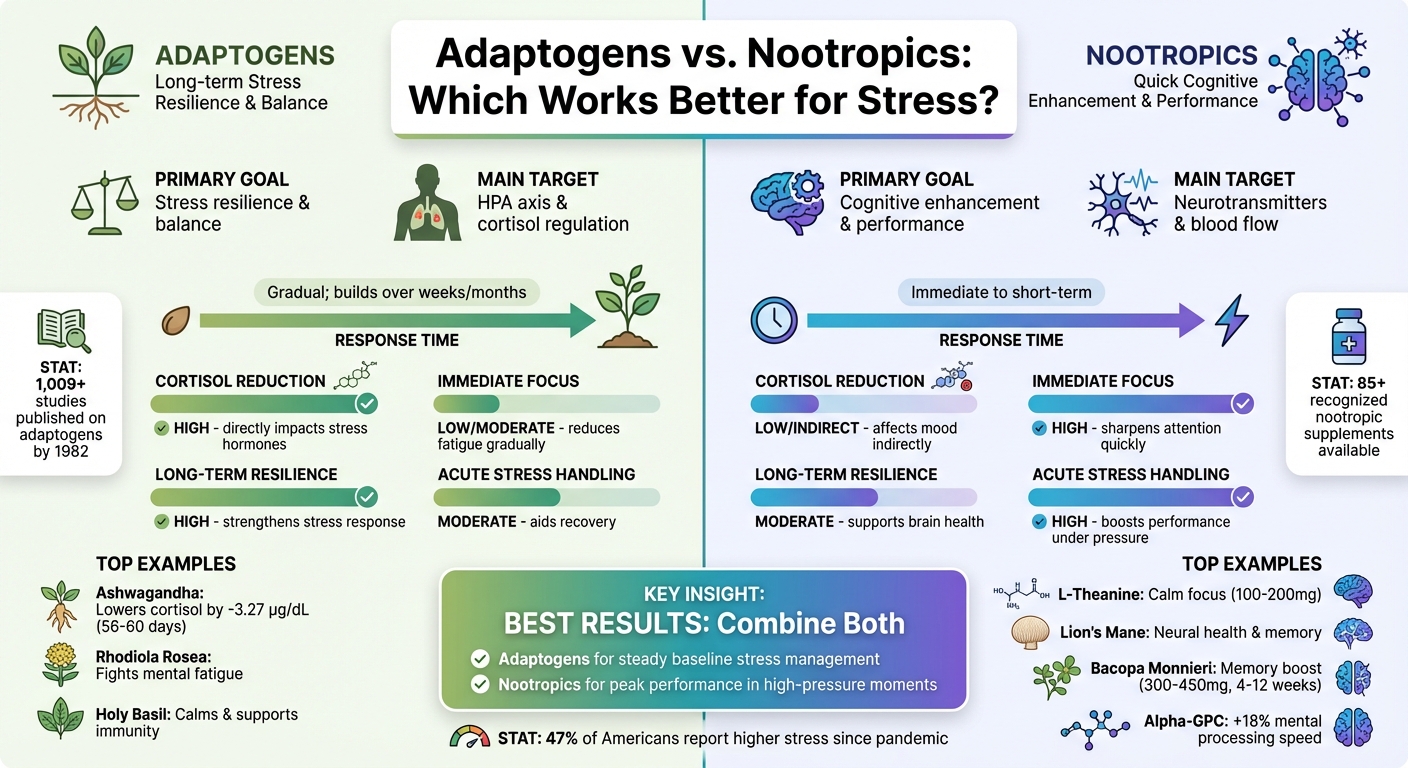
Adaptogens vs Nootropics: Complete Comparison for Stress Management
Adaptogens and nootropics both play a role in managing stress, but they tackle it in completely different ways. Adaptogens work by balancing your body’s stress response, helping to regulate cortisol and adrenaline levels. They focus on building resilience over time.
Nootropics, on the other hand, aim to enhance brain performance. They influence neurotransmitters like acetylcholine, dopamine, serotonin, and GABA, while also improving blood flow and energy use in the brain. Their primary focus is on boosting cognitive function rather than managing hormones.
"Adaptogens are like that steadying hand that helps you maintain your footing... Nootropics are all about optimization - turning the mind's dial up just enough for peak performance."
– Nootroic
The timing of their effects differs as well. Nootropics often deliver quick results, while adaptogens require consistent use over weeks or months to build up their benefits. That said, some adaptogens, like Rhodiola Rosea, can produce noticeable effects in just a few hours. Interestingly, certain botanicals - such as Panax ginseng, Rhodiola Rosea, and Lion’s Mane - offer a mix of both adaptogenic and nootropic properties, providing stress relief alongside cognitive support.
Comparison Table: Adaptogens vs. Nootropics
| Feature | Adaptogens | Nootropics |
|---|---|---|
| Primary Goal | Stress resilience & balance | Cognitive enhancement & performance |
| Main Target | HPA axis & cortisol regulation | Neurotransmitters & blood flow |
| Response Time | Gradual; builds over weeks/months | Immediate to short-term |
| Cortisol Reduction | High; directly impacts stress hormones | Low/Indirect; affects mood indirectly |
| Immediate Focus | Low/Moderate; reduces fatigue gradually | High; sharpens attention quickly |
| Long-term Resilience | High; strengthens stress response | Moderate; supports brain health |
| Acute Stress Handling | Moderate; aids recovery | High; boosts performance under pressure |
This breakdown highlights how these approaches cater to different needs, particularly for professionals juggling stress and mental demands.
Which Works Better for Stress?
Your choice depends on the type of stress you’re dealing with. For chronic stress or burnout, adaptogens like Ashwagandha or Holy Basil are more effective. They help regulate the HPA axis and lower cortisol levels, acting as a steady buffer against daily stress while improving long-term resilience.
For acute, high-pressure situations - like exams, presentations, or tight deadlines - nootropics are the go-to. For instance, Alpha-GPC has been shown to improve mental processing speed by 18% in young adults.
"Nootropics... can deliver more immediate results, making them useful when you need sharper mental performance."
– Shine+ Drink
A combination of both often yields the best results. For example, using Ashwagandha to establish a calm baseline and pairing it with Bacopa Monnieri for memory and learning creates a powerful synergy. This approach balances stress resilience with peak cognitive performance.
How to Combine Adaptogens and Nootropics
Why Stacking Works
Pairing adaptogens with nootropics creates a dynamic approach to managing stress and enhancing mental performance. Adaptogens help balance cortisol levels, promoting a sense of calm, while nootropics sharpen cognitive function, boosting focus and clarity. Together, they tackle stress on multiple levels without the typical downsides.
"Lion's mane builds up your cognitive hardware (nerve growth, synaptic plasticity, BDNF production). Ashwagandha removes a major obstacle to using that hardware effectively (excess cortisol, which impairs memory consolidation, focus, and sleep)."
– The BodyBrain Team
Chronic stress can damage the hippocampus and hinder decision-making. Adaptogens like Ashwagandha help reduce cortisol, while nootropics such as Lion's Mane stimulate brain cell growth. A 2025 review of five randomized controlled trials found that Lion's Mane improved cognitive test scores by an average of 1.17 points on the Mini-Mental State Examination.
For practical use, pair Ashwagandha with L-Theanine for a calm yet alert state. Rhodiola Rosea combined with Bacopa Monnieri can counteract fatigue and clear brain fog during demanding tasks. Timing matters too: take Rhodiola or Lion's Mane in the morning for focus, L-Theanine in the afternoon to maintain energy, and Ashwagandha in the evening to unwind. This approach bridges stress relief with cognitive optimization.
Founders Fuel: A Ready-Made Solution
Building your own stack can be time-consuming. Founders Fuel offers a streamlined alternative, combining adaptogens and nootropics in a single formula designed for high-performing professionals. The blend includes Kava and Whole Leaf Kratom for stress relief, Lion's Mane Mushroom for brain health and focus, and L-Theanine for relaxation without drowsiness.
Each 2oz bottle delivers balanced stress relief and mental clarity. Produced in a GMP-certified facility, the ingredients undergo rigorous testing for purity and potency. Founders Fuel is available via the Founders Circle subscription for $229 per month, providing 24 servings tailored for those who want effective cognitive support without the hassle of mixing supplements.
Conclusion
Adaptogens and nootropics work well together, offering distinct yet complementary benefits. Adaptogens help build resilience to stress over time, regulating cortisol and supporting the body's stress response with consistent use. Meanwhile, nootropics provide quick cognitive support, enhancing focus and mental clarity during high-pressure situations. As Amanda Herlocker MS, RDN, LDN puts it, adaptogens improve stress resistance, while nootropics enhance brain function.
Combining the two can be a game-changer. This approach tackles stress at its core while boosting mental performance in the moment. By stacking adaptogens with nootropics, you create a well-rounded strategy that addresses both long-term stress management and immediate cognitive needs - bridging the gap between physiological balance and mental sharpness.
If you're dealing with chronic stress, adaptogens are your go-to. For those moments when you need to perform at your peak, nootropics are the answer.
For a hassle-free option, Founders Fuel offers a 2oz solution blending adaptogens like Kava and Whole Leaf Kratom with nootropics like Lion's Mane and L-Theanine. Designed for balanced stress relief and cognitive support, it’s available through the Founders Circle subscription at $229/month (24 servings) - a streamlined way to achieve peak mental performance.
FAQs
How long do adaptogens take to work?
Adaptogens typically start showing effects within two to three weeks of consistent use. However, this timeline can differ based on factors such as a person’s stress levels, general health, and how regularly they take them.
Can I take adaptogens and nootropics together?
Yes, you can take adaptogens and nootropics together since they work well as a team. Adaptogens are known for helping the body handle stress and maintain balance, while nootropics focus on boosting brain function like memory and focus. Pairing them can offer a blend of mental sharpness and emotional steadiness.
What’s the safest way to start a stack?
The best approach to starting a stack is to begin with small doses of single ingredients like L-Theanine or Lion’s Mane. This lets you gauge how your body responds before adding others like Kava or Kratom. Pay close attention to your reactions, make adjustments as necessary, and combine supplements with healthy lifestyle choices. Always check with a healthcare professional, particularly if you have existing health conditions or take medications, to prioritize your safety.
