

Adaptogens and Nootropics: Better Together?
Apr 1st 2026
Adaptogens help your body handle stress. Nootropics sharpen your mental performance. Combine them, and you’ve got a duo that keeps you focused and steady, even under pressure. Think Ashwagandha calming those stress jitters while L-theanine boosts your focus. Or Rhodiola managing fatigue while Lion’s Mane strengthens your brain cells. Together, they balance stress and enhance clarity without the crash.
Here’s the deal: adaptogens regulate stress hormones like cortisol, while nootropics target neurotransmitters for quick cognitive boosts. They work on different systems but complement each other perfectly. Whether it’s a caffeine-ashwagandha combo to avoid energy crashes or a full stack of Rhodiola and Lion’s Mane for long-term brain health, the right pairing can supercharge your mental game.
Want sustained focus and calm? Start small, experiment with combos, and find what works. Just remember: results can take weeks for adaptogens, while nootropics often kick in faster. Always check dosages, cycle your usage, and consult a pro if you’re unsure.
Do Adaptogens and Nootropics Actually Work? (What the Science Says)
sbb-itb-02d64da
What Are Adaptogens?
Adaptogens are plant-derived substances known for their ability to help the body manage stress and maintain balance. What makes them so intriguing is their flexibility - they can either increase or decrease hormones like cortisol depending on what your body needs. For instance, ashwagandha may lower cortisol levels when you're feeling anxious, while licorice root might enhance cortisol activity if you're dealing with fatigue.
To be classified as an adaptogen, a substance must meet three criteria: it must be non-toxic at typical doses, help the body handle a variety of stressors (physical, chemical, or biological), and work to normalize bodily functions. Unlike quick fixes that mask symptoms, adaptogens aim to support your body in staying balanced during tough times.
"For a compound to qualify as an adaptogen, it must be safe at minimal doses and have a noticeable effect on the stress response - either upregulating or downregulating cortisol... based on the body's needs." – Kat Austin, Senior Writer, Lucid
Adaptogens primarily work by influencing the hypothalamic-pituitary-adrenal (HPA) axis, which is the main stress-response system in your body. By regulating this system, they help keep cortisol levels from spiking too high or dropping too low during stressful situations. This regulation is the foundation of the benefits seen in many popular adaptogens.
Common Adaptogens for Mental Endurance
Here are a few adaptogens that are particularly useful for improving mental endurance:
- Ashwagandha: One of the most studied adaptogens, it’s known for reducing cortisol levels by up to 30%. This makes it effective for relieving anxiety and enhancing cognitive performance, especially under pressure.
- Rhodiola rosea: Nicknamed "Arctic root", this adaptogen is celebrated for its ability to fight mental fatigue and improve endurance. With over 140 active compounds, including rosavin and salidroside, it helps reduce exhaustion and sharpen memory during prolonged mental strain.
- Lion’s Mane: This mushroom combines adaptogenic and nootropic properties. It supports brain health by promoting Nerve Growth Factor (NGF), aiding in brain cell repair, and protecting against stress-induced damage. Additionally, it helps regulate neurotransmitters like dopamine and serotonin while maintaining brain-derived neurotrophic factor (BDNF) levels, bolstering mental endurance even during stress.
These adaptogens highlight how nature can offer tools to support focus, resilience, and overall cognitive health.
What Are Nootropics?
Nootropics are substances designed to enhance memory, focus, and creativity. Unlike adaptogens, which gradually help the body adapt to stress, nootropics directly sharpen the brain’s performance, often delivering quicker results in terms of mental clarity.
The term "nootropic" was introduced in the 1960s by Romanian chemist Corneliu Giurgea, combining the Greek words noos (mind) and tropein (to bend or guide). Giurgea defined nootropics as substances that improve learning, protect brain function, and have minimal side effects.
These compounds work by influencing neurotransmitters like dopamine and acetylcholine, boosting blood flow to the brain, and offering neuroprotection. This combination allows the brain to process information faster and more effectively, making nootropics particularly useful for demanding mental tasks.
Common Nootropics for Cognitive Function
L-theanine, an amino acid found in tea leaves, is well-known for promoting mental clarity. It increases GABA levels while reducing excitatory brain chemicals, fostering relaxation without causing drowsiness. By enhancing alpha brain waves, which are linked to calm focus, L-theanine helps maintain concentration during stressful situations - without the jittery side effects of stimulants.
Lion’s Mane supports cognitive function by stimulating Nerve Growth Factor (NGF), which aids in neural repair and connectivity. By encouraging nerve outgrowth and the development of new nerve cells, Lion’s Mane improves communication within the brain, enhancing overall cognitive performance.
How Adaptogens and Nootropics Differ
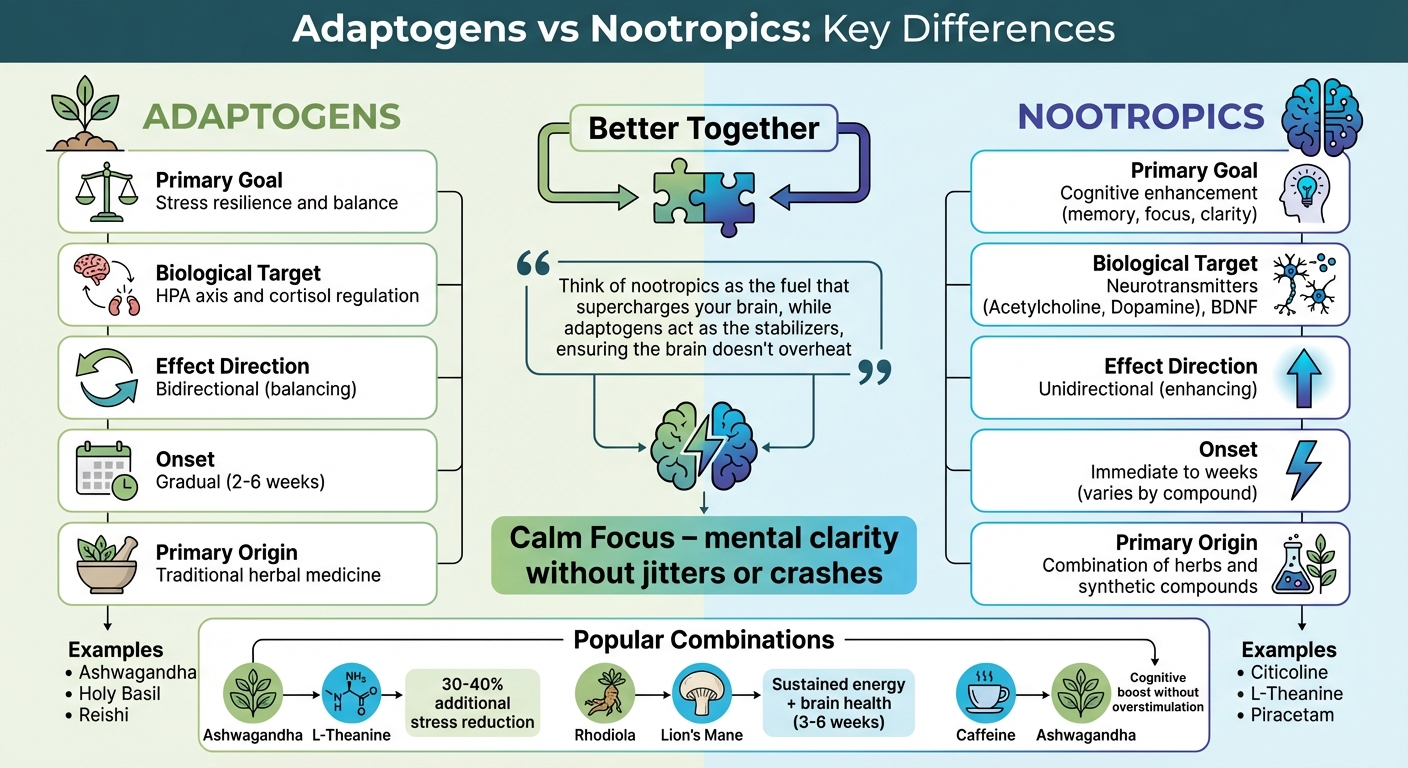
Adaptogens vs Nootropics: Key Differences and How They Work Together
Adaptogens and nootropics both support mental performance, but they work in fundamentally different ways. Adaptogens primarily influence the HPA (hypothalamic-pituitary-adrenal) axis, helping to regulate cortisol levels and promote balance in the body. Nootropics, on the other hand, enhance cognitive function by targeting neurotransmitters like dopamine and acetylcholine, improving blood flow to the brain, and offering neuroprotective effects.
The outcomes they provide also differ. Adaptogens aim to restore balance by normalizing bodily functions - they can calm overactivity or stimulate underactivity, making them bidirectional. Nootropics are unidirectional, meaning they focus on enhancing specific cognitive abilities, such as memory or focus. Erik Abramowitz, FNTP at Holistic Nootropics, explains:
"Adaptogens and nootropics aren't competing categories - they're complementary systems that work on different layers of the same problem."
Another key difference lies in how quickly they work. Adaptogens typically require 2–6 weeks of consistent use to build resilience and show noticeable effects. Nootropics, especially certain stimulants or synthetic options, can deliver results in minutes or hours, though some also need cumulative use. This contrast highlights how they serve different yet complementary roles in cognitive support.
Interestingly, some substances, like Bacopa monnieri and Rhodiola rosea, cross the line between these categories, offering benefits that overlap. While nootropics focus on boosting specific cognitive functions, they generally avoid the common side effects associated with pharmaceutical options.
Table: Adaptogens vs. Nootropics
| Feature | Adaptogens | Nootropics |
|---|---|---|
| Primary Goal | Stress resilience and balance | Cognitive enhancement (memory, focus, clarity) |
| Biological Target | HPA axis and cortisol regulation | Neurotransmitters (Acetylcholine, Dopamine), BDNF |
| Effect Direction | Bidirectional (balancing) | Unidirectional (enhancing) |
| Onset | Gradual (2–6 weeks) | Immediate to weeks (varies by compound) |
| Primary Origin | Traditional herbal medicine | Combination of herbs and synthetic compounds |
| Example | Ashwagandha, Holy Basil, Reishi | Citicoline, L-Theanine, Piracetam |
These distinctions highlight how adaptogens and nootropics can complement one another, offering a layered approach to mental resilience and cognitive performance.
Benefits of Combining Adaptogens and Nootropics
Pairing adaptogens with nootropics creates a powerful system for improving mental performance. Nootropics enhance memory, focus, and processing speed, while adaptogens help regulate stress responses. As Four Sigmatic puts it:
"Think of nootropics as the fuel that supercharges your brain, while adaptogens act as the stabilizers, ensuring the brain doesn't 'overheat.'"
This combination delivers a state of "calm focus" - mental clarity and alertness without the usual side effects like jitters or energy crashes. For example, caffeine paired with ashwagandha provides a cognitive boost while reducing caffeine's overstimulating effects. Research also shows that combining L-theanine with caffeine enhances reaction times and word recognition while minimizing caffeine-induced blood pressure spikes.
Both adaptogens and nootropics contribute to long-term brain health. Adaptogens like Rhodiola and nootropics such as Lion's Mane protect the brain from oxidative stress and inflammation - issues linked to prolonged mental strain. This supports processes like neurogenesis and brain plasticity. The key is their complementary roles: adaptogens regulate stress hormones and balance cortisol, while nootropics enhance neurotransmitter activity, helping to combat mental fatigue.
How They Work Together
The synergy between adaptogens and nootropics lies in how they address different systems to achieve a common goal. Adaptogens regulate the hormonal stress response and keep cortisol levels in check, which helps preserve the neurotransmitters that nootropics amplify.
Nootropics, on the other hand, enhance cerebral blood flow and brain metabolism, ensuring the brain gets the oxygen and nutrients it needs. Ingredients like Ginkgo Biloba play a role here, while adaptogens like Cordyceps boost cellular energy production. Some compounds even bridge the gap between these categories. Rhodiola rosea, for instance, contains over 140 active components that combat fatigue and improve brain metabolism simultaneously. Similarly, Bacopa monnieri supports memory retention, showcasing the overlap between these two groups.
This partnership is particularly effective in supporting neurotransmitters. Nootropics like Alpha-GPC increase acetylcholine production - studies show it can improve mental performance speed by 18% in younger adults. Meanwhile, adaptogens help prevent neurotransmitter depletion during stress. Together, they create a layered approach that balances stress management and cognitive enhancement, offering sustained mental endurance that feels natural and steady.
Effective Adaptogen-Nootropic Combinations for Mental Endurance
These combinations highlight how adaptogens and nootropics can work together to enhance mental stamina and focus.
Ashwagandha and L-Theanine
L-Theanine provides quick stress relief, typically within 30–60 minutes, while Ashwagandha strengthens stress resilience over a longer period, typically 4–8 weeks. Together, they amplify stress reduction by increasing GABA levels, with Ashwagandha mimicking GABA's calming effects. Studies suggest that combining these two can reduce perceived stress by an additional 30–40% compared to using them individually. Beyond stress relief, this duo supports focus by boosting alpha brain wave activity, which protects working memory and executive function under pressure. For best results, use 100–200 mg of L-Theanine one to three times daily alongside 300–600 mg of Ashwagandha.
Rhodiola and Lion's Mane
Rhodiola helps sustain mental endurance by managing cortisol levels and increasing ATP production, the body's main energy source. Lion's Mane promotes brain health by stimulating nerve growth factor (NGF) and brain-derived neurotrophic factor (BDNF), which are key for neurogenesis and neuroplasticity. When paired, these supplements create a balanced state of calm focus, delivering steady energy and improved concentration without overstimulation. Noticeable benefits typically appear after 3–6 weeks of consistent use.
Kratom, Kava, Lion's Mane, and L-Theanine Blend
For a more comprehensive approach, blends with multiple active ingredients can provide layered mental support. Founders Fuel offers a proprietary blend of Kratom, Kava, Lion's Mane, and L-Theanine, designed for professionals seeking sustained productivity. This combination aims to create a synergistic flow state without the tension or jitters associated with caffeine. Kratom acts as a mild stimulant and mood booster at lower doses, Kava provides calming effects, Lion's Mane supports long-term cognitive function, and L-Theanine encourages relaxed alertness. The blend is available in 2 oz bottles through a subscription service and is manufactured in a GMP-certified facility, with all ingredients tested for purity and potency.
How to Stack Adaptogens and Nootropics
Dosages and Timing
Start with the smallest dose and gradually increase while paying attention to how your body reacts. Most adaptogens and nootropics take about two weeks of consistent use to show their effects, so there’s no need to rush into higher doses, which could lead to unwanted side effects. If your stack includes caffeine - like guarana - take it early in the day to avoid messing with your sleep. Stick to cycling supplements 5–6 days a week to prevent building up a tolerance. For reference, healthy adults should keep their caffeine intake under 400 mg daily. If you're looking for focus in the evening, skip the caffeine and consider options like Holy Basil or Bacopa monnieri tinctures instead. Once you’ve got your dosages and timing sorted, think about how to fit these into your daily habits.
Daily Integration Tips
Choosing the right supplement format can make all the difference. To maintain the balance between adaptogens and nootropics, pick formats that fit seamlessly into your lifestyle. Oral pouches act quickly - effects kick in within minutes and last up to four hours - making them perfect for intense work sessions. Capsules are a handy all-in-one option, while functional coffee blends are an easy addition to your morning routine.
Founders Fuel offers a convenient 2 oz bottle featuring a proprietary mix of Kratom, Kava, Lion's Mane, and L-Theanine. Their subscription plan provides 12 bottles per month (24 servings) for $229. Every batch is crafted in a GMP-certified facility to ensure quality and consistency.
Always check product labels. Taking supplements on an empty stomach might upset your digestive system. If you notice side effects like sleep trouble or stomach discomfort, lower your dose or take a break. If you’re pregnant, on prescription meds, or dealing with heart or blood pressure issues, consult your doctor before adding new supplements to your routine.
Conclusion
Adaptogens and nootropics complement each other perfectly: while nootropics boost cognitive performance, adaptogens help your body handle stress by balancing cortisol levels and supporting the HPA axis. Together, they create a well-rounded approach that enhances mental sharpness without overloading your system. This balance is particularly useful for professionals aiming to maintain peak performance under pressure.
By managing stress and enhancing focus, this duo keeps you productive even in demanding situations.
Founders Fuel’s blend of Kratom, Kava, Lion’s Mane, and L-theanine brings this synergy to life. Packed into a convenient 2-oz bottle, it offers both the grounding stability of adaptogens and the mental clarity of nootropics for sustained focus and productivity.
FAQs
Can I take adaptogens and nootropics every day?
Yes, you can take adaptogens and nootropics daily to help with stress management and mental performance. However, it’s crucial to approach their use carefully. If you have any health conditions or concerns, consult a healthcare professional before starting. Consistent use should match your personal wellness goals and unique needs.
How do I know which combo is right for my stress and focus needs?
Choosing the right combination of adaptogens and nootropics comes down to your goals and how your body reacts to specific ingredients. If you're looking for quick, steady focus without the jitters, options like L-theanine or Ginseng might work well. For ongoing stress management and cognitive support, pairing adaptogens like Ashwagandha or Rhodiola with Lion's Mane could be worth exploring. Begin with small doses, monitor how you feel, and consult a healthcare professional to determine what suits you best.
What side effects or interactions should I watch for when stacking?
When combining adaptogens and nootropics, it’s important to keep an eye on potential side effects. Overstimulation, increased stress responses, or adverse interactions between ingredients can occur. For instance, substances like rhodiola or ginseng may affect both stress management and cognitive function, which could lead to unexpected reactions. Always factor in your personal tolerance levels and, if you’re uncertain, consult a healthcare professional for guidance.
